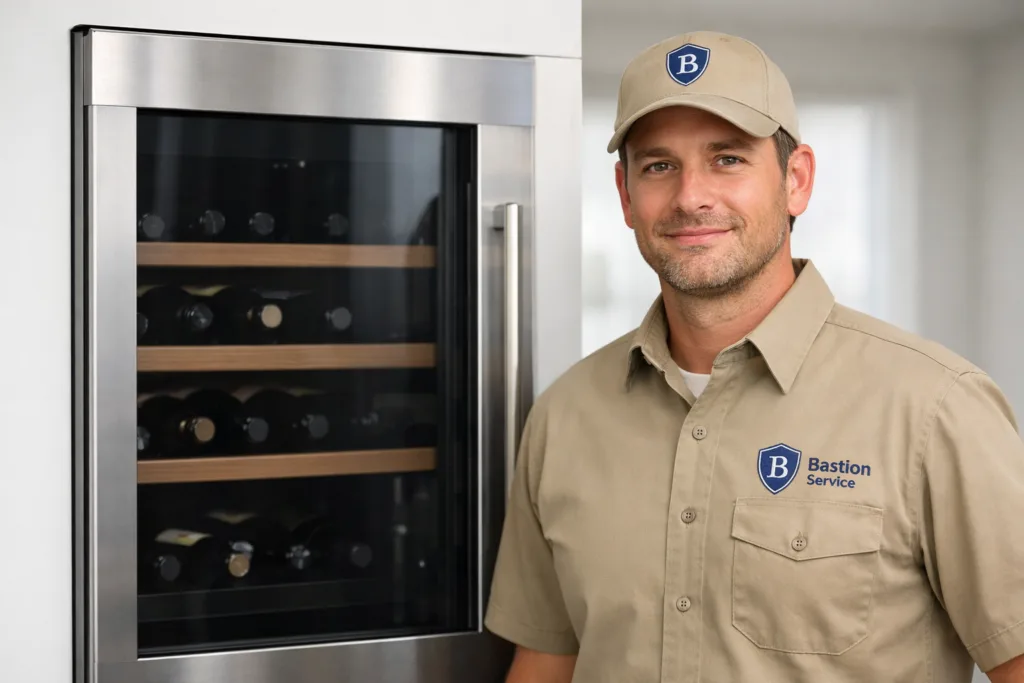
Stable storage depends on more than a cold cabinet. A Miele wine cooler has to manage temperature evenly, move air properly, and keep outside moisture from creeping in around the door. When one of those systems starts drifting, the symptoms often show up before the unit stops working completely.
In Rancho Park homes, the most useful approach is to match the repair path to the exact behavior of the appliance. A cooler that is slightly warm, one that runs nonstop, and one that collects condensation may all look similar at first, but they point to different components and different repair decisions.
Common Miele Wine Cooler Problems
Most service calls fall into a handful of recognizable patterns. Paying attention to how the problem appears, when it started, and whether it is getting worse can help narrow down the cause.
Temperature Swings or Inconsistent Cooling
If the interior seems colder one day and warmer the next, the issue may involve a sensor, control fault, fan problem, or restricted airflow. A wine cooler can also lose stability when the door gasket no longer seals tightly and room air keeps entering the cabinet.
Homeowners often notice this as bottles feeling warmer than expected even though the display still looks normal. That matters because the displayed setting does not always reflect actual cabinet conditions. A proper check compares what the unit is reading with how the cooler is really performing over time.
Not Cooling Enough
When the unit is clearly too warm, the cause can range from a basic maintenance issue to a more serious cooling-system problem. Common possibilities include blocked vents, poor ventilation around a built-in installation, a failing evaporator fan, a bad thermistor, or compressor-related trouble.
This symptom should not be ignored for long. If the cooler cannot reach or hold the selected temperature, the system may be overworking in the background while storage conditions continue to decline.
Constant Running or Short Cycling
A Miele wine cooler that seems to run all the time is usually struggling to satisfy the thermostat. Warm air leakage, weak cooling performance, or a control issue can all lead to extended run times. In other cases, the unit may cycle on and off too often because the temperature is being read incorrectly or airflow inside the cabinet is uneven.
Long run times do not always mean the compressor is failing, but they do indicate that something is preventing normal operation. That is especially true when the cabinet still does not feel cold enough despite all that activity.
Condensation, Moisture, or Water Around the Unit
Moisture on the glass, shelves, or door frame often points to warm-air intrusion. A worn gasket, slight door misalignment, or repeated failure of the door to close fully can all let humidity enter the cabinet. Drain problems may also allow water to collect where it should not.
When condensation keeps returning, it is worth addressing early. Ongoing moisture can affect labels, shelving, nearby cabinetry, and flooring, and it may also be a sign that the appliance is no longer regulating its interior environment correctly.
Fan Noise, Buzzing, or New Vibration
Wine coolers are not silent, but their normal sound profile is usually low and consistent. A sudden rattle, clicking noise, fan rubbing sound, or stronger-than-usual vibration can suggest a fan motor problem, loose mounting, airflow obstruction, or compressor strain.
Noise becomes more important when it appears alongside poor cooling or nonstop running. In that case, the sound is not just an annoyance; it may be a clue that the unit is struggling mechanically.
Control Panel, Alarm, or Display Problems
If the display stops responding, settings change unexpectedly, or alarms continue after being reset, the fault may involve the interface, sensors, wiring, or main control components. Electrical issues can mimic cooling problems because the cooler may not interpret cabinet temperatures correctly.
Repeated resets are rarely a real fix. They can temporarily clear an alert while the underlying problem continues, which makes the cooler less predictable and can delay needed service.
What These Symptoms Usually Mean
Wine cooler issues are often grouped into a few main categories:
- Airflow problems: blocked vents, overloaded shelves, or evaporator fan trouble
- Sealing problems: worn door gaskets, alignment issues, or frequent warm-air intrusion
- Control and sensor faults: incorrect readings, display issues, or unstable cycling
- Drain and moisture issues: condensation buildup or water collecting where it should not
- Cooling-system concerns: compressor or sealed-system underperformance
The reason this matters is simple: replacing the wrong part will not restore stable storage. Similar symptoms can come from very different failures, so testing matters more than guesswork.
When to Stop Waiting and Schedule Service
Some problems start small but become expensive if the appliance keeps operating under strain. It is usually time to schedule Miele wine cooler repair in Rancho Park when you notice any of the following:
- The cabinet stays warmer than the selected setting
- Temperature changes from day to day without explanation
- The unit runs almost nonstop
- Condensation keeps returning after cleaning
- The fan grows louder or airflow seems weak
- New clicking, buzzing, or rattling begins
- The display is unresponsive or alarms repeat
- The door no longer closes or seals as firmly as before
These warning signs do not all point to major failure, but they do suggest that normal operation has changed enough to justify inspection.
Built-In Installation Issues That Affect Performance
Many residential wine coolers are installed into finished kitchen, dining, or bar spaces. In those setups, performance can be affected by more than internal parts alone. Tight clearances, restricted ventilation, cabinet shift, or a door that brushes surrounding trim can all contribute to cooling complaints.
That is one reason diagnosis should include both the appliance and the installation conditions around it. A cooler may have a repairable internal fault, but it can also suffer from external conditions that need correction to prevent repeat problems.
Repair or Replace?
This decision depends on the type of failure, the age of the unit, overall condition, and whether the repair is likely to restore reliable temperature control. Smaller issues such as gaskets, fans, drains, sensors, and some control-related faults are often more straightforward to address.
Replacement becomes a more serious discussion when the cooling system has major wear, the compressor is failing, or multiple high-cost problems appear at once. The right answer comes from the condition of the specific cooler, not from age alone.
What a Good Service Visit Should Clarify
A worthwhile appointment should identify whether the problem is mechanical, electrical, airflow-related, or tied to the cooling system itself. That typically includes checking temperature behavior, listening for abnormal operation, inspecting seals and door alignment, evaluating fan performance, and reviewing any control or alarm issues.
From there, the next step is easier to judge: move ahead with repair, correct an installation or maintenance issue, or consider replacement if the unit no longer makes economic sense. For homeowners in Rancho Park, that kind of practical repair guidance helps protect both the appliance and the wine stored inside it.