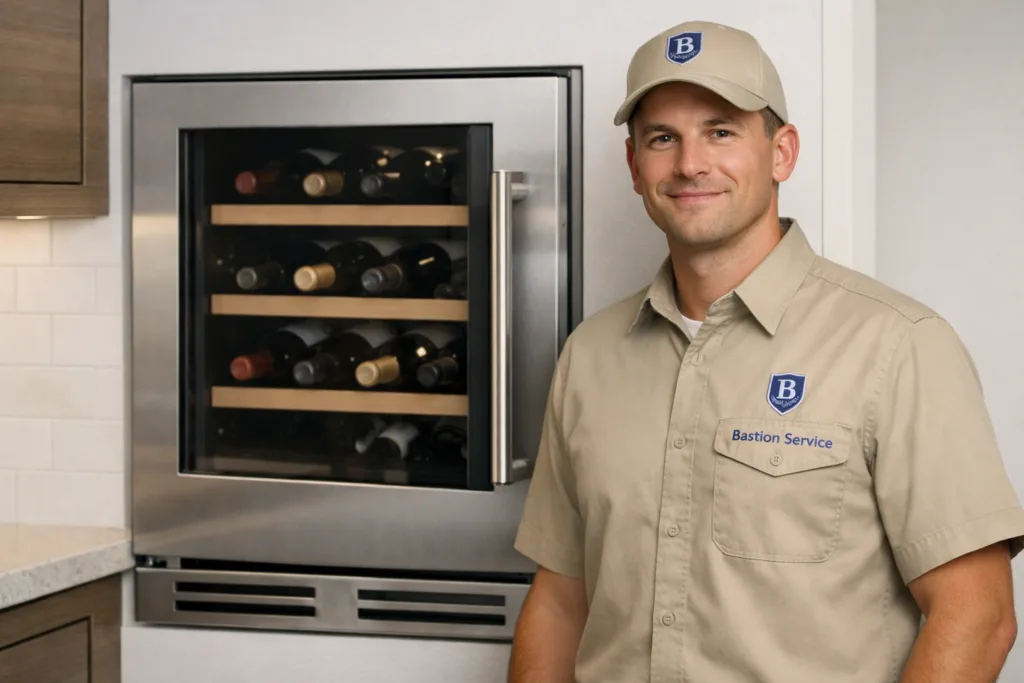
A Marvel wine cooler that starts warming, dripping, freezing bottles, or running nonstop can disrupt storage quickly. In Rancho Park homes, the best next step is to match the symptom pattern to the most likely cause before deciding on repair, because similar problems can come from very different parts of the system.
What specific symptoms can mean in a Marvel wine cooler
Cabinet is not cooling enough
If the interior feels warmer than the set temperature, the problem may be as simple as restricted airflow or as serious as a sealed-system issue. Common causes include dirty condenser components, a weak evaporator fan, sensor trouble, a control problem, or reduced cooling output. Because wine storage depends on consistency, even a small temperature rise is worth addressing early.
Homeowners often notice this as bottles feeling less cool than usual, the display reading one thing while the cabinet feels different, or the unit taking much longer to recover after the door is opened.
Wine cooler is too cold or freezing contents
When a Marvel unit overcools, the issue is often tied to temperature sensing or control logic rather than “extra good” cooling. A sensor that reads inaccurately, a control board that is not cycling properly, or an airflow imbalance can keep the compressor running longer than it should. This can affect bottle condition and is usually a sign that the unit is no longer regulating temperature correctly.
Water inside the cabinet or on the floor
Water around a wine cooler is commonly related to condensation management. A blocked drain path, poor door sealing, excess humidity entering the cabinet, or an installation-leveling issue can all lead to moisture buildup. If water keeps returning, the problem should be checked before it affects nearby flooring, cabinetry, or trim.
Running constantly or making more noise than usual
Some variation in runtime is normal, especially during warmer days or after frequent door openings. What is not normal is a unit that rarely seems to stop, clicks repeatedly, buzzes loudly, rattles, or suddenly sounds rougher than before. That can point to fan motor wear, airflow restriction, compressor start component trouble, loose mounting hardware, or a cooling system that is working too hard to maintain temperature.
Display, lights, or controls acting erratically
If the display is blank, settings do not respond, interior lighting is intermittent, or controls reset unexpectedly, those signs may be connected to the same underlying fault affecting cooling. User interface problems, switch issues, control board failure, and power-path faults can all show up this way. Even when the unit still cools somewhat, these symptoms should not be dismissed as cosmetic.
Why diagnosis matters before parts are replaced
Wine coolers can be misleading because one symptom can have several causes. A warm cabinet does not always mean compressor failure. Frost or condensation does not always mean the door was left open. A noisy unit does not always mean the compressor is bad.
A more accurate repair plan comes from checking temperature behavior, fan operation, sensor response, door gasket condition, drainage, and how the cooling system cycles. That approach helps avoid replacing obvious parts first only to find the real problem is elsewhere.
Common problem areas in residential Marvel wine coolers
- Temperature sensors that drift out of range
- Control boards that stop managing cycles correctly
- Evaporator or condenser fan problems that reduce airflow
- Door gaskets that no longer seal tightly
- Drain or condensation issues causing interior moisture
- Compressor start components that cause clicking or failed starts
- Sealed-system faults that reduce overall cooling performance
Not every repair involves a major cooling failure. In many cases, the unit still runs but cannot regulate temperature accurately, which is often what homeowners notice first.
Signs it is time to schedule service
It is a good time to schedule service when the cooler cannot hold its set temperature, develops water inside or underneath, forms frost where it should not, becomes louder, shuts off unexpectedly, or shows control/display issues. Intermittent problems also count. If the unit works normally one day and struggles the next, that usually means the fault is already progressing.
Early attention is especially helpful when the appliance is still cooling somewhat but taking longer cycles, recovering slowly, or showing mild temperature swings. Those patterns often appear before a more obvious breakdown.
When continued use can make the problem worse
Continued operation can add wear when the compressor is short-cycling, a fan is not moving air properly, or the control system is keeping the unit running too long. Moisture problems can also spread beyond the appliance if water begins reaching surrounding finishes.
If the door gasket is leaking, if frost is building around internal components, or if the cabinet feels unstable from day to day, using the wine cooler as if it were storing at a dependable temperature may lead to both appliance damage and storage concerns.
Repair or replacement: how the decision is usually made
Repair is often sensible when the issue is isolated to a fan, sensor, control, drain problem, gasket, lighting circuit, or another serviceable component and the cabinet itself remains in good condition. Replacement becomes more likely when the diagnosis points to major sealed-system trouble, repeated breakdowns, or repair costs that no longer fit the age and condition of the unit.
For many households in Rancho Park, the decision is less about the label on the symptom and more about whether the fault is targeted and repairable or broad enough to make future reliability uncertain.
What to expect during a service visit
A useful service visit for a Marvel wine cooler usually starts with confirming the complaint under real operating conditions. That includes checking the displayed setting against actual cabinet behavior, listening to compressor and fan operation, inspecting the door seal, looking for signs of condensation or frost, and testing whether controls and sensors are responding normally.
From there, the problem can usually be narrowed into one of three categories: airflow and component issues, electrical and control issues, or deeper cooling system trouble. That distinction matters because it gives the homeowner a realistic repair path instead of a guess based only on surface symptoms.
Practical guidance for Rancho Park homeowners
If your wine cooler is still running, avoid overloading it, limit unnecessary door openings, and watch for repeated temperature swings, new noise, or moisture return. If the unit has stopped cooling properly, is freezing contents, or is showing electrical-control issues, it is best not to assume the problem will correct itself.
For homeowners in Rancho Park, the most useful next step is a diagnosis that connects the symptom to the failed part or system. Once that is clear, it becomes much easier to decide whether repair is the right move for the appliance and the household.