
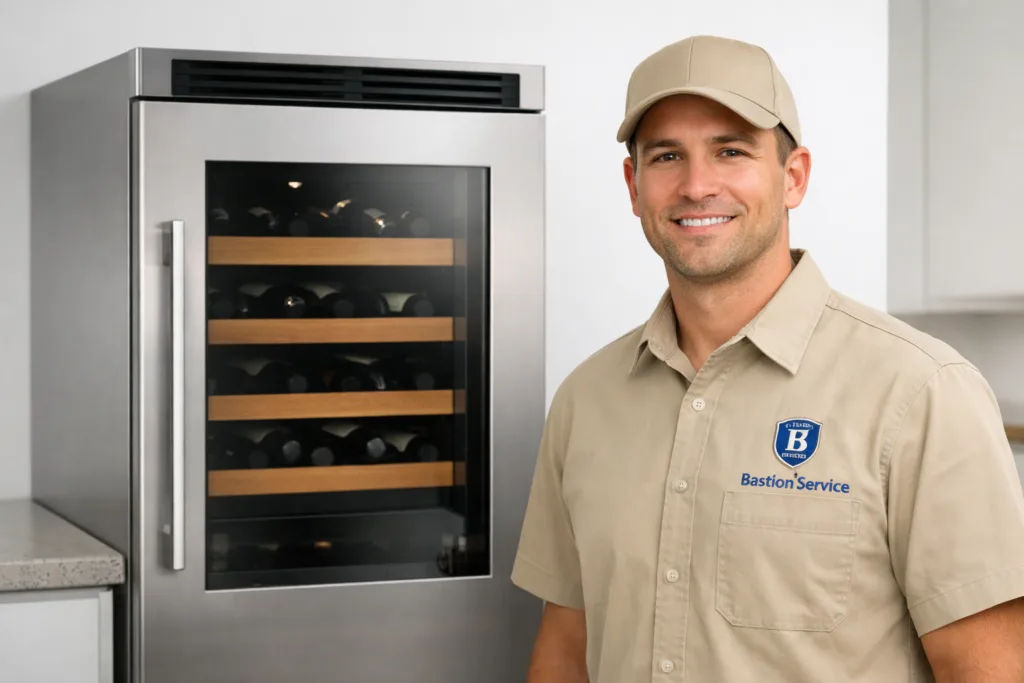




Temperature drift, moisture, and new noise can change quickly from a minor annoyance to a storage problem when a wine cooler is involved. With Fisher & Paykel units, the most useful approach is to match the repair plan to the actual behavior of the appliance, because similar symptoms can come from airflow restrictions, sensor faults, control issues, fan failure, or sealed-system trouble.
How Wine Cooler Problems Usually Show Up
Many homeowners first notice a subtle change rather than a complete breakdown. Bottles may feel warmer than expected, the cabinet may seem to run longer than usual, or the display may look normal even though the interior temperature is inconsistent. Those early signs matter because wine coolers depend on steady performance, not just occasional bursts of cooling.
In Rancho Park homes, useful clues often include when the symptom started, whether it affects the whole cabinet or one zone, whether condensation appears after the door is closed, and whether the sound of the unit has changed during normal cycling. Small details like these help separate a simple service issue from a larger refrigeration problem.
Common Fisher & Paykel Wine Cooler Symptoms
Not Cooling Properly
If the cabinet is no longer reaching or holding its set temperature, several faults are possible. Airflow may be reduced by a failing fan, condenser components may be dirty, the thermistor may be reading inaccurately, or the control may not be cycling the system correctly. In some cases, low cooling performance can also point to a sealed-system issue.
This symptom is especially important when the wine cooler still runs but never seems to stabilize. A unit that is always trying to catch up is usually telling you something is no longer working as designed.
Overcooling or Freezing
A wine cooler that gets too cold can be just as concerning as one that does not cool enough. When bottles are overchilled or temperatures drop below the selected range, the cause may be a faulty sensor, an electronic control problem, or improper airflow within the cabinet. Dual-zone models can also develop balance issues between compartments.
Condensation or Water Inside
Moisture on shelves, droplets on the interior walls, or pooled water near the bottom of the cabinet can indicate a blocked drain path, a door gasket that no longer seals tightly, or warm air entering the cabinet repeatedly. Condensation is not only a nuisance; it can also signal that the appliance is struggling to maintain a stable environment.
Constant Running or Short Cycling
If the compressor seems to run almost nonstop, the wine cooler may be compensating for heat infiltration, weak cooling performance, or a control problem. Short cycling, where the unit starts and stops too frequently, can also point to sensor or board issues. Either pattern is worth checking, especially if it is paired with temperature inconsistency.
Buzzing, Clicking, Rattling, or Fan Noise
Some sound is normal, but a noticeable change in sound usually deserves attention. Rattling can come from vibration or loose mounting points. Clicking may relate to starting components or control behavior. A scraping or uneven fan sound can mean the fan motor, blade, or surrounding airflow path needs service. When noise appears together with poor cooling, the diagnosis becomes more urgent.
Why Display Temperature Can Be Misleading
One of the more confusing wine cooler issues is when the control panel appears normal while the cabinet is not actually storing at the right temperature. The display reflects what the control system is reading, but if the sensor is inaccurate or cooling is uneven, the number on the panel may not match conditions around the bottles.
That is why symptom-based testing matters. The goal is not just to restore power or reset the display, but to confirm whether the unit is maintaining stable storage conditions throughout normal operation.
Problems That Often Worsen if Ignored
Some wine cooler faults stay manageable for a short time, but others tend to get worse with continued use. A fan issue can lead to uneven temperatures. A poor door seal can make the unit run harder and longer. Repeated condensation can affect shelving, interior surfaces, and nearby cabinetry. If cooling performance is already slipping, extended operation may also place extra strain on major components.
- The cabinet feels warm even though the controls are on
- One zone is behaving differently from the other
- Water or heavy condensation returns after wiping it out
- The unit has begun making a persistent new sound
- The appliance runs almost constantly without reaching temperature
Repair Issues That Are Often Straightforward
Not every wine cooler problem points to major failure. Many service calls come down to components such as fan motors, sensors, controls, drains, or door-sealing parts. When the cabinet itself is in good condition and the cooling system is otherwise sound, these repairs can often make sense.
That is different from cases involving multiple failing parts, severe age-related wear, or more serious refrigeration problems. The value of diagnosis is that it shows whether the issue is isolated and repairable or part of a broader decline in performance.
Repair or Replace: A Practical Way to Decide
For Rancho Park homeowners, the decision usually depends on four things: the exact fault, the age and overall condition of the wine cooler, the expected reliability after repair, and the total scope of work. A single failed component in a well-kept unit is very different from a wine cooler with ongoing cooling problems, moisture issues, and heavy wear.
Replacement tends to become more reasonable when repair costs are high relative to the condition of the appliance, or when the wine cooler cannot be expected to return to stable operation in a meaningful way. Repair is often the better path when the fault is specific and the rest of the unit is still in solid shape.
What to Note Before Service
If you are scheduling Fisher & Paykel wine cooler repair in Rancho Park, it helps to note a few simple details beforehand. These observations can make the problem easier to pinpoint:
- Whether the whole cabinet is affected or only one section
- Any difference between the set temperature and how the bottles actually feel
- Whether condensation appears after normal door use
- If the sound happens at startup, during cooling, or all the time
- Whether the issue began suddenly or gradually over several days
What Homeowners Usually Want to Know
Most people do not need a long technical breakdown. They want to know what failed, whether continued use could cause more damage, and whether the unit is worth repairing. A good service visit should answer those questions clearly and keep the recommendation tied to the actual condition of the appliance.
For a household wine cooler, the goal is not just to make it turn on again. The goal is to restore dependable temperature control, reduce avoidable strain on the system, and confirm whether the appliance can return to normal use without ongoing storage concerns.


