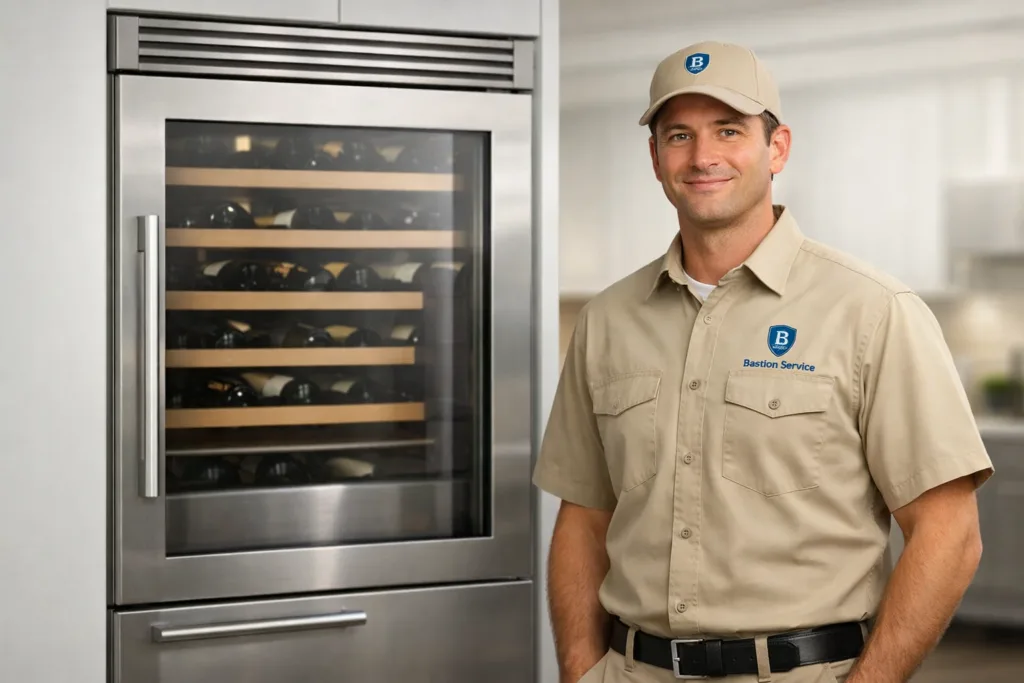
Stable temperature matters in a wine cooler because even small shifts can change how bottles age and how consistently they are stored at home. When a Sub-Zero unit begins running warm, collecting moisture, or making new sounds, the next step should be based on the exact symptom pattern rather than guesswork. Problems that look similar on the surface can come from very different causes, including airflow restrictions, sensor faults, door-seal leaks, fan failure, or a deeper refrigeration issue.
What common wine cooler symptoms usually mean
Sub-Zero wine coolers rely on steady airflow, accurate sensing, and a tight cabinet seal. When one part of that system stops working as intended, the result may be inconsistent cooling, noise, frost, or water buildup. Looking at how the symptom appears, how often it happens, and whether it changes throughout the day helps narrow down the likely cause.
Wine cooler not holding temperature
If the cabinet stays warmer than the setting or takes too long to recover after the door is opened, the issue may be related to condenser performance, evaporator airflow, temperature sensing, or control response. In some cases, the unit may seem to cool for a while and then drift upward again. That often points to an intermittent component problem rather than a complete system shutdown.
Signs worth paying attention to include:
- Bottles feeling warmer than expected despite a normal display reading
- Long run times without reaching the selected temperature
- Temperature that rises and falls without any setting changes
- Different shelf areas feeling noticeably uneven
Condensation on the glass, shelves, or door area
Moisture usually means warm household air is getting into the cabinet or cold air is not circulating properly. A worn gasket, misaligned door, blocked drain, or defrost-related issue can all lead to condensation. If left alone, recurring moisture can create odor, puddling, or frost where it should not be.
Condensation is especially important to address when it appears repeatedly around the same area, such as the door frame or lower interior. That pattern often helps identify whether the problem is sealing, drainage, or airflow related.
Fan noise, buzzing, or clicking
Sub-Zero wine coolers are not silent, but the sound profile should stay fairly consistent. A new rattle, a sharp buzz, or a fan sound that comes and goes can suggest a motor issue, loose component, ice interference, or compressor strain. Clicking may also point to a start or control problem if the unit is trying and failing to run normally.
Noise becomes more concerning when it is paired with poor cooling, excessive heat near the unit, or frequent cycling. Those combinations usually mean the sound is part of a larger performance issue instead of harmless vibration.
Frost buildup where it should not be
Light moisture is one thing; visible frost in the wrong place is another. Frost on interior surfaces, around vents, or near the evaporator area can indicate restricted airflow, a door sealing problem, or a defrost issue. Frost often starts as a small nuisance but can interfere with circulation and lead to more uneven temperatures over time.
Why symptom patterns matter on Sub-Zero units
Two wine coolers can both seem “not cold enough” while requiring completely different repairs. One may have a failing fan that prevents cold air from moving properly. Another may have a sensor reading incorrectly, causing the control system to cycle at the wrong times. A third may have a sealed-system problem that cannot be confirmed without proper testing.
That is why the most useful service approach begins with a clear diagnosis and then matches the repair plan to the actual fault. It helps avoid replacing parts that are not causing the problem and gives the homeowner a better sense of whether the repair is straightforward or more involved.
Household issues that can mimic a breakdown
Not every cooling complaint starts with a failed part. Some performance problems come from conditions around the appliance or changes in how it is being used. Before assuming the worst, it helps to consider a few practical factors:
- The door may not be closing fully because of shelf placement or bottle position
- Dust buildup around the condenser area may reduce cooling efficiency
- Frequent opening during gatherings can temporarily raise interior temperature
- A slight cabinet shift can affect door alignment and sealing
These conditions do not rule out the need for repair, but they can affect how the problem presents and should be checked as part of the inspection.
When continued use can make the repair worse
A wine cooler that runs constantly, struggles to reach temperature, or repeatedly develops condensation is working harder than it should. Continued operation under those conditions can put extra strain on motors, controls, and the refrigeration system. What begins as a fan or gasket issue can become more complicated if the appliance is allowed to run for too long without correction.
It is smart to limit use and arrange service sooner when you notice any of the following:
- The cabinet remains persistently warm
- The display does not match actual interior conditions
- Water keeps returning after being wiped up
- The unit cycles on and off much more often than before
- New sounds appear together with cooling problems
Repair or replacement: how Rancho Park homeowners usually decide
In many cases, repair makes sense when the problem is limited to a fan motor, sensor, door gasket, control issue, or drainage component and the cabinet is otherwise in good condition. These faults can disrupt performance significantly while still being isolated enough to address without replacing the appliance.
Replacement becomes a more serious consideration when the wine cooler has multiple major issues, advanced age-related wear, cabinet deterioration, or an expensive refrigeration-system failure relative to the unit’s overall condition. For homeowners in Rancho Park, the most reasonable choice often depends on three things: the confirmed cause of the problem, the general condition of the appliance, and whether the repair restores reliable temperature stability.
What a useful service visit should evaluate
A thorough repair appointment should focus on how the unit is cooling in real conditions, whether air is moving correctly, whether the controls are responding properly, and whether moisture or frost patterns point to a sealing or defrost problem. It should also account for how the symptom developed over time, since intermittent issues often leave clues that a quick visual check can miss.
For a household wine cooler, the goal is not just to make it run again for the moment. The goal is to identify why the storage environment changed and whether the recommended repair is likely to restore dependable operation.
Signs it is time to schedule service
If your Sub-Zero wine cooler in Rancho Park is no longer maintaining a stable interior, develops repeated condensation, or starts making unfamiliar noise, delaying service usually does not improve the outcome. Smaller warning signs matter too, especially when they persist.
- The door no longer closes evenly
- Controls respond inconsistently
- One section of the cabinet feels colder or warmer than another
- Cooling seems normal one day and weak the next
- Moisture appears around the same door or shelf area repeatedly
When those symptoms show up, an informed repair decision is usually easier to make after the cause has been identified rather than after the unit has deteriorated further.