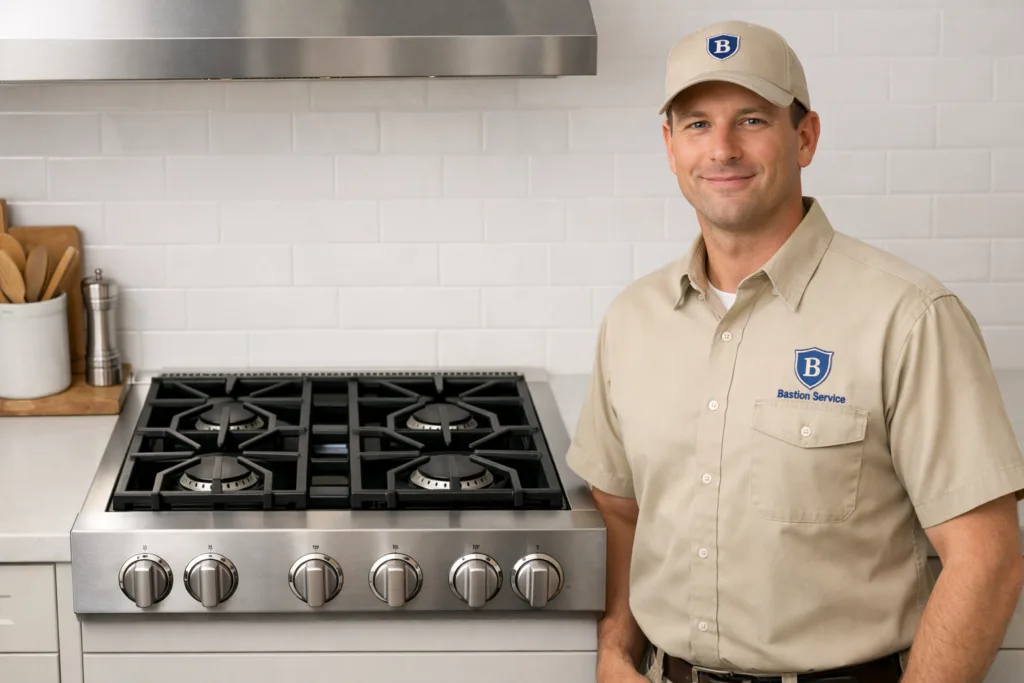
Cooktop issues are easiest to solve when the problem is described by what the burner actually does. A burner that clicks but never lights points in a different direction than a burner that lights and then dies, or one that reaches flame but will not adjust properly. With Wolf units, small differences in behavior often help narrow the fault to the ignition system, burner assembly, control components, or surface damage.
Start with what the burner is doing
Before scheduling Wolf cooktop repair in Mid-Wilshire, it helps to notice whether the problem affects one burner or several, whether it happens every time or only occasionally, and whether it started after a spill, cleaning, or recent change in cooking performance. Those details often make the repair path much clearer.
- One burner not lighting: often tied to that burner’s cap, igniter, ports, or local component wear.
- All burners acting up: may suggest a broader ignition, power, or gas-related issue.
- Clicking that does not stop: can point to moisture, a switch problem, or an ignition fault that should not be ignored.
- Flame too low or uneven: commonly linked to blockage, misalignment, or burner wear.
- Knob turns poorly or feels loose: may involve the knob itself, the valve stem, or internal control parts.
Common Wolf cooktop problems and what they may mean
Burner clicks but will not ignite
This is one of the most common service calls. In some cases, the burner cap is slightly out of position or the burner ports have buildup that interferes with ignition. In others, the igniter is sparking weakly, the switch is not responding correctly, or moisture has affected the ignition area. If the clicking continues without ignition, repeated attempts usually do not improve the situation and can make diagnosis harder once residue or wear builds up further.
Burner lights, then goes out or works inconsistently
When a burner lights and then fails shortly after, the issue may involve unstable flame, poor burner seating, or a control problem that prevents consistent operation. Some homeowners first notice this when a pan starts losing heat unexpectedly or a burner must be turned on several times before it stays lit. Intermittent symptoms are worth addressing early because they often become more frequent over time.
Weak flame or uneven heating
If one burner takes much longer than usual to heat a pan, does not simmer properly, or cooks unevenly, the problem may be more than normal wear. Partial blockage, damaged burner parts, or a control issue can all affect flame shape and heat output. This becomes especially noticeable when the same cookware suddenly behaves differently on one position than it used to.
Continuous clicking after the flame is on
A burner that lights but keeps clicking should not be treated as normal. Ongoing clicking can indicate a wet ignition area, a failing switch, or another electrical issue in the ignition system. Even if the burner seems usable, the underlying fault can worsen and may eventually affect other burners or routine operation.
Control and knob problems
Wolf cooktops are built to respond smoothly, so knobs that stick, wobble, feel rough, or fail to adjust flame accurately usually deserve attention. Sometimes the problem is limited to an external knob. In other cases, the issue is deeper in the valve or switch area. If a control requires extra force, it is better to stop pushing through it than risk damaging the surrounding components.
Cracked glass or visible surface damage
On models with glass sections, any crack or surface damage changes the repair decision immediately. Some cosmetic wear may not affect function, but cracks, unstable grates, or damaged burner assemblies can affect safe cooking and should be evaluated before continued use. The important question is whether the damage is isolated to one replaceable part or whether it affects the overall condition of the cooktop.
What homeowners can safely check first
There are a few simple observations that can help, as long as you avoid disassembly and stop if you suspect a gas issue.
- Make sure the burner cap is seated correctly.
- Look for obvious food residue blocking burner ports.
- Notice whether the igniter is sparking consistently.
- Check whether the issue affects only one burner or multiple burners.
- Pay attention to whether the symptom began after a spill or cleaning.
If a burner still will not light, the clicking is constant, or flame behavior is unpredictable, the next step is usually service rather than more trial and error.
When the problem should be handled quickly
Some symptoms are more urgent than others. A burner that simply cooks unevenly may still be a repair issue, but a strong gas smell, a burner that will not shut off normally, or visible cracking around the cooking surface should be treated more seriously. In those cases, stop using the cooktop and have the issue evaluated before returning it to normal use.
Even without an immediate safety concern, it is smart to schedule service when the same burner fails repeatedly, ignition becomes less reliable week by week, or the controls no longer respond the way they should. Problems that start small on cooktops often become more expensive once repeat use affects nearby components.
Repair or replacement?
In many Mid-Wilshire homes, repair makes sense when the problem is limited to burner components, ignition parts, switches, or an isolated control issue and the rest of the cooktop is in good shape. Repair becomes less attractive when there is major surface damage, several failures at the same time, or the unit’s condition suggests more problems are likely to follow.
The most practical decision usually depends on:
- the age and overall condition of the cooktop
- whether the problem is isolated or widespread
- the condition of the surface and burner assemblies
- parts availability for the specific model
- whether normal performance can be restored reliably
What a service visit should clarify
A useful visit should identify more than the visible symptom. It should determine whether the failure begins at the igniter, switch, burner assembly, valve, or surface area, and whether continued use could cause added wear. For homeowners in Mid-Wilshire, that matters because a cooktop that only seems “a little off” can still have a developing issue behind the panel or around the burner base.
When the diagnosis is specific, it becomes easier to choose between repairing one component now or reconsidering the appliance based on its condition. That is especially important with Wolf cooktop repair in Mid-Wilshire, where restoring steady ignition, even flame, and normal control response is usually the goal—not simply getting a burner to light once.