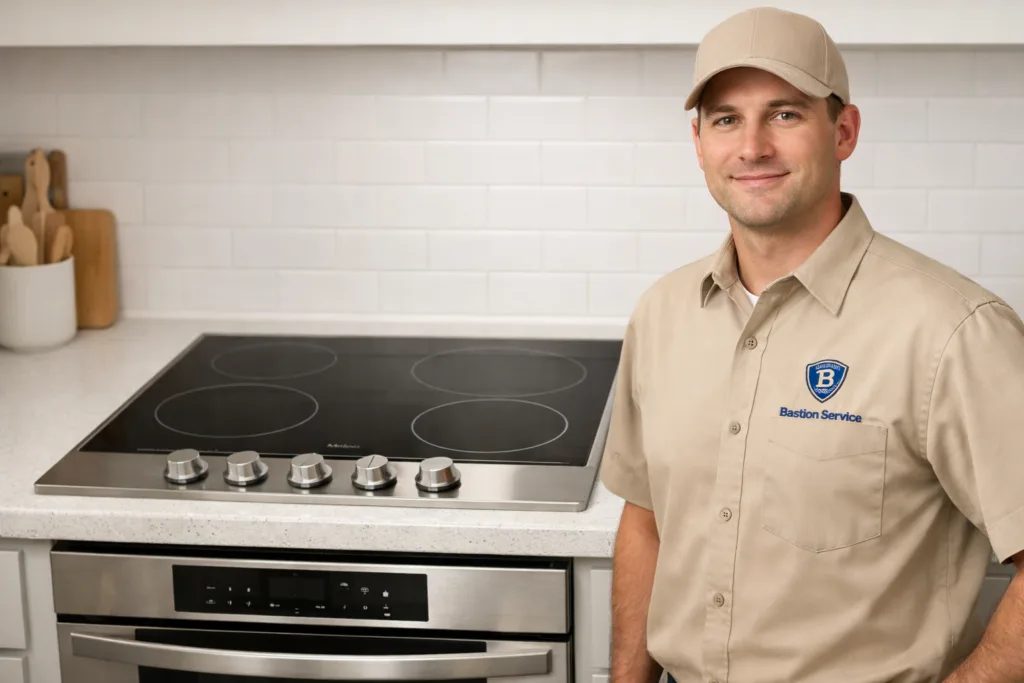
Cooking problems often start with one confusing symptom: a burner that clicks but does not light, a hot spot that scorches food, or a control that no longer matches the heat setting. On a Whirlpool cooktop, those issues can come from different parts of the system, so the best next step is to match the symptom pattern to the most likely failure instead of assuming the burner itself is always the problem.
Common Whirlpool cooktop problems in Mid-Wilshire homes
Most cooktop failures fall into a few recognizable categories. Whether the unit is gas or electric, the exact behavior helps narrow down what should be checked first.
Burner will not ignite or heat at all
On gas Whirlpool cooktops, a burner that clicks without lighting may be dealing with a dirty or misaligned burner cap, blocked ports, moisture after cleaning, a weak spark path, or a fault in the ignition system. If only one burner is affected, the problem is often isolated to that burner assembly rather than the entire appliance.
On electric models, a burner that stays cold may point to a failed surface element, a damaged receptacle, a bad infinite switch, or a wiring issue under the top. Sometimes the burner appears completely dead when the real problem is the control sending no power to it.
Burner heats unevenly or too slowly
Uneven heating is one of the most frustrating cooktop issues because the appliance still seems usable, just not reliable. Electric burners may cycle incorrectly because of a weakening element or worn control switch. Gas burners may produce an uneven flame if the cap is out of position, the ports are blocked, or gas flow at that burner is restricted.
If pans are taking longer to heat than usual, or one side of the pan cooks faster than the other, that usually means the burner is no longer operating consistently enough for normal everyday use.
Burner gets too hot or will not adjust properly
When a Whirlpool cooktop burner stays on high or does not respond well to lower settings, the issue often involves the control side of the appliance rather than the burner surface alone. On electric cooktops, a failing infinite switch is a common cause of heat that does not match the selected setting. This can make routine cooking difficult and may lead to overcooking, scorched cookware, or unnecessary strain on the burner.
Constant clicking or repeated sparking
Persistent clicking on a gas cooktop usually means the ignition system needs attention. In some cases, it begins after a spill or deep cleaning and improves once moisture dries out. If it keeps returning, the problem may involve the spark switch, igniter, or another ignition component. Repeated clicking should not be ignored, especially when the burner becomes unreliable to light.
Cracked glass or visible surface damage
Some Whirlpool cooktops have glass or glass-ceramic surfaces that can become cracked from impact or thermal stress. Surface damage is more than a cosmetic problem. Cracks can affect safe operation, cleaning, and long-term reliability. If the cooktop also has heating or control problems, the overall condition of the unit becomes part of the repair decision.
Why the symptom pattern matters
Two burners can seem to have the same problem while failing for completely different reasons. A burner that does not heat may need a new element, but it could also have a failed switch or a loose connection. A gas burner that lights sometimes and not others may have an igniter issue, burner alignment problem, or contamination in the burner head.
That is why good service starts by separating power issues, ignition issues, control issues, and burner-specific faults. For Mid-Wilshire households, this matters most when the cooktop is used daily and the goal is to restore consistent performance rather than guess at parts.
Signs the problem is getting worse
Some cooktop issues stay minor for a short time, then become more disruptive. A burner that works only occasionally can turn into a complete failure. Intermittent ignition can become constant clicking. Uneven heat can progress into a burner that runs too hot or not at all.
It is usually time to schedule service when you notice any of the following:
- one burner no longer works reliably
- ignition takes multiple tries
- the burner setting does not match the actual heat
- clicking continues after the burner is lit
- the cooktop shows visible damage near a burner area
- performance changed suddenly after a spill or boil-over
- the same problem keeps returning after cleaning
Gas and electric Whirlpool cooktop issues are diagnosed differently
Gas cooktops and electric cooktops can produce similar frustrations, but the repair path is not the same. Gas units are more likely to have problems tied to ignition, burner caps, spark switches, burner heads, and flame quality. Electric units are more likely to involve surface elements, switches, terminals, and internal wiring.
That difference matters when a homeowner is deciding whether the problem sounds simple or whether the appliance likely needs a more thorough inspection. A burner that “won’t work” is only the starting point. The way it fails tells much more.
Repair or replacement: what usually makes sense?
Many Whirlpool cooktop repairs are worthwhile when the failure is limited to one burner, one control, one igniter, or another targeted component. In those situations, restoring normal operation is often more practical than replacing the entire appliance.
Replacement becomes more likely when there are multiple failing burners, recurring electrical issues, significant glass damage, heavy wear across the cooktop, or a repair history that suggests the unit is entering a broader decline. The decision is usually based on overall condition, not just the most visible symptom.
What to note before service
A few details can make diagnosis easier and help explain whether the problem is isolated or part of a larger issue. Before service, it helps to note:
- whether the problem affects one burner or several
- whether it started after cleaning, a spill, or a power interruption
- if the issue is constant or intermittent
- whether the burner gets too hot, too cool, or does not respond to changes
- if clicking happens only at startup or continues during use
- whether there is visible cracking, scorching, or damage around the cooking surface
Those observations can help separate a simple burner-related fault from a control or wiring problem.
Focused Whirlpool cooktop repair for Mid-Wilshire households
In Mid-Wilshire, cooktops often see heavy day-to-day use, which means small changes in burner performance are usually noticed quickly. When a Whirlpool cooktop stops heating evenly, develops ignition trouble, or shows signs of control failure, the most useful approach is a practical repair plan based on what the appliance is actually doing, how many functions are affected, and whether the condition of the unit supports repair.
The goal is not only to get the burner working again, but to restore stable, predictable cooking performance across the cooktop.