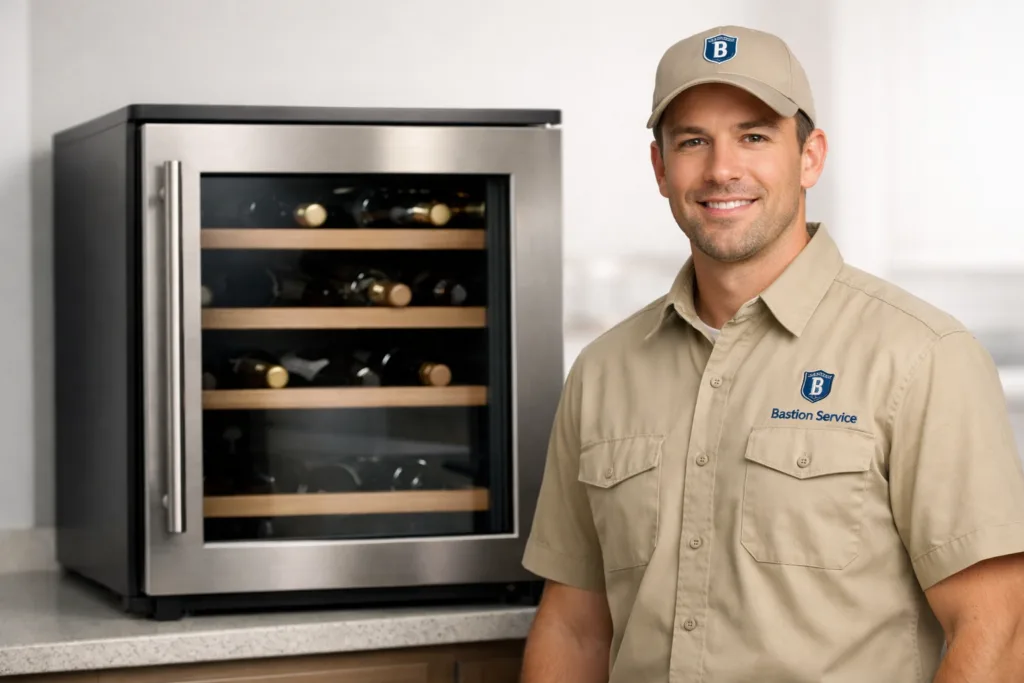
Common Marvel Wine Cooler Problems in Westwood Homes

Wine coolers are built for steady storage conditions, so small changes in performance can matter more than they would in a standard refrigerator. When a Marvel unit begins drifting off temperature, running longer than usual, or collecting moisture, the symptom pattern usually points toward a short list of likely causes.
Not Cooling Enough
If bottles feel warmer than expected or the cabinet never seems to reach the set temperature, the issue may involve restricted airflow, a dirty condenser, a faulty sensor, a thermostat problem, weak fan operation, or a sealed system fault. Similar symptoms can come from very different failures, which is why testing matters before any part is replaced.
Homeowners often notice this problem gradually. The cooler may still appear to run normally, but temperatures become less consistent from shelf to shelf or from one day to the next. That kind of drift is often the first sign that the unit is working harder than it should.
Temperature Swings
A Marvel wine cooler that alternates between too warm and too cold may have trouble reading interior temperature correctly or responding to it. Sensors, controls, fan movement, door sealing, and frost buildup can all affect stability. This is especially important for long-term storage, since repeated swings can be harder on the unit and on the wine than a single obvious cooling failure.
Constant Running or Short Cycling
If the cooler rarely shuts off, it may be compensating for heat entering through a poor door seal, blocked ventilation, dirty coils, or weak cooling performance. If it turns on and off too frequently, the cause may be related to controls, sensors, or overheating conditions that prevent normal operation.
Either pattern can lead to added wear over time. A unit that runs nonstop is not always facing a major sealed system issue, but it should be checked before the strain causes additional component failure.
Condensation, Water, or Frost
Moisture inside the cabinet, around the door, or beneath the unit often points to an airflow problem, a drainage restriction, a gasket issue, or a control problem that is allowing frost to form where it should not. Excess condensation can also be a clue that the interior temperature is not staying where it should.
Frost buildup deserves attention even if the cooler is still operating. Ice can block airflow, reduce efficiency, and create misleading symptoms that make the unit seem like it has a more serious cooling problem than it actually does.
Unusual Noise
Buzzing, rattling, clicking, or fan noise that suddenly becomes louder may come from loose components, vibration, fan blade interference, or a system struggling to maintain temperature. Some sounds are minor, but a noticeable change in noise along with poor cooling or frequent cycling usually means the problem is progressing.
What Often Causes These Symptoms
Marvel wine coolers depend on several systems working together: temperature sensing, airflow, door sealing, heat removal, and refrigeration. When one part falls out of range, the symptoms can overlap.
- Airflow issues: blocked vents, weak evaporator fan operation, or internal frost can prevent even cooling.
- Condenser problems: dust buildup or restricted ventilation can make the unit run hot and struggle to cool.
- Door seal wear: a gasket that looks fine can still leak enough air to cause condensation and long run times.
- Control or sensor faults: inaccurate temperature readings can lead to overcooling, undercooling, or erratic cycling.
- Drainage problems: restricted drain paths can cause water accumulation and excess interior moisture.
- Sealed system concerns: compressor or refrigerant-related issues are less common than maintenance or airflow faults, but they are more significant when present.
Why Symptom-Based Diagnosis Matters
Two Marvel wine coolers can show the same symptom and need very different repairs. A cabinet that seems to have a compressor problem may actually have a fan issue. Condensation around the door may look like a simple moisture problem when the real cause is temperature instability inside the cabinet. Guessing based on appearance alone can lead to unnecessary parts replacement and more downtime.
A useful diagnosis should identify whether the problem is mainly electrical, airflow-related, mechanical, or part of the sealed refrigeration system. That gives you a realistic picture of repair scope, urgency, and whether the unit is likely to return to stable operation.
Signs It Is Time to Schedule Service
It is usually time to have the cooler checked when the problem continues for more than a day or two, or when stored bottles are clearly being affected. Warning signs include:
- The interior no longer matches the set temperature
- The unit runs almost constantly
- Cooling seems uneven from top to bottom
- Water collects inside or under the cabinet
- Frost keeps returning
- The fan becomes noisy or airflow seems weak
- The controls respond inconsistently or the display seems inaccurate
Waiting can turn a manageable problem into a more expensive one, especially when the unit is overheating, icing over, or short cycling.
Repair or Replacement: How Homeowners Usually Decide
Repair often makes sense when the cabinet is in good shape and the issue involves serviceable parts such as fans, controls, sensors, gaskets, or drainage components. In many cases, restoring airflow or correcting a control fault is enough to bring the cooler back to normal operation.
Replacement becomes more likely when the unit has repeated cooling failures, advanced age, major sealed system trouble, or repair costs that no longer fit the expected remaining life of the appliance. The right decision depends less on the symptom alone and more on the actual cause, the condition of the cooler, and how reliably it can be restored.
What a Thorough Service Visit Should Clarify
A productive visit should do more than confirm that the cooler is not performing well. It should narrow the failure to a real cause by checking temperature behavior, airflow, fan operation, gasket condition, drainage, condenser condition, control response, and overall cooling performance.
For homeowners in Westwood, that kind of evaluation helps answer the questions that matter most: what is failing, whether repair is practical, and what to expect if the unit continues to run without correction. Once the fault is identified, the next step is much easier to judge with confidence.