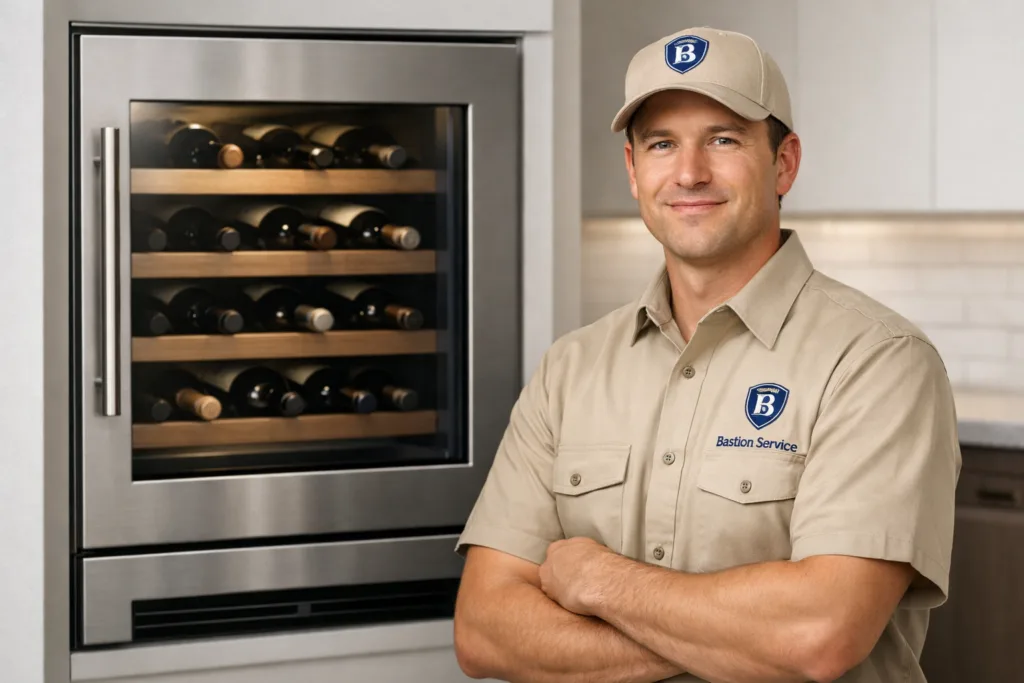
A wine cooler does not have to fail completely to need attention. Subtle shifts such as slower pull-down times, uneven cabinet temperature, fresh condensation, or a fan sound that changes at certain points in the cycle often point to a real fault developing inside the unit. For a household in Westwood, catching those signs early can help prevent spoiled storage conditions and reduce the chance of a larger refrigeration repair later.
Common KitchenAid wine cooler symptoms and what they usually mean
Most service calls follow a pattern. The cooler may still turn on, lights may work, and the display may appear normal, yet the appliance is no longer creating a stable environment. Looking at the symptom combination, rather than one isolated complaint, is usually the fastest way to understand the likely repair path.
Not cooling enough
If the cabinet feels warmer than the set temperature, cools slowly after the door is opened, or never seems to get properly chilled, the cause may involve airflow, sensing, or the cooling system itself. A weak evaporator fan, dirty condenser area, inaccurate sensor reading, failing control, worn gasket, or compressor start problem can all produce similar results at first.
Signs that usually go along with this issue include:
- Bottles no longer feeling consistently chilled
- The display showing one temperature while the interior feels different
- Cooling that improves briefly and then drifts again
- Long run times without reaching the target setting
Temperature swings from day to day
Temperature instability is especially frustrating because the unit may seem normal one day and off the next. In many KitchenAid wine coolers, this can point to a sensor problem, intermittent control issue, weak airflow, or a door that is not sealing evenly all the way around. If the cooler is installed tightly and ventilation is limited, heat buildup around the cabinet can also contribute to unstable performance.
Repeated swings matter even when the appliance eventually cools again, because the unit may be overworking between cycles to recover.
Runs constantly or cycles at odd times
A wine cooler that rarely shuts off is usually trying to overcome heat gain or struggling to remove heat efficiently. That can happen with poor air circulation, dirty condenser components, a leaking door seal, sensor misreadings, or early compressor-related trouble. Short cycling, where the unit starts and stops too frequently, may suggest a start device issue, control problem, or protective shutdown caused by overheating.
When this symptom appears together with warm storage temperatures, service should not be delayed for long.
Buzzing, rattling, clicking, or fan noise
Some sound is expected during normal operation, but a noticeable change usually means something has shifted. Rattling can come from vibration or loose mounting. Buzzing may be related to the compressor or fan motor. Repetitive clicking can point to start component trouble or a control issue. A scraping or uneven fan sound may indicate obstruction, ice interference, or a worn motor.
If noise appears without any change in cooling, the repair may still be fairly contained. If noise appears along with poor temperature control, the problem is more likely to involve a working component under stress.
Condensation, leaking, or interior frost
Moisture issues are common because several different faults can create them. Water under or inside the unit may result from a blocked drain path or condensation that is no longer being managed correctly. Moisture around the door often points to gasket wear, alignment issues, or frequent warm-air entry. Frost buildup can indicate airflow problems, sensor faults, or a door that is not closing as tightly as it should.
These symptoms are worth addressing before they begin affecting cabinetry, flooring, or the cooling system itself.
Why the same symptom can have different causes
Wine coolers are compact refrigeration appliances, so one failing part can affect several areas of performance at once. A homeowner may assume the unit “just isn’t cooling,” but the real issue could be a fan not moving air, a control board misreading conditions, a drain problem creating ice in the wrong place, or a door seal letting in warm air continuously.
That is why symptom-based testing matters. A warm cabinet with no fan noise suggests a different repair than a warm cabinet with heavy vibration and constant running. Water on the floor with otherwise steady cooling is a different situation from leaking that appears together with frost and unstable temperatures.
KitchenAid wine cooler parts that commonly need attention
While every model is different, repairs often involve one of a few systems:
- Temperature controls and sensors: when readings are inaccurate or the unit cools unpredictably
- Evaporator or condenser fans: when airflow is weak, noisy, or inconsistent
- Door gaskets and sealing surfaces: when condensation, constant running, or heat gain develops
- Drain components: when water collects where it should not
- Start components and electrical parts: when the compressor struggles to start or cycles improperly
- Main control components: when operation becomes erratic despite no obvious mechanical blockage
- Compressor or sealed-system components: when cooling performance drops beyond what simpler repairs can explain
Some of these problems are relatively straightforward. Others require a closer cost-versus-condition decision, especially if the unit has had repeated issues.
When homeowners in Westwood should schedule service
It usually makes sense to arrange service when the cooler is no longer maintaining a stable temperature, when new noises begin, when condensation keeps returning, or when the controls seem inconsistent. Waiting can be risky if the appliance is still partially cooling, because partial operation often means a component is still trying to run while failing.
You should be more cautious about continued use if you notice:
- The cabinet temperature rising despite normal power
- The compressor area becoming unusually hot
- A fan sound that suddenly becomes loud, irregular, or intermittent
- Moisture buildup that returns quickly after cleaning
- Frequent clicking or attempts to start without proper cooling
What to check before requesting repair
A few basic observations can help narrow things down before a technician arrives. Make sure the temperature setting was not changed accidentally, the door is closing fully, and stored bottles are not blocking interior airflow. If the exterior ventilation area is dusty, gentle cleaning may help improve performance. It is also useful to note whether the problem is constant or only appears at certain times of day.
However, deeper disassembly or electrical testing is best left to a trained technician. Refrigeration and control issues can look simple from the outside while involving multiple interacting faults.
Repair or replace?
For many KitchenAid wine coolers, repair is still a sensible option when the issue involves a fan, sensor, thermostat, gasket, drain problem, or accessible electrical component and the cabinet is otherwise in good condition. Replacement becomes more likely when the diagnosis points to major sealed-system trouble, compressor failure, or repair costs that no longer make sense for the age and condition of the appliance.
The most useful next step is a practical repair plan based on the actual symptom pattern, not guesswork. For homeowners in Westwood, that approach makes it easier to decide whether the unit can be restored reliably or whether replacement is the better long-term move.