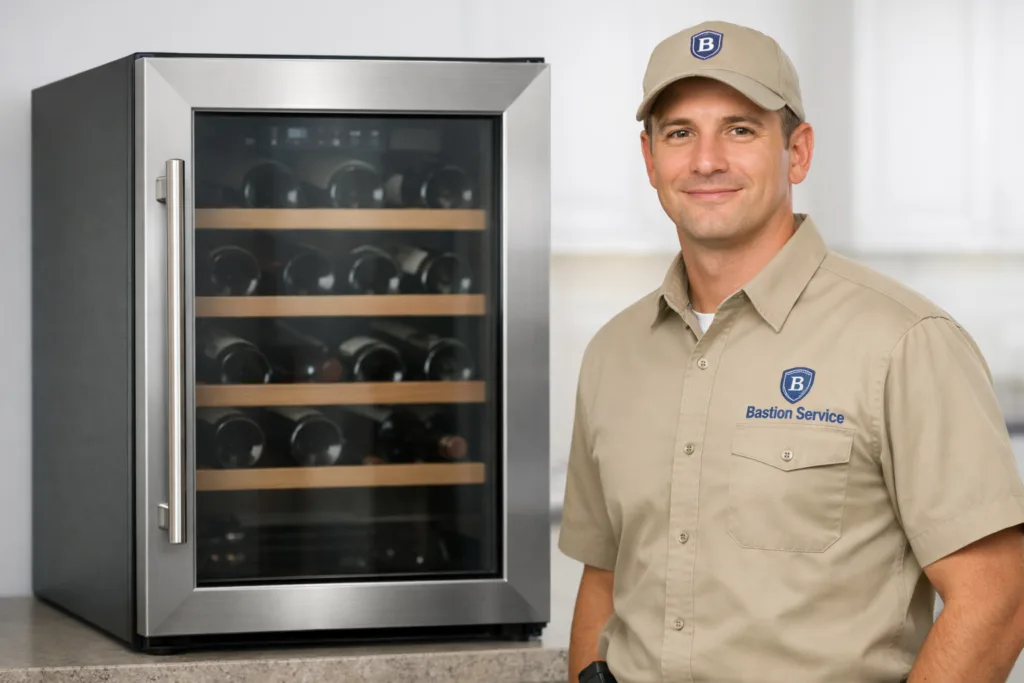
An EdgeStar wine cooler that runs warm, frosts up, leaks, or cycles constantly can put a collection at risk faster than many homeowners expect. Similar symptoms can come from very different failures, so testing the unit before replacing parts is usually the smartest way to avoid wasted time and expense.
Start with the symptom pattern
Wine coolers rely on steady temperature control, proper airflow, an accurate sensor response, and a tight door seal. When one of those systems is off, the unit may still appear to be working while storage conditions drift out of range. Paying attention to how the problem shows up often helps narrow the cause.
For example, a cooler that is slightly warm all day points to different issues than one that cools normally overnight and rises during the afternoon. A unit with frost on one interior panel suggests a different repair path than one with no cooling at all. Looking at the full symptom pattern helps determine whether the issue is likely related to airflow, controls, drainage, the fan system, or a more serious refrigeration failure.
Running warm or not holding temperature
If your EdgeStar wine cooler cannot maintain the set temperature, temperature swings are usually the first clue. Common causes include restricted condenser airflow, a weak or failed evaporator fan, a sensor reading incorrectly, a control problem, or a door that is allowing warm air into the cabinet.
Homeowners may notice that bottles near one shelf stay cooler than bottles in another section. That often points to circulation problems inside the cabinet rather than a complete cooling loss. If the interior is only slightly cool or close to room temperature, the compressor may be running under strain, and delaying service can make the problem worse.
Too cold, freezing, or developing frost
Overcooling is not harmless just because the unit still feels cold. If an EdgeStar wine cooler begins freezing contents, building ice on the back wall, or developing recurring frost, the problem may involve the temperature sensor, control board, door gasket, or defrost-related components.
Ice buildup can block airflow and make the cooler run longer than it should. In some cases, homeowners first notice this as extra fan noise or a door that becomes harder to open because of internal frost. When freezing and poor airflow appear together, the issue usually needs more than a simple setting change.
Condensation, water leaks, or interior moisture
Moisture inside or around the unit is often tied to warm air entering the cabinet or water not draining correctly. You might see droplets on shelves, condensation around the door, or water collecting underneath the cooler.
Typical causes include a partially blocked drain path, a worn or warped gasket, a door that is not closing evenly, or airflow problems that leave humidity trapped inside. In a residential kitchen, bar area, or pantry, recurring leaks can affect nearby flooring and cabinetry, so repeated moisture should not be ignored.
Fan noise, buzzing, clicking, or constant running
A change in sound is one of the most useful warning signs. Rattling may come from loose panels or components. Buzzing can point to a fan motor or compressor-related issue. Clicking may happen when the unit repeatedly tries to start or when a control component is failing.
If the wine cooler seems to run all the time, that does not always mean the compressor itself is bad. It may be working harder because of dirty condenser areas, poor ventilation, a leaking door seal, frost blocking airflow, or a temperature control problem. When noise changes and cooling performance drops at the same time, the repair path usually becomes clearer with proper diagnosis.
What you can check before scheduling service
A few simple observations can help identify whether the issue is likely minor or whether the unit needs professional attention right away:
- Check the displayed temperature and compare it to the actual feel inside the cabinet.
- Listen for fan operation and note whether the sound is steady, intermittent, or unusually loud.
- Inspect the door gasket for gaps, stiffness, tears, or moisture.
- Look for frost on the back wall, around vents, or near the fan area.
- See whether the cooler is pushed too tightly into surrounding cabinetry with limited ventilation space.
- Note whether the problem is constant or happens only at certain times of day.
These details often make it easier to separate a loading or airflow issue from a failing part.
When to stop using the cooler
Some conditions justify shutting the unit down until it can be inspected. If the cabinet is no longer holding a stable temperature, if frost is becoming heavy, if water is leaking repeatedly, or if the cooler is making sharp new noises, continued use can increase internal wear and raise the chance of spoiled contents.
Multiple symptoms at once usually mean the problem is more than cosmetic. Warm temperatures combined with fan noise, or condensation paired with long run times, often indicate a deeper fault that should be addressed before regular use continues.
Repair or replacement depends on the actual failure
Not every malfunction means the appliance should be replaced. Many wine cooler problems involve components such as sensors, fans, door seals, drain issues, or controls that may be more manageable to correct than homeowners expect. On the other hand, a unit with repeated breakdowns, heavy wear, or a major sealed-system issue may not be the best candidate for continued repair.
The most sensible decision usually comes down to the diagnosed fault, the age of the cooler, overall condition, and how consistently it has been performing before the current problem appeared. A straightforward component repair is very different from a major refrigeration-system failure.
Why symptom-based service matters in Westwood homes
In Westwood households, wine coolers are often built into cabinetry or placed in finished living spaces where temperature changes, moisture, and noise become noticeable quickly. That makes symptom-based troubleshooting especially important. A leak can affect surrounding finishes, a failing fan can become disruptive, and temperature instability can go unnoticed until bottles have already been exposed to poor conditions.
When service begins with the actual behavior of the unit instead of assumptions, homeowners get a more useful recommendation about whether the cooler is likely to return to stable operation and whether the repair makes sense for the appliance’s condition.
Common signs the issue is getting worse
Even if the cooler still works part of the time, these warning signs often mean the problem is progressing:
- The unit runs longer each day than it used to.
- Interior temperatures drift further from the set point.
- Noise becomes louder or more frequent.
- Frost returns soon after being removed.
- Condensation keeps appearing after the door and gasket are cleaned.
- The cooler cools unevenly from one section to another.
When one or more of these signs appears, delaying repair can turn a smaller fault into a more expensive one.
For homeowners in Westwood, the best next step is usually to match the repair approach to the exact symptom rather than guess at the cause. That leads to a more practical repair plan, a better understanding of whether the unit is worth fixing, and a stronger chance of restoring stable wine storage conditions.