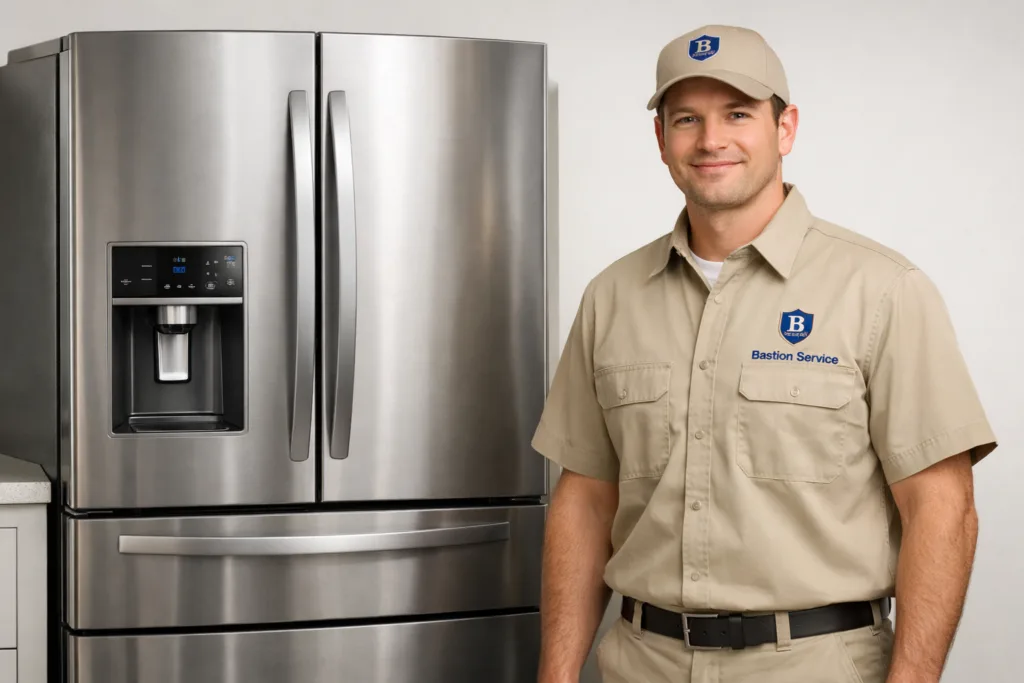
When a refrigerator stops holding temperature, starts leaking, or makes new sounds, the symptom alone does not always identify the failed part. On many Kenmore models, the same complaint can come from airflow restrictions, fan motor problems, frost blocking the evaporator, control faults, door seal wear, or a developing compressor-related issue. Looking at the full pattern of behavior usually leads to the best repair decision.
Common Kenmore refrigerator symptoms and what they may indicate
Refrigerators are built around a few systems working together: cooling, airflow, defrost, drainage, and door sealing. When one system falls out of balance, the effect can show up in several places at once. That is why a refrigerator with one obvious complaint often has a second symptom that helps narrow the cause.
Fresh food section is warm but the freezer still seems cold
This is one of the most common household complaints. If the freezer is still producing some cold air but the refrigerator section is getting too warm, the problem may be related to restricted airflow rather than total cooling loss. Frost buildup behind the rear freezer panel, a weak evaporator fan, blocked interior vents, or a defrost failure can all reduce the cold air reaching the fresh food compartment.
Homeowners may notice milk spoiling early, soft produce, or temperatures that swing through the day. In some cases, food near the vent freezes while items on lower shelves stay too warm, which points to uneven air distribution rather than a simple setting issue.
Refrigerator runs constantly but still does not cool well
A Kenmore refrigerator that seems to run all day without reaching the right temperature may be struggling with dirty condenser coils, poor air circulation, weak fan performance, gasket leaks, or a control problem that keeps the system working harder than it should. Constant running does not always mean the compressor is healthy; sometimes it means the appliance is overcompensating for another fault.
If the cabinet feels warmer than usual, if food quality drops quickly, or if the appliance never seems to cycle off, the issue should be checked before the added strain causes further wear.
Heavy frost or ice buildup
Frost on interior panels, around vents, or near the back wall often suggests warm air intrusion or a defrost system problem. A torn door gasket, a door that does not close fully, or repeated openings can contribute, but thicker hidden frost behind panels is often more significant. When the evaporator area ices over, airflow drops, and the refrigerator section may stop cooling properly even though the sealed cooling system is still operating.
Ice buildup also tends to return if only the visible frost is removed without correcting the cause.
Water leaking onto the floor or pooling inside
Water under the refrigerator or beneath crisper drawers often comes from a blocked or frozen defrost drain. As frost melts during the defrost cycle, water is supposed to move through the drain system and evaporate safely. If that path is clogged, the water can back up into the cabinet or spill onto the floor.
Moisture problems can also be made worse by poor door sealing, frequent humidity entering the compartment, or a leveling issue that affects drainage and door closure. Even a small leak deserves attention because it can damage flooring and create odor problems inside the appliance.
Buzzing, clicking, humming, or rattling sounds
Some refrigerator sounds are normal, especially during cycling or ice maker operation. The concern grows when the sound becomes louder, more frequent, or appears along with poor cooling. Rattling can come from vibration or a loose component. Clicking may point to a start problem. Buzzing or humming that changes in tone can be associated with a fan issue, compressor strain, or ice maker behavior.
If noise begins at the same time as temperature problems, that combination is usually more important than the sound by itself.
Ice maker or water dispenser stops working correctly
Small ice cubes, slow water flow, no ice production, or a dispenser that works intermittently can come from a restricted filter, low fill, a frozen line, a faulty inlet valve, or temperatures that are not staying low enough for normal ice production. In some households, the ice complaint is actually the first sign of a broader cooling issue.
Signs the problem should not be left alone
Some refrigerator issues are worth monitoring for a day or two, but others tend to get worse with continued use. Service becomes more urgent when you notice:
- Food warming up or spoiling faster than expected
- The refrigerator running nearly nonstop
- Repeated frost returning after you clear it
- Water leaking beyond the appliance footprint
- Clicking or buzzing paired with weak cooling
- Doors not sealing tightly or popping back open
For households in Playa Vista, early attention can help prevent food loss and keep a smaller issue from turning into a larger repair.
What to check before scheduling repair
A few simple observations can make the next step easier. Before service, it helps to note:
- Whether the freezer is cold, partly cold, or fully warm
- Whether the refrigerator section is always warm or only intermittent
- Whether frost is visible on interior panels or around vents
- Whether the doors close fully without needing an extra push
- Whether large containers or food packages are blocking airflow vents
- Whether a new noise started before or after the cooling issue
- Whether water appears after defrosting, after dispensing water, or continuously
These details can help separate an airflow problem from a drain issue, control fault, or mechanical failure.
When repair is often worthwhile
Many Kenmore refrigerator problems are reasonable to repair when the cabinet is in good condition and the failure is limited to one system. Fan motors, defrost components, sensors, drain blockages, gaskets, inlet valves, and some ice maker faults are often practical repairs. If the unit has otherwise been reliable, restoring normal cooling can make more sense than replacing the appliance.
Repair may be less attractive when the refrigerator has multiple active problems, recurring cooling failures, or a major sealed-system issue. Age, overall wear, and the estimated cost compared with the condition of the appliance all matter.
How symptom-based service helps
Effective Kenmore Refrigerator Repair in Playa Vista starts by matching the complaint to the way the refrigerator is actually behaving in the home. A freezer-cold and fridge-warm pattern points in a different direction than a fully warm cabinet, and a leak with good cooling suggests something different from a leak with heavy frost. That symptom-based approach helps avoid replacing the wrong part and gives homeowners a better sense of whether the repair path is sensible.
Household habits that can affect refrigerator performance
Not every cooling complaint is caused by a failed component. Overpacked shelves can block vents and reduce circulation. Warm leftovers placed inside in large quantities can temporarily raise temperatures. A refrigerator that is slightly out of level may have door-closing and drainage issues. Door gaskets also collect residue over time, which can prevent a full seal even when the gasket is not torn.
These conditions do not account for every issue, but they can make an existing problem more noticeable. If temperatures remain unstable after basic housekeeping checks, a repair evaluation is usually the more useful next step.
What homeowners in Playa Vista usually want to know
Most people are trying to answer three practical questions: Is the food still safe, is the problem likely to spread, and is the repair worth doing? The answer depends on how the refrigerator is failing, not just on whether it is cooling a little or a lot. Intermittent operation, recurring frost, or water leaks often mean the appliance needs attention even if it appears to recover briefly.
For residential kitchens in Playa Vista, the goal is not simply to get the refrigerator running again for a day or two. It is to identify why cooling, airflow, drainage, or ice production changed and choose the repair path that fits the condition of the appliance.