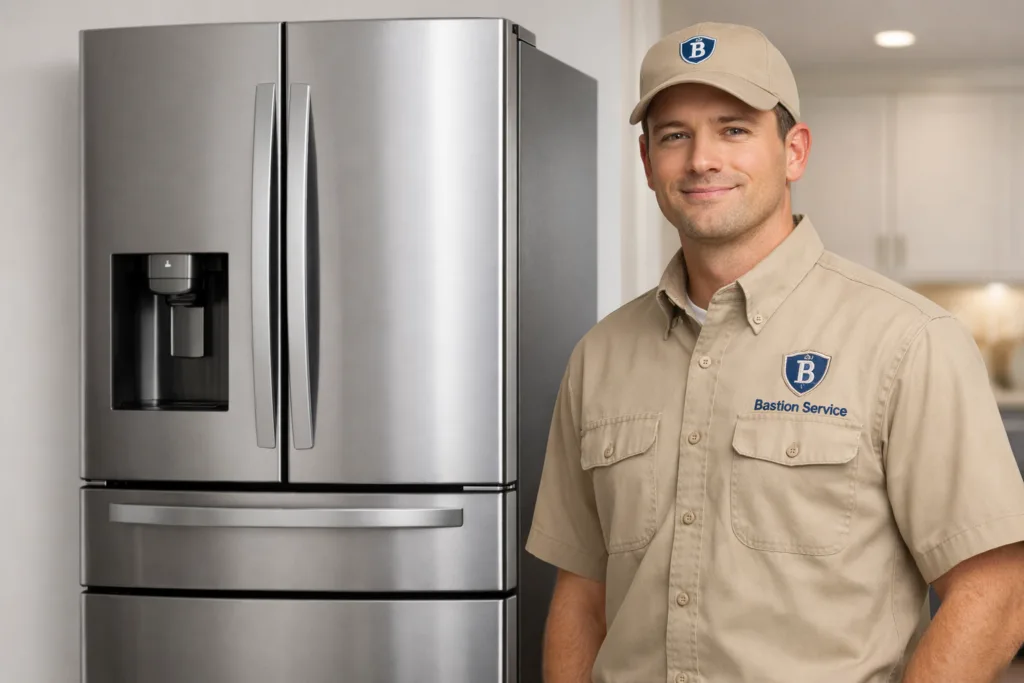
Refrigerator problems rarely stay minor for long. A small temperature swing can turn into spoiled food, heavy frost can block airflow, and a slow leak can damage nearby flooring or cabinets. With LG units, the same symptom can come from several different faults, so the best next step is to match what you are seeing with how the refrigerator is behaving overall.
Common LG refrigerator symptoms and what they may mean
Most households notice a performance change before the refrigerator stops working completely. Paying attention to that pattern helps narrow down whether the problem is likely tied to airflow, defrost, controls, water delivery, or a more serious cooling issue.
Fresh food section is warm but the freezer still seems cold
This is one of the most common complaint patterns. In many cases, the refrigerator section depends on proper airflow from the freezer side, so a unit can appear to be partly cooling while food in the main compartment becomes unsafe.
- Evaporator fan problems that reduce air movement
- Frost buildup behind interior panels
- Damper or airflow restrictions
- Sensor or control issues causing poor temperature regulation
- Door seal leakage that lets warm air enter
If beverages feel cool but not cold, dairy is warming, or the back of the refrigerator is much colder than the front shelves, the problem usually needs more than a thermostat adjustment.
Temperature swings from too warm to too cold
When an LG refrigerator alternates between freezing produce and then struggling to keep items cold, the issue may involve inconsistent airflow, a failing sensor, defrost trouble, or an electronic control problem. This kind of instability is hard on food quality and can be a sign that the refrigerator is not cycling normally.
Watch for signs such as these:
- Vegetables freezing in crisper drawers
- Soft ice cream or partially thawing frozen food
- Condensation inside the cabinet
- The compressor running for unusually long periods
Frost buildup inside the freezer
Heavy frost is not just a cosmetic issue. It can block vents, interfere with fan operation, and reduce cooling in both sections of the refrigerator. On LG models, frost buildup may point to a defrost system fault, door sealing problem, or warm air intrusion from frequent opening combined with an underlying airflow issue.
If frost returns quickly after being cleared, the root cause is usually still active. Repeated icing often leads to louder fan noise and weaker cooling over time.
Water leaking under or inside the refrigerator
Leaks can come from more than one place. Some are tied to defrost drain blockages, while others involve water line connections, filter housing components, or excess condensation. A puddle that keeps reappearing deserves attention because even a small leak can damage surrounding surfaces in a kitchen.
Typical leak patterns include:
- Water pooling under lower drawers
- Puddles forming near the front of the unit
- Moisture around the dispenser area
- Drips that appear after the ice maker cycles
Ice maker not keeping up or dispenser not working
Ice maker complaints are often blamed on the ice maker itself, but the real cause may be poor freezer temperature, a frozen fill tube, water valve trouble, switch failure, or a control issue. If the dispenser stops responding at the same time that cooling performance changes, those symptoms may be connected.
When ice production slows gradually, that often points to a developing cooling or airflow problem. When it stops suddenly, electrical or water-supply faults become more likely.
Buzzing, clicking, rattling, or fan noise
Some refrigerator sounds are normal, but a new or persistent noise usually means something changed. Rattling may come from loose components or vibration. Buzzing can point to a compressor start issue or water valve problem. Scraping or humming from inside the freezer often suggests fan interference from frost buildup.
Noise matters more when it appears with other symptoms such as weak cooling, long run times, or an error display.
Signs the problem is becoming more urgent
Some refrigerator issues can wait a short time for evaluation, but others should be addressed quickly to avoid food loss or additional damage.
- The refrigerator runs constantly and still does not hold temperature
- Food spoils faster than normal
- Error codes appear on the display
- Frost spreads across vents or back panels
- Water keeps leaking after cleanup
- The unit trips a breaker or shuts off unexpectedly
- New noises start along with reduced cooling
In Santa Monica homes, these symptoms usually mean the problem has moved beyond routine maintenance. Continued operation can place more strain on motors, fans, and cooling components if the refrigerator is already struggling.
What you can check before scheduling service
A few basic checks can help rule out simple causes before moving ahead with repair.
- Confirm doors are closing fully and not being blocked by bins or containers
- Look for torn or loose door gaskets
- Make sure temperature settings were not changed accidentally
- Check whether vents inside the refrigerator are blocked by large food items
- Listen for fan noise changes when doors open and close
- Inspect for obvious water pooling, frost buildup, or repeated condensation
If these checks do not explain the issue, or if temperatures remain unsafe, service is usually the better option than repeated resets or trial-and-error part replacement.
Repair or replace?
Many LG refrigerator problems are still worth repairing, especially when the fault is limited to a fan motor, sensor, valve, drain issue, gasket, defrost component, or control-related part. Those issues can often be addressed without replacing the appliance.
Replacement becomes a more serious consideration when the refrigerator has a confirmed major sealed system problem, a history of repeated major repairs, or declining overall condition beyond a single failure. Age alone does not decide it. The more important question is whether the repair is likely to restore stable household use without leading to another major expense soon after.
What homeowners should expect from a service visit
A useful appointment should do more than identify a symptom. It should clarify what component failed, whether related parts have been affected, and whether continued use risks additional damage. That matters with refrigerators because problems involving airflow, frost, or temperature control can overlap and create misleading signs.
For households in Santa Monica, the goal is simple: understand why the LG refrigerator is misbehaving, what repair path makes sense, and whether restoring reliable cooling is practical for the appliance you have now.