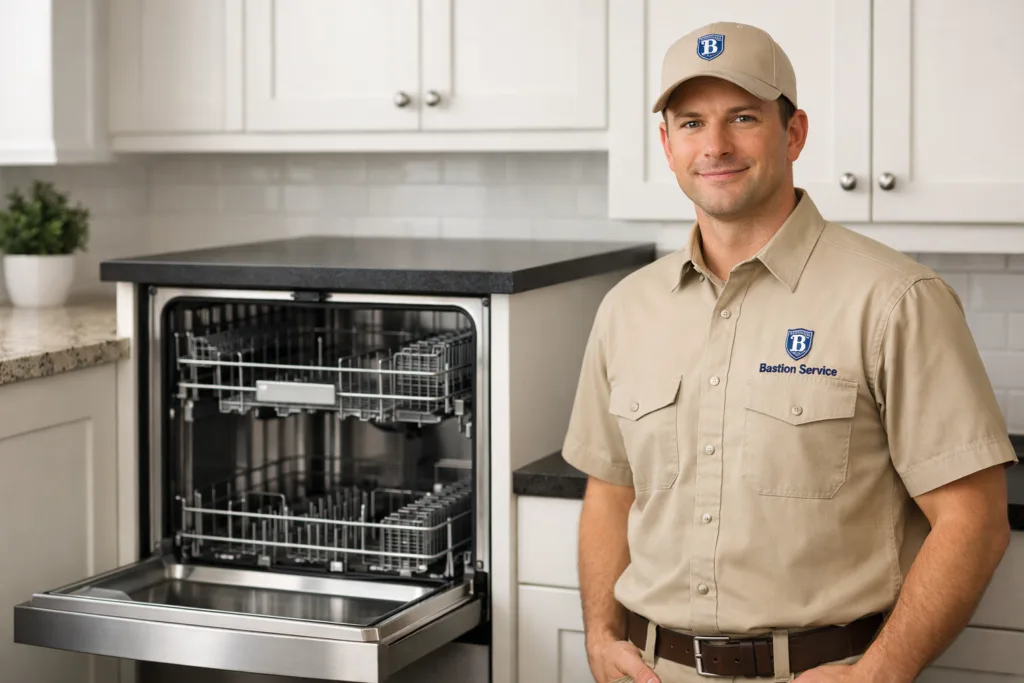
LG dishwasher issues in Westwood often point to a specific system

When an LG dishwasher starts leaving water behind, cleaning poorly, leaking, or stopping mid-cycle, the symptom usually traces back to one of a few core systems: water fill, circulation, heating, drainage, door latching, or electronic controls. The challenge is that different failures can look similar at first. A machine that seems to have a pump problem, for example, may actually be dealing with a blockage, a sensor interruption, or low water entering the tub.
That is why it helps to look at the exact pattern. Does the problem happen on every cycle or only on heavy loads? Does the dishwasher fill normally and then stop? Does it wash but fail at the drain stage? Small details like that can make the repair path much clearer for a household in Westwood trying to decide what to do next.
Common LG dishwasher symptoms and what they can mean
Standing water after the cycle
Water left at the bottom of the tub usually means the dishwasher is not draining fully. Common causes include a clogged filter area, a restricted drain hose, a drain pump issue, or a blockage where the unit connects to the household drain. In some cases, the machine may partially drain and then leave enough water behind to create odor, residue, or repeat performance problems on the next run.
If the dishwasher hums at the drain stage but water stays in place, that can suggest a pump obstruction or pump failure. If draining is slow rather than completely stopped, buildup or a hose restriction is often part of the picture.
Dishes come out dirty, cloudy, or gritty
Poor wash results are not always caused by detergent or loading habits. LG dishwashers depend on proper water fill, strong circulation through the spray arms, and enough heat during the cycle. If one of those functions drops off, dishes may come out with stuck-on food, film on glassware, or detergent residue.
Top-rack cleaning problems can sometimes indicate weak circulation or blocked upper spray delivery. Cloudiness may be related to wash performance, rinse issues, or water temperature that is too low to clean effectively.
Water leaking from the door or underneath
Leaks can come from a worn door gasket, a damaged spray arm that throws water in the wrong direction, overfilling, loose internal connections, or cracks in components that only show up while the dishwasher is running. Some leaks appear only during the wash portion of the cycle, while others happen during drain-out.
Even a small leak is worth attention. Repeated moisture exposure can damage flooring, cabinet edges, and the area beneath the appliance long before the source is easy to see from the front.
The dishwasher will not start
If the control panel lights up but the cycle will not begin, the issue may involve the door latch, switch assembly, user interface, or control system. If the dishwasher is completely unresponsive, power supply issues, wiring faults, or electronic failure may be involved.
Because start problems can overlap, replacing parts based only on the symptom is risky. A latch issue and a control issue can both look like a no-start complaint to the homeowner.
It stops in the middle of a cycle
A cycle that starts normally and then shuts down can point to overheating, sensor problems, intermittent electrical faults, drain interruptions, or control-board issues. Some machines pause because they cannot move to the next stage, while others display an error and cancel the cycle entirely.
If mid-cycle shutdown happens more than once, it is a sign the dishwasher is not just having an isolated glitch. Repeated interruption usually means a repairable fault is developing.
Low rinse temperature or poor drying
If dishes are wet at the end of the cycle or the interior seems cooler than expected, heating performance may be reduced. That can affect more than drying. Lower rinse temperature can also contribute to weaker cleaning results and residue left on dishes.
Heating-related issues may involve the heater, sensors, wiring, or the control system that governs temperature during the cycle.
Grinding, humming, or unusual pump noise
New or louder-than-normal noise often points to debris in the pump area, a stressed motor, spray arm interference, or a drain system problem. A brief sound change may not always mean failure, but persistent grinding, rattling, or straining should not be ignored.
Running the dishwasher repeatedly with an obstructed pump or circulation issue can turn a smaller repair into a more expensive one.
How symptom patterns help narrow the diagnosis
One of the most useful things a homeowner can notice is when the problem happens during the cycle. That timing often separates one type of fault from another.
- Problem at the beginning: often linked to power, latch, fill, or control issues.
- Problem during wash: may involve circulation, spray delivery, heating, or sensor faults.
- Problem during drain: usually points toward a blockage, drain hose issue, or pump trouble.
- Problem near the end: can suggest heating, final drain, or control-stage failure.
This kind of symptom-based explanation is especially helpful when the dishwasher still runs part of the cycle, because partial operation often means one system is working while another is not.
When repair is usually worth scheduling
Repair is generally worth considering when the problem repeats, affects daily use, or creates a risk of water damage. A dishwasher that occasionally leaves one wet cup may not need urgent attention, but one that consistently leaves standing water, leaks, or fails to finish cycles usually does.
It also makes sense to stop using the appliance and arrange service if you notice any of the following:
- Water leaking onto the floor
- Burning smell or signs of overheating
- Repeated shutdowns or flashing errors
- Water sitting in the tub for long periods
- Noise that suddenly becomes much louder than normal
These signs suggest the problem may worsen with continued use.
Repair or replacement: what to consider
Not every LG dishwasher problem means the appliance is at the end of its life. Many faults involve serviceable components such as pumps, valves, seals, latches, sensors, or drain parts. If the dishwasher cabinet is in good shape, the racks are holding up, and the issue appears limited to one main system, repair is often the sensible option.
Replacement becomes a more serious consideration when several major problems show up at once, leak-related damage has spread, or the machine has ongoing performance complaints that go beyond a single failed part. Age matters, but condition matters just as much. A well-kept dishwasher with one isolated failure can be a much better repair candidate than a newer one with multiple developing issues.
What helps before a service visit
If you are preparing for LG dishwasher repair in Westwood, a few observations can make the appointment more productive. Try to note:
- Whether the problem happens on every cycle
- What stage of the cycle the failure occurs
- Whether there is an error code on the display
- If the leak appears at the front, side, or underneath
- Whether the machine makes a new noise during wash or drain
It also helps to leave the dishwasher in the condition where the problem can still be seen when possible, such as standing water left in the tub after a failed drain cycle. That can make troubleshooting faster than starting with a machine that has already been emptied and reset.
Focused help for Westwood households
For homeowners in Westwood, the goal is not just getting the dishwasher to run once again. The better outcome is understanding why the cycle failed, whether the issue is isolated or developing, and what repair path makes sense for the appliance as it sits today. A clear diagnosis and a practical repair plan based on the exact symptom pattern usually leads to the best decision.