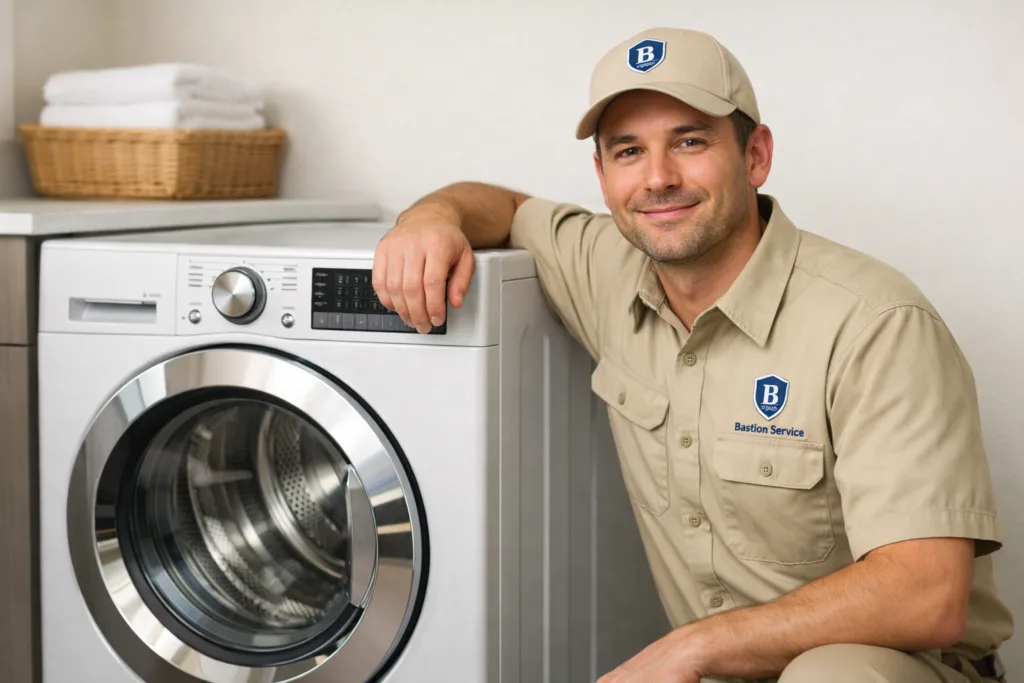
Common LG dryer problems in Del Rey homes

When an LG dryer starts leaving laundry damp, running louder than usual, or refusing to start, the symptom itself is only part of the story. Several different faults can create similar results, which is why it helps to look at the pattern: whether the drum turns, whether heat is present, whether the cycle stops early, and whether the issue happens every time or only on certain settings.
Dryer runs but does not heat
If the drum tumbles but clothing stays cool or wet, the cause may be a failed heating element, thermostat, thermal fuse, igniter on gas models, or a power supply issue on electric units. LG dryers can also appear to have a heating problem when airflow is restricted, because poor venting can prevent the machine from drying properly even when some heat is present.
A useful clue is whether loads come out completely cold or just partially dry. No heat at all often points toward a failed heating component or electrical fault. Warm but still damp loads may suggest weak heat, cycling trouble, or airflow restriction.
Long dry times and repeated cycles
One of the most common complaints is a dryer that eventually dries clothes, but only after two or three cycles. That often indicates restricted airflow, moisture sensor problems, or inconsistent heat. Heavy items such as towels may stay damp in the center while lighter items feel hot and nearly dry, which can happen when air is not moving through the drum the way it should.
Running extra cycles can seem manageable for a while, but it usually signals a condition that should be addressed before it leads to overheating, higher energy use, or added wear on internal parts.
Dryer will not start
If the dryer does not respond at all, the issue may involve the power supply, door switch, thermal fuse, control board, or start switch. If the display lights up but the cycle will not begin, the likely causes are different from a dryer that appears completely dead. That distinction matters because it changes the repair path.
In some cases, the machine may start intermittently or require repeated button presses. Intermittent starting problems can point to a failing switch, latch issue, or control fault rather than a simple one-time interruption.
Dryer stops mid-cycle
An LG dryer that shuts off before the load is done may be overheating, losing power to a key component, or developing a motor or control problem. If it restarts after cooling down, that can be a sign the dryer is protecting itself from excessive heat or internal strain.
When this symptom repeats, continued use is not a great idea. Mid-cycle shutdowns often get worse over time, and they can be related to vent restrictions or parts that are close to failing completely.
Noise, vibration, and burning smells
New sounds usually mean something mechanical is wearing out or has come out of alignment. Squealing can point to rollers or an idler pulley. Thumping may come from a drum support issue or an item caught in the drum area. Scraping or grinding suggests a part may be rubbing where it should not.
A burning smell deserves prompt attention. It can be caused by lint buildup, friction from worn moving parts, overheating, or an electrical problem. If the odor is strong or comes with unusual heat, stop using the dryer until the cause is identified.
Symptom-based clues that help narrow the cause
Homeowners do not need to diagnose the appliance themselves, but a few observations can make the problem easier to pinpoint.
- Drum turns, no heat: often a heating, fuse, thermostat, igniter, or power issue.
- Heat is present, but drying is slow: often airflow restriction, sensor trouble, or weak cycling.
- No response at all: often power supply, fuse, door switch, or control failure.
- Starts, then stops: often overheating, motor stress, or control interruption.
- Loud squeal, thump, or scrape: often rollers, pulley, blower area, or drum support wear.
- Burning odor: often lint accumulation, friction, overheating, or electrical damage.
These patterns are helpful because they reduce guesswork. Replacing parts based only on a general complaint like “not drying” can miss the real cause if the problem is actually airflow-related or tied to a separate electrical issue.
Why diagnosis matters for LG dryer repair
LG dryers are designed with multiple systems that interact with each other, including heat production, moisture sensing, airflow, drum movement, and electronic controls. A single visible symptom can come from several different failures. For example, damp clothes may point to a bad heater, but they can also result from a vent restriction, a cycling problem, or a sensor issue.
That is why diagnosis matters before deciding on a repair. It helps determine whether the problem is isolated to one failed part or whether the dryer is showing broader wear. It also helps avoid spending money on a part that does not solve the original complaint.
When to stop using the dryer
Some symptoms are inconvenient but manageable for a short time, while others are signs to stop running the appliance. It is best to stop using the dryer if you notice:
- a burning smell
- scraping, grinding, or harsh metal-on-metal noise
- unusual overheating on the cabinet or inside the drum
- the dryer shutting off repeatedly during cycles
- strong vibration or movement that was not present before
These signs can lead to more damage if the machine keeps running. A dryer that simply needs longer to dry may still be usable briefly, but one that smells hot or sounds mechanically rough should not be ignored.
Repair versus replacement considerations
For many households in Del Rey, the better choice depends on the age of the dryer, the condition of the rest of the machine, and the cost of the specific failure. A repair often makes sense when the issue is limited to a heating part, sensor, switch, roller set, or another defined component and the dryer has otherwise been reliable.
Replacement becomes more worth considering when the appliance has multiple worn parts, recurring overheating issues, a major motor or control failure, or a history of repeated breakdowns. If a dryer has become unreliable in several different ways at once, investing further may not be the cleanest long-term solution.
Usage matters too. A dryer handling frequent family loads tends to show wear sooner than one used lightly. If performance has steadily declined rather than changing all at once, that can suggest cumulative wear instead of a single isolated fault.
What to note before service
Before scheduling a visit, it helps to make a few simple observations:
- Does the drum turn normally?
- Is there any heat at all?
- Does the problem happen on every cycle or only some settings?
- How long does a normal load take compared with before?
- Are there unusual sounds such as squealing, thumping, buzzing, or rattling?
- Does the dryer stop at a predictable point in the cycle?
- Is there an error code on the display?
Even basic observations like these can make troubleshooting more efficient and help determine whether the issue points toward airflow, heat generation, controls, or mechanical wear.
LG dryer repair for Del Rey households
Laundry problems have a way of disrupting the entire routine of a home, especially when damp loads start piling up or the machine becomes unpredictable. For Del Rey homeowners, the most helpful next step is usually a symptom-based evaluation that identifies what the dryer is actually doing wrong and whether the repair path is straightforward.
When the cause is clearly identified, it becomes much easier to decide whether repair is sensible, whether the unit should be taken out of use for safety, or whether replacement deserves serious consideration. That kind of practical repair guidance helps you move forward without guessing.