




KitchenAid appliances often show a small warning sign before they stop working completely. A refrigerator may start running longer than usual, a dishwasher may leave grit on glasses, or an oven may take noticeably more time to preheat. Paying attention to those changes can help prevent a larger failure and makes it easier to determine whether the issue is related to airflow, drainage, heating, controls, or a worn mechanical part.
Start with the symptom, not the part
Many homeowners first notice a result rather than a cause: food is warming up, water is pooling, a burner will not ignite, or a cycle stops halfway through. With KitchenAid appliances, the same outward symptom can come from several different failures. A warm refrigerator, for example, may involve a fan motor, frost buildup, a door seal problem, a sensor issue, or a compressor-related fault. Replacing parts too early can add cost without solving the real problem.
That is why symptom patterns matter. Whether the appliance is making a new sound, showing inconsistent performance, or failing entirely, the most useful next step is to narrow the problem by how it behaves during normal use.
Cooling issues in KitchenAid refrigerators, freezers, and wine coolers
Cooling products tend to announce trouble in stages. Early signs may include longer run times, uneven temperatures between shelves, frost appearing where it normally does not, or soft frozen food. In other cases, the unit may seem to run constantly but never quite recover its set temperature.
Common causes can include:
- Restricted condenser airflow
- Evaporator fan failure
- Defrost system problems
- Temperature sensor or control issues
- Door gasket air leaks
- Blocked drain lines or internal ice buildup
- Compressor start or sealed-system problems
A freezer that is frosting heavily, a refrigerator compartment that feels warm while the freezer stays cold, or a wine cooler that cannot hold a steady temperature each point in slightly different directions. In West Hollywood homes, these problems are worth addressing quickly because continued operation under strain can lead to food loss and additional wear on the sealed system.
What “running all the time” can mean
If a KitchenAid refrigerator or freezer rarely shuts off, that does not always mean the compressor itself has failed. It may be compensating for warm air entering through a poor seal, an evaporator fan that is not moving cold air correctly, dirty condenser surfaces, or a defrost fault causing airflow blockage behind interior panels. Constant operation is a symptom of lost efficiency as much as a symptom of outright failure.
Ice maker problems that are really cooling problems
When a KitchenAid ice maker stops producing ice, makes hollow cubes, or drops production sharply, the ice maker assembly is only one possibility. Ice production depends on correct freezer temperature, steady water supply, proper fill timing, and working sensors or switches. If the freezer is also struggling to hold temperature, replacing ice maker parts alone may not fix the issue.
Dishwasher symptoms that point to wash, drain, or leak problems
KitchenAid dishwashers commonly develop symptoms in one of three areas: cleaning performance, draining, or water control. Dishes coming out cloudy or dirty can indicate poor wash circulation, clogged spray arms, a failing pump, or heating problems that prevent detergent from dissolving properly. Standing water at the end of the cycle often points toward a drain restriction, drain pump trouble, or a control issue that interrupts the cycle before completion.
Leaks deserve faster attention. Water under the front edge of the dishwasher may come from a door seal, misalignment, over-sudsing, or overfilling. Water appearing underneath can be related to hoses, sump components, or internal seals. Even a slow leak can affect flooring and surrounding cabinetry if it continues unnoticed.
Signs a dishwasher problem is getting worse
- Grinding or harsh buzzing during wash or drain
- Cycles that run much longer than normal
- Detergent left in the dispenser
- Repeated stopping mid-cycle
- Water returning after the tub has drained
- Moisture or drips appearing below the door
These patterns usually suggest more than routine cleaning is needed. If the unit is leaking or failing to drain, it is better to stop repeated test runs until the cause is identified.
Cooktop, range, oven, and wall oven problems
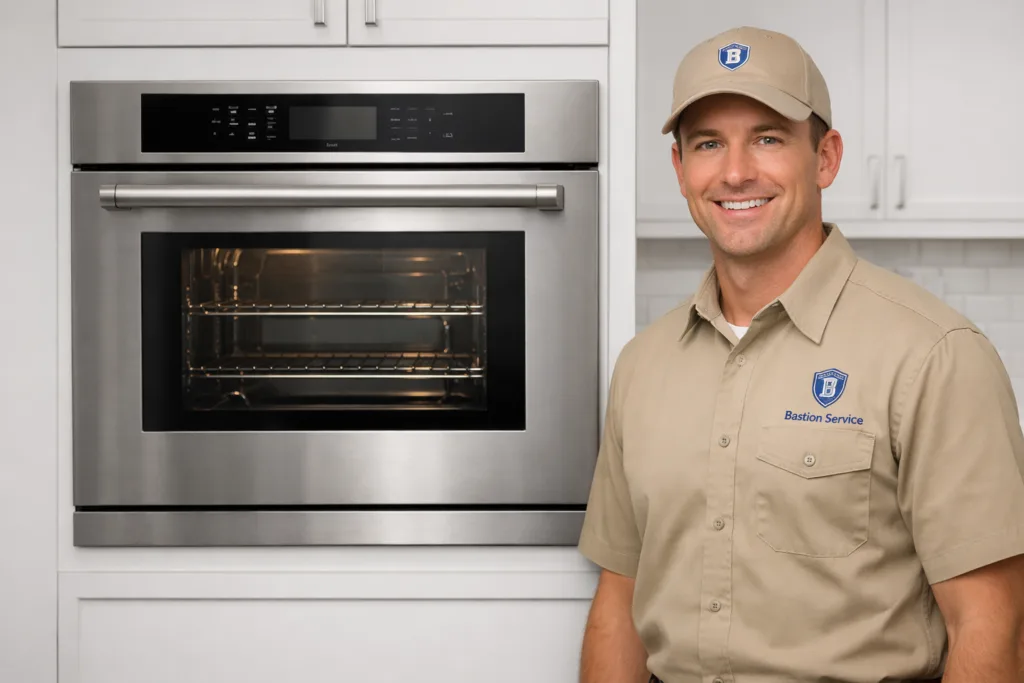
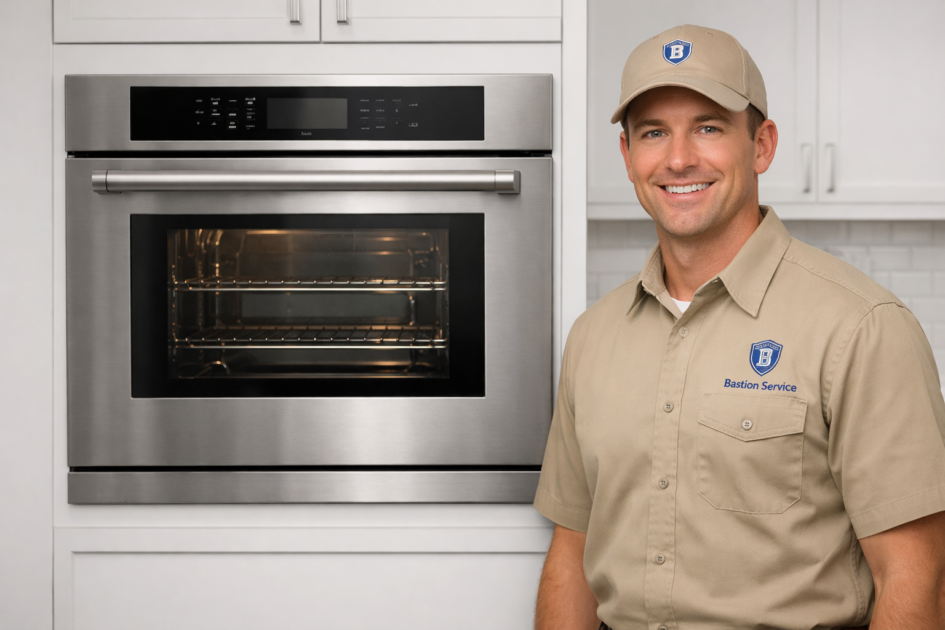
KitchenAid cooking appliances can develop faults in ignition systems, heating elements, sensors, relays, switches, or electronic controls. The way the failure appears can tell you a lot. A burner that clicks repeatedly but does not light often points to ignition-related trouble. An electric element that stays weak or completely cold may involve the element itself, wiring, or a control issue. An oven that reaches temperature slowly or bakes unevenly may have a sensor, igniter, element, or calibration problem.
Uneven baking and slow preheat
Homeowners often notice cooking issues before they notice a complete failure. Food browning too quickly on one side, inconsistent roasting results, or a preheat cycle that takes much longer than it used to can all indicate that the appliance is heating, but not correctly. On KitchenAid ovens and wall ovens, that can involve a weakening bake element, an igniter no longer drawing proper current, a sensor reading inaccurately, or a control board failing to regulate heat as intended.
When ignition issues should not be ignored
If a gas cooktop or range is clicking without ignition, lighting inconsistently, or producing delayed flame, the issue should be checked before regular use continues. Moisture, misaligned burner caps, and dirty ignition points can sometimes contribute, but persistent ignition trouble may involve switches, spark modules, igniters, or gas flow components. If there is a strong or ongoing gas smell, stop using the appliance and address that safety concern immediately before arranging repair.
Electrical and control symptoms across KitchenAid appliances
Not every appliance failure is mechanical. Some problems are tied to controls, user interfaces, wiring, or intermittent electrical faults. This can show up as flashing error codes, buttons that respond only sometimes, cycles that cancel unexpectedly, or an appliance that works for a while and then shuts down.
Repeated breaker trips are especially important. A breaker that trips more than once during normal appliance use can suggest a shorted component, motor problem, damaged wiring, or a heating element fault. That is not a symptom to ignore or repeatedly reset without understanding the cause.
Helpful ways to describe the problem before service
When homeowners in West Hollywood can describe what the appliance is doing in specific terms, diagnosis tends to move faster. A few details are especially useful:
- Whether the issue is constant or intermittent
- Any recent noises such as grinding, buzzing, clicking, or rattling
- Whether the appliance still powers on
- If the symptom began suddenly or got worse over time
- Any visible leaks, frost buildup, error displays, or burning smells
- Whether performance changes during certain parts of the cycle
For example, “the freezer is cold but the refrigerator section is warm” is more useful than “the fridge is not working.” The same goes for “the dishwasher fills and washes but does not drain” or “the oven reaches temperature, then drops heat.” Specific symptom descriptions help separate likely causes from less likely ones.
When continued use can make the repair worse
Some appliance issues allow a little planning time, but others can become more expensive if they continue unchecked. Cooling products with rising temperatures can lead to spoilage and heavier compressor load. Dishwashers with even a modest leak can damage nearby materials over time. Ovens, cooktops, and ranges with unstable ignition or heating problems can become unreliable for everyday cooking and may raise safety concerns.
It is usually best to stop using the appliance and schedule service if you notice:
- Active leaking
- Burning smells
- Visible sparking
- Repeated breaker trips
- Major cooling loss
- Ignition failures or unstable flame behavior
Repair or replace: what usually guides the decision
Most KitchenAid appliance decisions come down to condition, failure type, and whether the problem is isolated or part of a pattern. Repair tends to make sense when the appliance is structurally sound and the fault is limited to one system or component. Replacement becomes more likely when there is severe internal damage, repeated breakdown history, or multiple unrelated issues appearing at the same time.
That evaluation is especially important with refrigerators, freezers, wine coolers, and cooking appliances because symptoms can overlap while repair value varies significantly depending on the root cause. A single failed fan motor and a sealed-system problem may both look like “not cooling,” but they are very different repair situations.
KitchenAid appliances commonly seen in West Hollywood homes
Households in West Hollywood often rely on KitchenAid refrigerators, dishwashers, cooktops, ovens, ranges, wall ovens, freezers, ice makers, and wine coolers as part of everyday kitchen use. While each category has its own failure patterns, the most effective repair path is usually the same: identify what system is failing, determine whether the issue is isolated or progressive, and decide on the sensible next step based on the appliance’s overall condition.
When a KitchenAid appliance is no longer cooling, cleaning, heating, draining, or responding as it should, symptom-based diagnosis gives homeowners a better way to judge urgency and choose the right repair direction.


