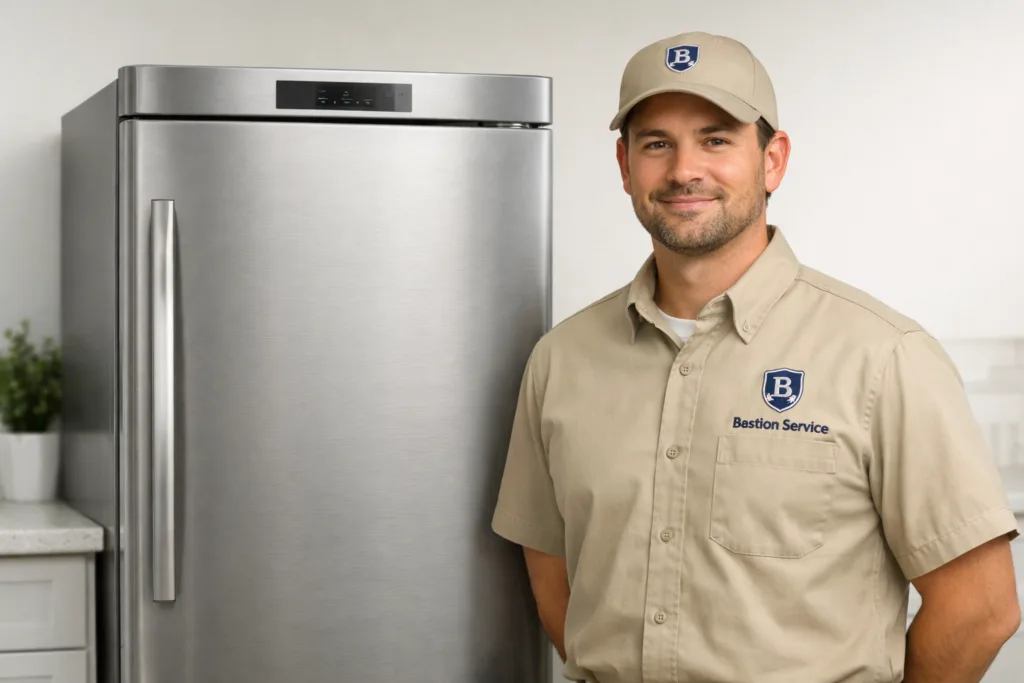
Freezer problems often start as small changes: ice cream softens, frost appears along the back panel, or the unit seems louder than usual. On a Kenmore freezer, those signs can come from airflow trouble, a defrost failure, a bad seal, a sensor issue, or a harder-starting compressor. The symptoms may look similar from the outside, but the repair path is not the same.
Common Kenmore freezer symptoms and what they usually mean
Not freezing hard enough
If food is no longer staying fully frozen, the cause may be as simple as poor air circulation or as serious as a cooling system problem. Typical possibilities include a failing evaporator fan, blocked interior vents, dirty condenser components, a thermostat or sensor fault, or a door that is not sealing tightly. In many homes, this complaint appears gradually before the freezer stops cooling well enough to protect food.
Frost buildup on shelves, walls, or around the door
Heavy frost usually points to moisture getting into the cabinet or a defrost system that is no longer clearing normal ice from the evaporator area. A worn gasket, a door that shifts out of alignment, a failed defrost heater, or a control problem can all create this pattern. If frost keeps coming back after being removed, the underlying cause is still active.
Temperature swings
When one day the freezer seems fine and the next day items are soft, the issue may involve an intermittent control, a weak fan motor, or a component that fails after it warms up. Temperature swings are especially important to address quickly because food can partially thaw and refreeze without the change being obvious right away.
Water leaks or moisture around the unit
Leaks can come from melting frost, a clogged defrost drain, excess condensation, or a sealing issue that allows humid air inside. In upright models, moisture problems may show up as water under drawers or near the bottom of the cabinet. In chest freezers, the signs are sometimes more subtle, such as recurring dampness or ice that forms in unusual places.
Buzzing, clicking, scraping, or fan noise
Some operating noise is normal, but new sounds usually deserve attention. Repeated clicking may suggest a start problem. Buzzing can point to a struggling compressor or an electrical component under strain. Scraping often happens when frost interferes with a fan blade. A noisy freezer that is also warming up is usually moving toward a larger failure.
Why symptom patterns matter on a Kenmore freezer
The most useful diagnosis comes from looking at the full pattern rather than one symptom by itself. For example, a warm freezer with interior lights working does not automatically mean the compressor has failed. It could also mean the evaporator fan is not moving cold air, the defrost system has iced over the airflow path, or the control is not sending the right signals.
- Warm interior with normal power: often related to fan, start, control, or sealed-system issues.
- Back wall covered in frost: commonly tied to a defrost problem or air leak.
- Only part of the freezer stays cold: usually suggests restricted airflow or uneven circulation.
- Runs almost constantly: may indicate poor sealing, dirty coils, sensor trouble, or a cooling system struggling to keep up.
- Leaking plus frost: often means moisture entry and drainage need to be checked together.
That is why replacing a part based on a guess can waste time and money. Two freezers with the same visible frost can need completely different repairs.
Issues that homeowners in Playa Vista should not ignore
If your Kenmore freezer is partially thawing food, developing thick frost within days, or making repeated clicking sounds, waiting usually makes the situation worse. Food loss becomes more likely, and parts that are already under strain may fail fully. A fan motor that is dragging, for example, can stop altogether. A start device that is struggling can increase stress on the compressor.
Moisture problems should also be taken seriously. Water around the freezer is not just inconvenient; it can signal recurring thawing, blocked drainage, or a door seal problem that keeps pulling humid air into the cabinet. In a household kitchen, garage, or utility area, that can create both performance and cleanup issues.
What can cause a Kenmore freezer to run nonstop
A freezer that rarely cycles off is often trying to compensate for another fault. Common causes include warm air leaks at the door, condenser surfaces that cannot release heat properly, a thermostat or sensor reading incorrectly, or frost buildup that is restricting internal airflow. In some cases, nonstop running is the early warning sign of a sealed-system problem.
Long run times do not always mean the freezer is working better. In fact, the appliance may be consuming more energy while still failing to maintain a stable temperature. If the cabinet feels warmer than normal and the motor sound seems almost constant, service is usually warranted.
When frost is a repair issue rather than a maintenance issue
A light layer of frost can happen from normal use, especially if the door is opened often. But thick frost on interior panels, ice collecting near vents, or recurring frost after manual removal is usually not a simple housekeeping matter. On a Kenmore freezer, that pattern often means the automatic defrost system is not doing its job or outside air is entering more than it should.
Trying to chip away ice or turning the control colder may temporarily change the symptoms, but it does not correct the failed component. In some cases, forcing settings colder can make airflow problems and frosting even more noticeable.
Repair or replace?
Many Kenmore freezer problems are repairable, especially when they involve parts such as fans, gaskets, defrost heaters, sensors, controls, or drain components. Replacement is more likely to enter the conversation when the appliance has multiple ongoing problems, is older and wearing in several areas at once, or needs major sealed-system work.
For homeowners in Playa Vista, the smartest decision usually comes down to four factors:
- the exact failed system
- the age and overall condition of the freezer
- whether food loss or repeat breakdowns have already occurred
- the cost of repair compared with the expected remaining life of the appliance
A good service call should make that decision easier by narrowing down the real cause instead of treating every cooling complaint as the same problem.
What to do before service arrives
There are a few helpful observations you can make before a technician inspects the unit. Check whether the freezer has power, whether the lights or display are working, and whether the door is closing evenly. Listen for repeated clicking or fan noise. Look for frost patterns on the back wall, around vents, or near the door opening. If food is softening, move anything valuable to another cold storage option as soon as possible.
It also helps to avoid repeated adjustments to the controls. Constantly changing settings can make the symptom pattern less clear and may not improve performance if the real issue is mechanical or electrical.
What a well-handled service visit should accomplish
For Kenmore freezer repair in Playa Vista, the visit should identify which system is actually failing, verify how the freezer is cooling, inspect airflow and frost patterns, check door sealing, and determine whether the problem is electrical, mechanical, or related to the cooling circuit. From there, the next step should be straightforward: repair the failed component when it makes sense, or advise replacement if the freezer is no longer a practical candidate for repair.
That approach gives homeowners a realistic answer, protects food when possible, and avoids spending money on the wrong part or the wrong repair.