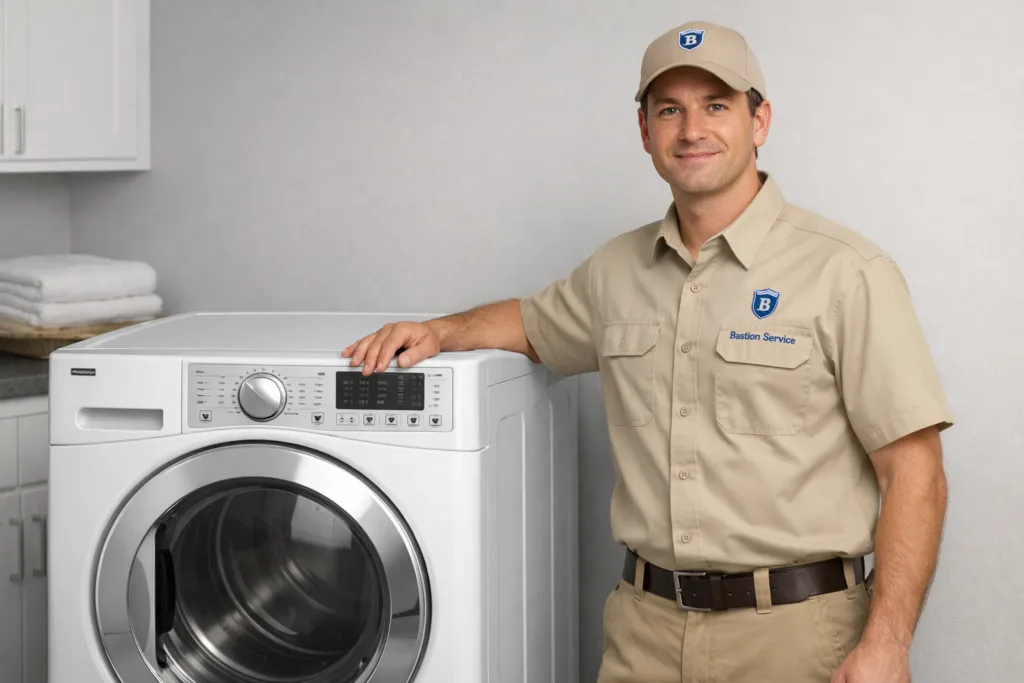
Dryer problems tend to show up in everyday ways first: towels still damp after a full cycle, a drum that turns with no real heat, a sudden squeal, or a machine that simply will not start. With Kenmore dryers, those symptoms can come from airflow restrictions, failed heating parts, worn support components, switch problems, or electrical faults, so the most useful next step is to match the repair path to the exact behavior of the machine.
Common Kenmore dryer symptoms and what they often point to
Dryer runs but clothes stay wet
If the drum is turning but the load is still damp, the dryer may have a heating problem, limited airflow, or a sensor issue. On electric models, a dryer can sometimes run with only part of the required power, which leaves the motor working but the heat weak or absent. On gas models, ignition-related parts can fail in a way that prevents proper heating even though the rest of the appliance seems normal.
Restricted venting is another common cause. When hot, moist air cannot leave the system efficiently, drying times increase and heat performance can seem inconsistent. This is why “runs but does not dry” should not automatically be treated as a single-part failure.
Dryer takes too long to finish a load
Long dry times usually mean the dryer is producing some heat but not operating at full efficiency. Lint buildup, crushed or blocked venting, weak heating output, moisture sensor problems, and oversized loads can all create the same complaint. In homes where laundry volume is high, this often starts gradually, with one extra cycle here and there before becoming a regular issue.
If drying time has changed noticeably, it is worth checking sooner rather than later. Poor airflow can strain heating components and safety devices, which may turn a performance issue into a shutdown problem later.
Dryer will not start at all
When pressing start does nothing, the problem may involve the door switch, thermal fuse, start switch, belt switch on some models, main control, or motor. In some cases, the dryer has power at the outlet and the console appears normal, but one failed safety component prevents the machine from beginning a cycle.
An intermittent no-start condition can be especially telling. A dryer that starts sometimes and not others may be dealing with a switch issue, a failing motor, or a control fault that is becoming less reliable over time.
Dryer makes squealing, thumping, scraping, or rumbling noises
Unusual sound is often a wear-and-tear issue. Drum rollers, idler pulleys, belts, glides, blower wheels, and motor bearings are all common sources of noise in Kenmore dryers. The type of sound matters:
- Squealing often points to a belt, pulley, or support part beginning to seize.
- Thumping can mean a worn roller or an item caught in the drum path.
- Scraping may indicate glides or supports wearing down far enough for metal contact.
- Rumbling can suggest roller wear or motor-related movement.
Ignoring noise is rarely a good bet. A part that begins as a simple wear item can damage adjacent components if it continues to run under stress.
Dryer stops in the middle of a cycle
A dryer that shuts off before the load is done may be overheating, tripping a safety component, struggling with airflow, or developing a motor problem. If it restarts only after cooling down, that pattern often points to heat buildup or motor stress. If it stops randomly with no clear pattern, the issue may be deeper in the control or power path.
Why the same symptom can have different causes
Dryers are a good example of why symptom-based diagnosis matters. “No heat” can be caused by a failed heating element, a blown thermal fuse, poor airflow, a gas ignition problem, or an electrical supply issue. “Not starting” can mean a simple switch failure or something more involved, such as a motor or control problem.
That difference matters because the right repair depends on what failed first and whether anything else was affected. Replacing parts based only on guesswork can add cost without fixing the actual problem. A proper inspection helps determine whether the issue is isolated, whether there is secondary wear, and whether the machine is still a sensible candidate for repair.
Signs the dryer should not keep running
Some symptoms should be treated as a stop-using-it situation rather than a wait-and-see inconvenience. It is smart to stop using the dryer if you notice:
- a burning smell
- the cabinet becoming unusually hot
- metal-on-metal noise
- the dryer shutting off repeatedly mid-cycle
- clothes coming out excessively hot
- visible sparking or flickering at the controls
Even if the dryer still turns on, these signs can indicate overheating, severe airflow restriction, failing moving parts, or electrical trouble. Continued use may worsen the damage and can create unnecessary safety risk in the home.
What usually makes a Kenmore dryer repair worthwhile
Many Kenmore dryer problems are still practical to repair when the failure is limited to one system and the overall machine is in decent condition. A dryer with a solid drum, stable cabinet, and no history of repeated breakdowns is often worth fixing if the issue involves normal wear parts or a single heating-related fault.
Replacement becomes a more serious consideration when several problems appear at once, when the machine has ongoing control issues, or when major internal wear shows up across multiple components. Age alone does not decide the answer. The better question is whether the current problem is isolated and whether the repair is likely to restore reliable drying rather than buy only a short period of improvement.
How homeowners in Playa Vista can judge the symptom before service
You do not need to disassemble the dryer to notice useful patterns. A few observations can help narrow down what is happening:
- If the drum turns but there is no heat at all, the issue is likely in the heating or safety circuit.
- If the dryer gets warm but takes far too long, airflow and partial heat loss move higher on the list.
- If noise gets worse with every load, support parts may be wearing quickly.
- If the dryer only stops after running for several minutes, overheating or motor stress becomes more likely.
- If the console lights up but the machine will not begin, a switch or start-related fault may be involved.
These patterns do not replace testing, but they do help explain why one symptom does not always equal one part.
What to expect from a service decision
For most households in Playa Vista, the real question is not just “Can this be repaired?” but “Will this repair make sense for the condition of the dryer?” A useful service recommendation should explain what failed, whether the issue appears isolated, whether any related wear is already visible, and what kind of reliability to expect after the repair.
That gives homeowners a better basis for deciding whether to move forward now, monitor a smaller issue for a short period, or put the cost toward replacement if the machine is showing broader decline. When the symptom pattern is clear and the fault is confirmed, the decision becomes much easier and far less frustrating.