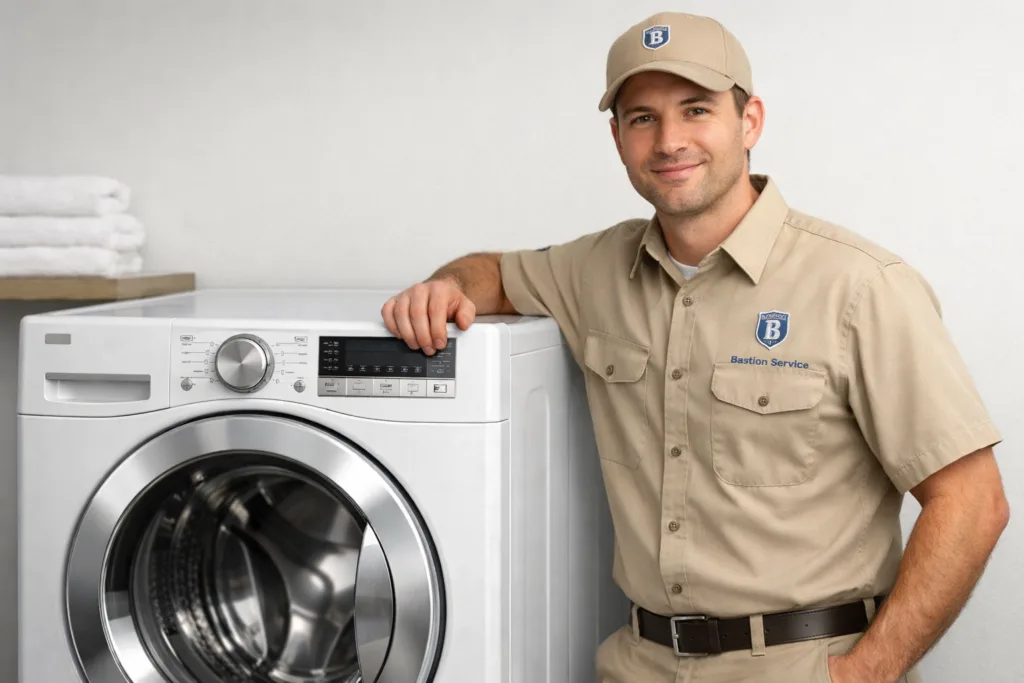
Washer problems are easiest to solve when the symptoms are matched to the stage of the cycle where they happen. A Kenmore washer that fills normally but never begins agitation points to a different repair path than one that washes, then stalls before drain and spin. Watching when the failure starts can help narrow the issue quickly and avoid replacing parts based on guesswork.
How common Kenmore washer symptoms point to different problems
Many service calls begin with a simple complaint like “it won’t finish” or “my clothes are still wet,” but those symptoms can come from several different systems. A washer that will not start may involve power supply issues, a failed lid switch, a bad door lock, or an electronic control problem. A machine that starts but cannot build into a full spin may be dealing with load sensing trouble, a worn drive component, or a drain problem that prevents the cycle from advancing.
Leaks, noise, poor wash performance, and cycle interruptions also need to be tied to timing. Water on the floor at the beginning of the cycle often suggests supply hoses, inlet connections, or overfill conditions. Water that appears later may be related to draining, a tub seal issue, or a damaged door boot on front-load models. That timing matters because the same puddle can come from very different failures.
Not draining or leaving clothes soaked
If your Kenmore washer finishes with standing water in the tub, the problem may be in the drain pump, drain hose, filter area, or a blockage somewhere in the drain path. In some cases, the washer is capable of draining but cannot move into spin because the lid switch, door lock, or control sequence is failing. When that happens, clothing may come out much wetter than normal even though the machine appears to complete part of the cycle.
Homeowners often notice this issue first as a longer-than-usual laundry day. Loads need to be re-run, clothes stay heavy, and moisture remains inside the washer longer than it should. Leaving that condition unresolved can lead to odor, residue buildup, and extra wear on the machine.
Not filling, filling slowly, or overfilling
A washer that does not take in water properly may have a restricted supply line, a failing inlet valve, pressure-sensing trouble, or a control issue. If only one temperature setting is affected, that can help isolate whether the fault involves one side of the water inlet system. If the unit keeps filling too long or the water level is clearly wrong, service should not be delayed because overflow risk rises quickly.
Slow filling can also change wash quality. Detergent may not dissolve correctly, cycles may pause or error out, and clothing can come out with soap residue if the machine never receives the water volume it expects.
Stops mid-cycle or will not advance
When a Kenmore washer pauses and never resumes, the cause is often more specific than it first appears. Some units stop because the door lock is not confirming safely closed status. Others stall because the control cannot verify draining, spinning, or water level changes. If the machine shuts off at roughly the same point every time, that pattern is useful because it helps identify which system is failing during that stage.
Intermittent stopping is worth attention too. A washer that works one day and fails the next may have a developing electrical fault, a loose connection, or a component that works only until it heats up under normal use.
Noise and movement should not be ignored
Not every loud washer has a major internal failure, but repeated banging, grinding, squealing, or scraping deserves inspection. A simple balance problem can make a machine shake, yet persistent noise during spin may also indicate suspension wear, pulley damage, tub support problems, or bearing-related wear. The longer a washer runs under that stress, the greater the chance of collateral damage.
If the machine has started moving across the floor, stopping use is usually the safer choice until the cause is identified. Excessive vibration can strain hoses, damage flooring around the appliance, and increase wear on the drive system.
What different sounds can mean
- Grinding during spin: possible bearing, pulley, or drive system wear
- Banging or thumping: unbalanced loads, worn suspension parts, or tub support issues
- Squealing: belt, motor, or pulley-related wear depending on model
- Clicking without starting: lid switch, door lock, or control-related interruption
Leaks and moisture problems around the washer
Any leak should be taken seriously because washer leaks rarely stay small. A loose hose connection may be straightforward, but repeated moisture around the machine can also point to a cracked hose, overfill condition, drain backup, pump leak, or a worn door seal. The location of the water is helpful: puddles near the back often suggest supply or drain connections, while water near the front can indicate a boot, door, or overflow problem.
Even small leaks matter in a laundry area because they can affect flooring, nearby walls, and the washer’s own base components. If you notice water only during large loads or only on certain settings, mention that during service, since those details help narrow down the cause faster.
Poor wash results are often repair-related, not just detergent-related
If clothing comes out dingy, soapy, or still dirty, the issue is not always load size or detergent choice. A Kenmore washer that is underfilling, failing to agitate correctly, not heating when the cycle calls for warm or hot water, or cutting cycles short can all produce disappointing wash results. In some models, a sensor or control fault can throw off the whole sequence without making the machine look obviously broken.
This matters because homeowners sometimes keep adjusting soap, cycle settings, or load habits when the underlying issue is mechanical or electrical. If wash quality has changed suddenly rather than gradually, a repair issue is more likely.
When to stop using the washer
Some symptoms allow a little scheduling flexibility, while others call for immediate attention. It is best to stop using the washer if you notice any of the following:
- Water leaking onto the floor
- Burning smells
- Repeated tripping of a breaker
- Loud grinding during spin
- Standing water left in the tub
- A drum that will not turn properly
These issues can move beyond a single failed part and create more expensive damage if the washer continues running. In a household that depends on frequent laundry, getting the problem evaluated early is usually the less disruptive option.
Repair or replacement depends on the failure, not just the age
Age matters, but it should not be the only factor in deciding what to do next. Many Kenmore washer problems are still practical to repair when the fault is limited to a pump, valve, switch, lock assembly, hose, or a defined drive-related component. Replacement becomes more likely when the machine has major structural wear, repeated expensive failures, or multiple unrelated systems failing at the same time.
For homeowners in Pico-Robertson, the most useful approach is to weigh the symptom, the condition of the washer overall, and the expected repair path. A newer machine with one contained failure is a very different situation from a washer that has ongoing leak, noise, and control issues all at once.
What to have ready before service
A few details can make diagnosis more efficient. Try to note:
- Whether the washer fills, washes, drains, and spins at all
- What point in the cycle the problem begins
- Any error codes or flashing lights
- Whether the issue happens on every load or only sometimes
- If noise, leaking, or vibration is getting worse
That information helps connect the symptom to the likely system involved and supports a more practical repair decision.
Kenmore washer repair focused on household laundry needs in Pico-Robertson
When a washer is tied to daily routines, the goal is not just to identify that something is wrong, but to understand why the failure is happening and whether the repair makes sense for the machine you have. Whether the issue is draining, filling, leaking, heating, cycle control, or spin performance, symptom-based inspection is the best starting point for restoring normal laundry use in Pico-Robertson.