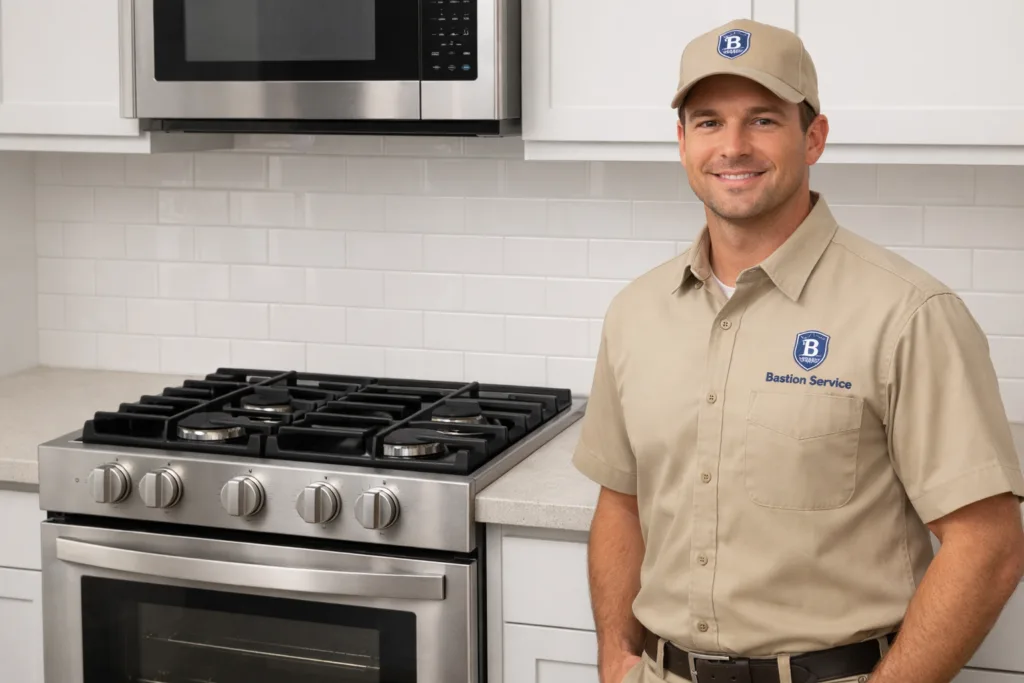
Cooktop failures rarely stay limited to convenience. A burner that runs too hot, an igniter that keeps clicking, or a surface element that will not turn on can disrupt everyday cooking and sometimes create a safety concern. The most useful approach is to match the repair plan to the exact symptom rather than assume every no-heat or ignition issue has the same cause.
How Kenmore cooktop problems usually show up
Most Kenmore cooktop issues fall into a few recognizable patterns. Some affect only one burner, which often points to a localized part failure. Others affect several burners or the full unit, which can suggest a shared electrical supply problem, a control issue, or a fault in the ignition system. Noticing when the problem happens matters just as much as the symptom itself.
If the trouble started after a spill, a deep cleaning, a breaker trip, or visible impact to the cooking surface, that context can narrow the likely cause. If the problem developed gradually over time, wear in switches, burner components, or ignition parts becomes more likely.
One burner will not heat or light
When a single electric burner stays cold, the problem may involve the element, the receptacle connection, the control switch, or wiring serving that burner. On gas models, one burner failing to light can come from clogged burner ports, a misaligned cap, moisture around the igniter, or a failing spark component. If the other burners work normally, the repair often centers on that burner’s own parts rather than the entire cooktop.
All burners are affected
If multiple burners stop working, act weak, or become unreliable at the same time, the issue may go beyond a single burner assembly. Electric units may have a supply or control problem. Gas units may have ignition issues that affect more than one burner. This kind of symptom pattern usually deserves prompt inspection because it can indicate a shared fault rather than normal wear on one part.
Heat is uneven or hard to control
Uneven heating is more than an annoyance when pans no longer cook predictably. On electric cooktops, weak or inconsistent heat can point to a failing element or switch that is no longer cycling properly. On gas models, restricted flame ports, burner seating problems, or poor flame distribution can cause one side of the pan to heat faster than the other. If a burner suddenly runs hotter than the selected setting, the control side of the system should be checked before continued use.
Clicking, delayed ignition, or sparking
Constant clicking on a gas cooktop often means the ignition system is struggling to complete the lighting cycle. Food debris, moisture, worn spark parts, or misalignment can all contribute. Delayed ignition should not be ignored, especially if it is getting worse. If there is a persistent gas smell, stop using the appliance until the problem has been properly evaluated.
Knobs or controls are not responding normally
A control that turns loosely, only works on one level, or causes a burner to stay high can make the cooktop difficult to use safely. These symptoms often point to worn switches or damaged control components. In some cases, the burner itself is fine but the control is no longer regulating it correctly.
Cracked glass or visible surface damage
On smooth-top Kenmore cooktops, cracks and impact damage should be taken seriously. Even if the unit still powers on, the surface may no longer be safe to use. Heat stress can worsen the damage, and replacement options may depend on the exact model and the extent of the crack or lifting in the top surface.
Symptoms that mean you should stop using the cooktop
Some problems can wait for a scheduled repair visit, but others should put the cooktop out of service right away. That includes visible arcing, repeated breaker trips, a burning smell, a burner that will not shut down properly, or a cracked glass top. Gas models should also be stopped if ignition becomes unreliable enough to cause repeated delayed starts or a noticeable gas odor.
- Burner stays on too high or does not regulate
- Igniter clicks continuously without normal lighting
- Cooktop trips the breaker during use
- Burning odor or signs of overheating appear
- Glass surface is cracked or separating
- Gas burner has repeated delayed ignition
These conditions typically do not resolve on their own, and continued use can increase damage to controls, wiring, burner parts, or the cooking surface.
Repair or replacement: what usually decides it
For many households in Mid-City, the decision comes down to the type of failure and the overall condition of the appliance. A repair is often worthwhile when the problem is limited to an igniter, element, switch, receptacle, or burner-related part and the rest of the cooktop remains in good shape.
Replacement becomes more likely when the glass surface is extensively damaged, several systems are failing at once, or the needed parts are no longer practical to source. Age matters, but age alone does not decide the outcome. A well-kept cooktop with one repairable fault may still make sense to fix, while a unit with multiple control and surface problems may not.
What to note before scheduling service
A few observations from the homeowner can make diagnosis faster and more accurate. Try to note whether the issue affects one burner or all burners, whether it happens every time or only occasionally, and whether it began after cleaning, a spill, a power event, or physical impact. For gas cooktops, pay attention to how long ignition takes and whether clicking continues after the flame appears. For electric models, notice whether the burner is completely cold, slow to heat, or stuck at one temperature level.
It also helps to watch for patterns such as a problem that appears only after the cooktop has been running for several minutes or only when a specific burner is selected. Intermittent symptoms often point to failing controls, loose connections, or ignition components that are beginning to wear out.
Why symptom-based diagnosis matters on Kenmore cooktops
Kenmore cooktops can show similar outward symptoms for very different reasons. A burner that will not heat may have a failed element, but it could also have a switch or connection problem. A gas burner that will not light may need simple burner cleaning, or it may have an ignition fault that requires parts. Treating every issue as though it has the same cause can lead to wasted time and unnecessary part replacement.
That is why a symptom-based approach is the best starting point for homeowners in Mid-City. It helps determine whether the problem is isolated, whether the cooktop is still safe to use, and whether repair is likely to be the sensible next step.
Residential Kenmore cooktop service in Mid-City
In a household kitchen, cooktop performance affects everyday routines quickly. Whether the problem is a burner that will not light, a surface element that heats unevenly, or controls that no longer respond as they should, the goal is to identify the fault clearly and decide on the most reasonable path forward. For Mid-City homeowners, that means focusing on the actual behavior of the cooktop, the current condition of the unit, and whether the repair addresses the problem in a lasting way.