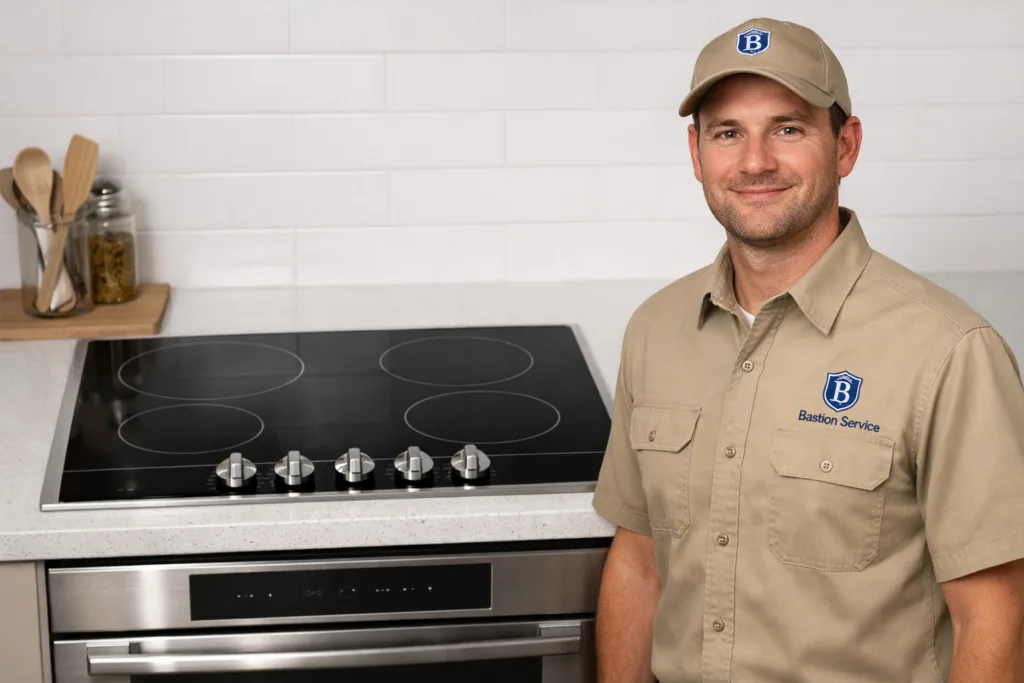
Cooktop problems tend to show up in ways that feel similar at first, even when the underlying failure is different. A burner that will not ignite, a cooking zone that stays cold, nonstop clicking, or heat that does not match the setting can each trace back to several possible causes. On an Electrolux cooktop, the most effective repair starts by matching the exact symptom pattern to the right component instead of guessing and swapping parts.
Common Electrolux cooktop symptoms and what they often mean
Burner will not heat on an electric cooktop
If one cooking zone does not heat at all, the problem may be the surface element, the receptacle or connection point, a damaged wire, or the switch or control that powers that burner. If the burner heats only part of the time, that points more toward a weakening component or an intermittent electrical connection. When multiple zones act up together, the issue may be farther upstream in the control system or power supply path.
Gas burner clicks but does not light
Clicking usually means the ignition system is trying to light the burner. If the flame does not appear, likely causes include a wet or dirty burner head, clogged burner ports, a misaligned cap, a weak igniter spark, or a problem with the spark module. On some calls, the burner itself is fine and the issue is simply that the gas is not reaching the flame correctly because of buildup or poor alignment after cleaning.
Burner heats unevenly or runs hotter than expected
Uneven heat can make pans develop hot spots, extend cooking times, and make normal stovetop cooking frustrating. On electric models, this can mean a failing element or a control that is not cycling properly. On gas models, it may point to blocked ports, burner assembly wear, or flame distribution problems. If a burner seems stuck too high, that should be taken seriously because it can damage cookware and create a kitchen safety issue.
Continuous clicking or intermittent sparking
Persistent clicking after the burner is lit often means moisture, residue, or a fault in the ignition circuit is keeping the system active. If cleaning and fully drying the burner area does not stop it, the cooktop may need service. Repeated sparking attempts can also be a sign that one part of the ignition system is affecting the others, especially on models with shared spark behavior.
Knobs, switches, or touch controls do not respond normally
A control problem can look like a burner problem. A loose or worn knob shaft, a failing infinite switch, a damaged user interface, or a control board fault can all cause settings to behave unpredictably. Homeowners sometimes notice that the burner turns on only at certain positions, changes output unexpectedly, or does not respond to touch inputs consistently. Those are strong clues that the issue is not just the burner itself.
Symptoms that call for stopping use right away
Some cooktop issues can wait for scheduled service, but others should put the appliance out of use until it is checked. Stop using the cooktop if:
- a burner will not turn off properly
- the unit trips the breaker or loses power repeatedly
- you see sparking beyond normal ignition behavior
- the glass surface is cracked or visibly damaged
- a burner overheats far beyond the selected setting
- controls respond erratically in a way that affects safe operation
For gas cooktops, a persistent gas odor is a separate safety issue. If you smell gas strongly or continuously, stop using the appliance and follow the appropriate gas safety steps before arranging appliance service.
Cracked glass and surface damage on smooth-top models
Not every cooktop problem is electrical or ignition-related. On smooth-top Electrolux units, impact damage or heat stress can leave cracks in the glass surface. Even if the burner beneath still works, using a cracked top is risky. Spills can reach internal components, the damage can spread with heat, and cleaning becomes harder without making the crack worse. In these cases, the repair decision usually depends on the extent of the damage, the model, and parts availability.
Why one bad burner does not always mean one bad part
It is easy to assume that a failed burner automatically needs a new burner element or igniter, but that is not always true. A single symptom can be caused by wiring damage, a failed switch, a control issue, contamination around the burner, or a problem in a related component. That is why symptom-based testing matters. It keeps the repair focused and helps avoid replacing parts that are not actually causing the failure.
Repair or replacement for a household cooktop
In many Mid-City homes, repair is the sensible choice when the problem is limited to one burner, one control, one ignition component, or a localized wiring fault. If the cooktop is otherwise in good shape and the surface is intact, a targeted repair often restores normal function without the cost and disruption of replacement.
Replacement becomes more likely when there is severe surface damage, multiple failing systems, repeated prior breakdowns, or parts that are no longer practical to source. Age matters, but condition matters more. A newer cooktop with major control and surface issues may be a poor repair candidate, while an older unit with a single failed igniter or element may still be worth fixing.
What to check before scheduling service
There are a few simple observations that can help narrow the issue without taking the appliance apart:
- Does the problem affect one burner or several?
- Is the symptom constant, or does it happen only sometimes?
- Did the issue begin after a spill, deep cleaning, or breaker trip?
- For gas models, are the burner caps seated correctly?
- For electric models, does the burner show any sign of partial heating?
- Are the controls physically loose, stiff, or inconsistent?
These details can make diagnosis faster and help determine whether the fault is likely mechanical, electrical, or related to the ignition system.
What Mid-City homeowners usually want to know
Most households want a straightforward answer to four questions: what failed, is the cooktop safe to use, what repair will solve it, and is that repair worth doing. For Electrolux cooktop repair in Mid-City, the most useful service outcome is a diagnosis that explains the symptom in plain language and lays out the realistic next step based on the condition of the appliance.
When professional repair makes the most sense
Cooktops combine heat, electricity, and in many homes gas ignition, so recurring problems are rarely a good place for trial-and-error fixes. Professional service is especially helpful when the same burner keeps failing, the symptoms do not match a simple cleaning issue, or the control behavior is inconsistent enough that normal cooking is no longer reliable. In those cases, proper testing is the fastest path to deciding whether the cooktop should be repaired or replaced.