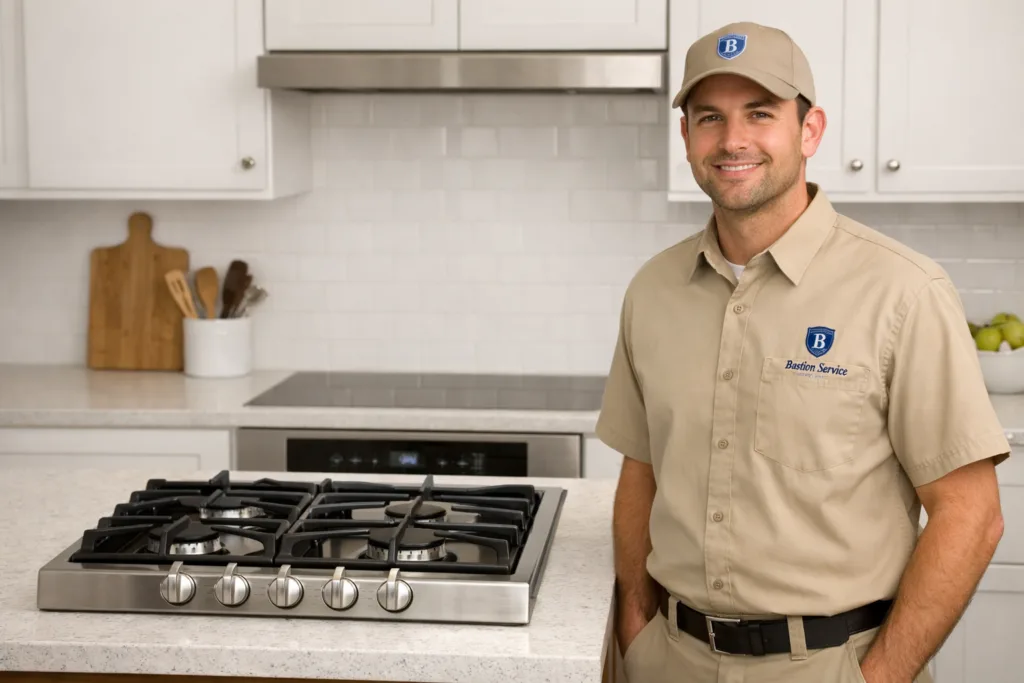
Burners that stop heating evenly, click without lighting, or respond unpredictably usually point to a specific component problem rather than a vague “cooktop failure.” On electric units, the cause may be a worn surface element, a failed infinite switch, damaged wiring, or a problem at the terminal block. On gas models, ignition trouble often traces back to clogged burner ports, a wet or misaligned igniter, weak spark output, or restricted gas flow.
Common cooktop problems and what they may mean
A burner that will not turn on at all is one of the clearest signs that something inside the appliance needs attention. If only one burner is affected, the issue is often isolated to that burner circuit, switch, igniter, or element. If several burners are acting up, the diagnosis may shift toward a broader electrical supply issue, damaged controls, or a harness problem beneath the cooktop.
Uneven heat is another frequent complaint in Mid-City kitchens. Food may scorch at the center, simmer poorly at the edges, or take much longer than normal to cook. That can happen when a burner is no longer cycling correctly, when a control is sending the wrong output, or when a radiant element has developed a hot spot. Gas cooktops can show a similar pattern if the flame is uneven, partially blocked, or not distributing heat consistently around the pan.
Clicking that continues after ignition should not be ignored. Sometimes the cause is simple, such as moisture after cleaning or food debris around the burner head. In other cases, the spark module, switch, or ignition wiring may be failing. If the symptom affects more than one burner or returns repeatedly, a proper inspection is usually the fastest way to separate a minor cleanup issue from a repair that should be scheduled.
Signs you should stop using the cooktop
Some symptoms are more than inconvenient. If a burner stays hot when turned to low, will not shut off, throws sparks, trips the breaker, or creates a burning smell from the control area, it is smart to stop using that section right away. Continued use can damage surrounding components and may create a larger safety issue.
For gas cooktops, delayed ignition, repeated clicking without flame, or a strong gas odor deserve immediate caution. If there is a persistent gas smell, stop using the appliance and follow gas safety guidance before arranging service. Once that immediate concern is addressed, the cooktop can be inspected for ignition faults, burner alignment issues, or gas delivery problems.
Cracked glass on a smooth-top unit also changes the situation. Even when the burner still works, spills and moisture can reach internal parts through the damaged area. That can lead to shorting, corrosion, or additional breakage, especially when the crack spreads with heat. A chipped edge may be cosmetic, but a structural crack across the cooking surface usually needs prompt evaluation.
Repair or replace?
Many cooktop problems are repairable when the failure is limited to one part, such as a switch, element, igniter, burner cap, or wiring connection. Repair becomes less attractive when the surface is badly damaged, multiple burners have separate faults, replacement parts are no longer available, or the appliance has a history of repeated control problems.
Age matters, but condition matters more. A newer cooktop with a single failed burner may be a straightforward repair, while an older unit with cracked glass and intermittent electrical faults may not be worth continued investment. Diagnosis helps narrow that decision so homeowners are not replacing parts based on guesswork.
How cooktop diagnosis usually works
Cooktop service is most effective when it starts with the exact symptom: no heat, weak heat, endless clicking, burner staying on high, broken glass, or a control that no longer responds normally. From there, the appliance can be checked for power delivery, ignition output, switch continuity, burner condition, visible heat damage, and signs of spill-related wear beneath the top.
Electric cooktops often require testing at the switch and burner connection to confirm whether the control is sending power correctly. Gas units usually need closer inspection of the burner head, spark path, ignition behavior, and flame pattern. That step matters because two cooktops can show the same symptom while needing very different repairs.
When the problem may involve another cooking appliance
Some Mid-City homes have a cooktop paired with a separate baking appliance, and the symptoms can overlap. If surface burners are working but baking or preheating problems are happening at the same time, Oven Repair in Mid-City may be the better place to start.
In kitchens where the cooktop and oven are part of one combined appliance, a fault affecting both the burners and the oven controls often points away from a standalone cooktop issue. If the top and lower cavity are tied together in one unit, Range Repair in Mid-City may fit the symptom more accurately.
Homeowners sometimes use “stove” to describe any cooking appliance, but the distinction matters when the burner issue is part of a freestanding unit with shared controls or broader heating problems. If surface heat and overall cooking performance are failing together, Stove Repair in Mid-City may be the better service path.
Built-in kitchen layouts can create confusion too, especially when the surface unit works separately from an installed baking appliance in the wall. If the concern is really centered on temperature drift, slow preheat, or a nonheating built-in oven rather than the burners above the counter, Wall Oven Repair in Mid-City may be more relevant.
Symptoms worth scheduling soon
It is usually wise to book service before the problem gets worse when a burner works only sometimes, ignition takes several tries, control knobs feel loose, the flame looks uneven, or the glass surface shows growing damage. These issues rarely improve on their own, and early repair can prevent added damage to switches, ignition parts, or internal wiring.
Households in Mid-City usually benefit most from a repair decision based on the actual failed part, the safety condition of the appliance, and how the cooktop is used day to day. A focused inspection helps determine whether the fix is simple, whether continued use should stop, and whether repair still makes practical sense for the kitchen.