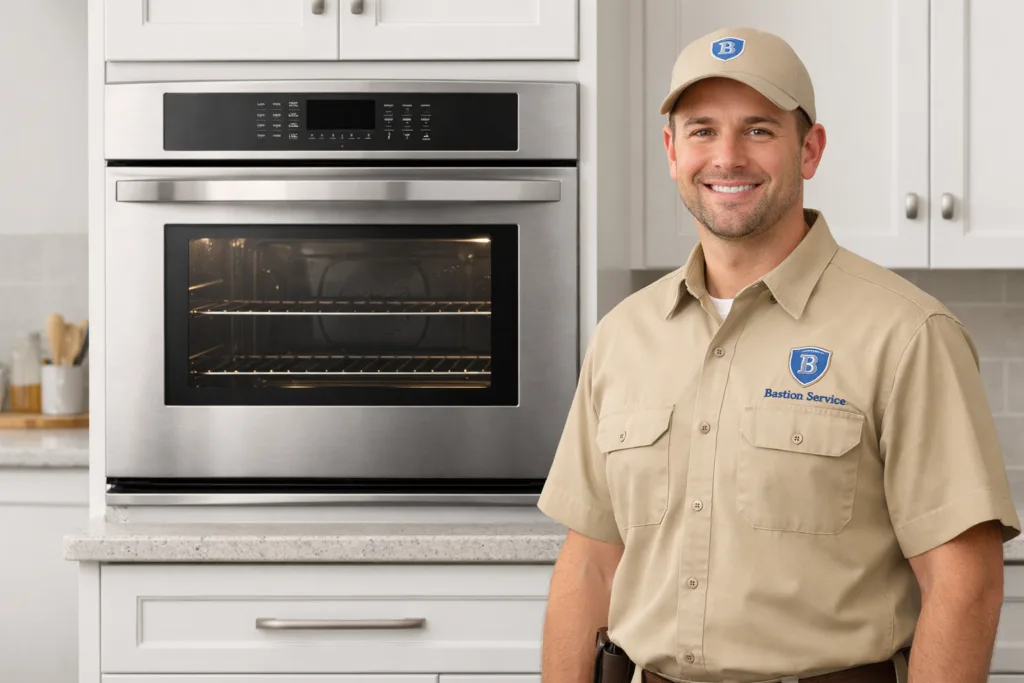
Oven problems are often easy to describe but harder to pinpoint. A Kenmore unit may seem to have one obvious failure, yet the real cause could involve the heating system, sensor circuit, electronic controls, wiring, or door-related components. For homeowners in Mid-City, that difference matters because the repair choice should match the actual fault, not just the symptom on the display or the way food is coming out.
What common Kenmore oven symptoms usually mean
Not heating at all
If the oven turns on but never gets hot, the likely cause depends on the model type. Electric ovens commonly lose heat because of a failed bake element, a damaged broil element, or a problem in the power path to the element. Gas ovens often point to a weak igniter that glows but does not draw enough current to open the gas valve properly. In both cases, the surface symptom is the same, but the repair path is different.
Uneven baking or hot and cold spots
When one rack bakes faster than another or food browns unevenly, the issue may involve inaccurate temperature sensing, partial element failure, poor heat cycling, or a control problem. Some households first notice this as cookies baking unevenly, casseroles taking longer in the center, or dishes needing repeated time adjustments. That pattern usually means the oven is still heating, but not managing temperature the way it should.
Slow preheat
A long preheat is often an early warning sign rather than a minor inconvenience. A weak igniter, failing element, or temperature regulation issue can cause the oven to take much longer to reach the set point. Many ovens with slow preheat eventually progress to weak heating or complete no-heat operation if the failing component is left in service.
Temperature swings during cooking
If the oven seems too hot one day and too cool the next, the problem may be more than simple calibration. A drifting sensor, intermittent relay problem, unstable control response, or failing heating component can create wide cycling patterns. That can make roasting, baking, and meal timing frustrating because the set temperature no longer reflects actual cooking performance.
Control panel problems
Unresponsive buttons, a blank display, beeping without a clear cause, or cooking cycles that cancel unexpectedly can all point to control-related issues. Sometimes the problem is in the control board itself. In other cases, the panel is reacting to a separate fault such as power interruption, wiring damage, or a door-lock circuit issue.
Why partial heating problems should not be ignored
A Kenmore oven that still works “well enough” can be the easiest one to put off, but partial failures often become more expensive if they continue. A weak igniter can overwork itself on every preheat attempt. A failing element may eventually open completely. Temperature regulation problems can also lead to overcooked food, undercooked meals, and unnecessary strain on other components.
It usually makes sense to stop waiting when you notice patterns like these:
- Preheat times keep getting longer from week to week
- The oven reaches temperature inconsistently
- Cooking results vary even when using the same settings
- The display works, but bake or broil functions do not respond normally
- The oven shuts off before the cycle is complete
- Error codes appear along with heating or control issues
Self-clean and door-lock problems on Kenmore ovens
Many oven issues show up after a self-clean cycle. That process creates high heat, which can expose weak components that were already close to failure. Homeowners in Mid-City may notice that the door stays locked, the controls stop responding, or the oven no longer heats properly after self-clean is used.
These situations can involve the door-lock assembly, thermal protection components, sensor issues, or control damage. If the oven changed behavior immediately after self-cleaning, that timing is useful diagnostic information and should be part of the repair assessment.
Electric vs. gas oven repair concerns
Electric and gas Kenmore ovens can show similar symptoms, but the internal causes are not always the same. Electric models more often point toward elements, relays, terminal connections, or supply issues. Gas models more often raise suspicion around the igniter, gas valve circuit, or ignition sequence. Knowing which style of oven is in the home helps narrow the test path and avoid replacing parts by guesswork.
For gas ovens, any persistent gas odor should be treated as a safety issue first. Stop using the appliance and address the smell before arranging repair. Appliance diagnosis should come only after immediate safety concerns are handled.
Signs the problem may involve more than one part
Some repairs are straightforward, such as replacing a clearly failed heating component. Others are less isolated. If the oven has both heating trouble and erratic controls, or if it has a history of repeated breakdowns, the issue may involve multiple related failures rather than one simple bad part.
That is especially important when:
- The oven has had previous control or heating repairs
- Multiple cooking modes fail in different ways
- The breaker has tripped during use
- There are signs of overheated wiring or scorching
- The door does not close or lock correctly in addition to heating problems
How to think about repair versus replacement
Not every oven problem means the appliance should be replaced. In many homes, a repair is still the better choice when the cavity, door, racks, and core structure are in good shape and the failure is limited to a serviceable component. Heating elements, igniters, sensors, and some control-related parts are often the kinds of issues that can make repair worthwhile.
Replacement becomes more reasonable when the oven has extensive wear, repeated failures across different systems, major control damage, or a repair cost that no longer makes sense for the age and condition of the appliance. The useful question is not simply whether the oven can be fixed, but whether fixing it is the smartest next step for that specific unit.
What homeowners should expect from a service evaluation
A useful visit should do more than confirm that the oven is malfunctioning. It should identify the failed system, check whether related components have been affected, and explain whether the issue is isolated or part of broader wear. That gives you a clearer basis for deciding whether to move forward with the repair.
For Mid-City households that rely on their oven for everyday meals, symptom-based testing is usually the fastest way to get from frustration to a workable plan. Whether the problem is no heat, slow preheat, uneven baking, or control trouble, the goal is to match the repair to the exact failure so the oven can be evaluated on real condition rather than guesswork.