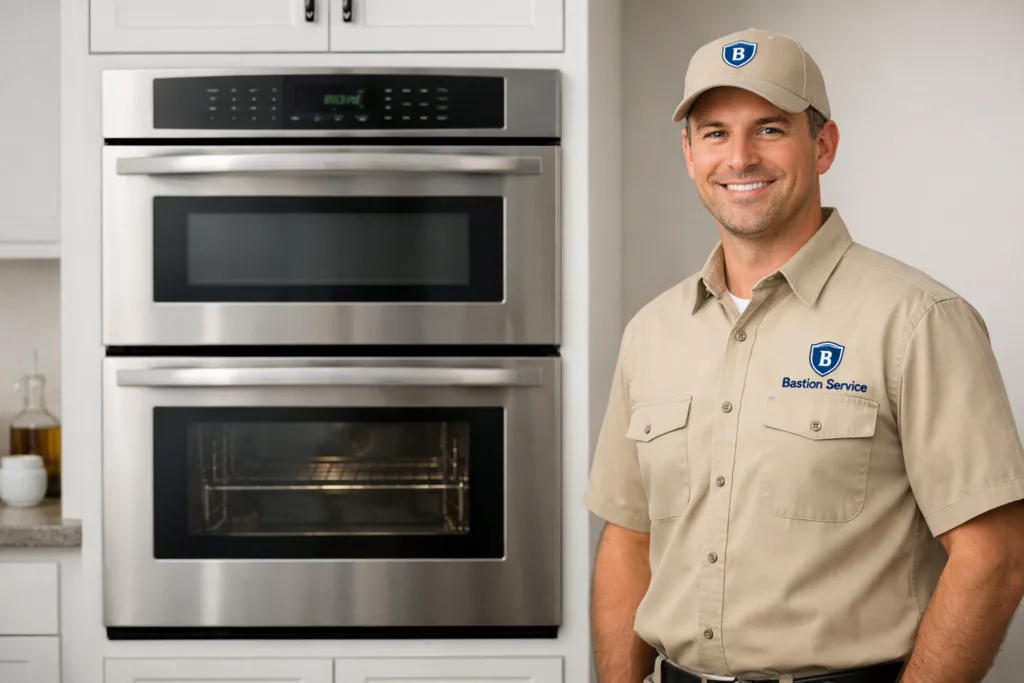
Oven problems often start subtly. Cookies brown too quickly on the back edge, casseroles need extra time, or preheat seems to run far longer than it used to. With a Kenmore oven, those symptoms can point to very different failures, so it helps to look at the pattern before deciding whether the issue is minor, urgent, or a sign the appliance should be repaired soon.
Common Kenmore oven symptoms and what they often mean
The oven will not heat at all
If the display powers on but the cavity stays cold, the problem may involve the bake element, broil element, igniter, temperature cutoff, wiring, or control board. Electric models may lose one part of the heating circuit and appear normal until cooking begins. Gas models may click or glow without producing reliable ignition. A no-heat symptom usually needs prompt attention because normal use is no longer possible and repeated attempts can strain related components.
Food cooks unevenly
Uneven baking can show up as burnt corners, pale centers, or one rack cooking much faster than another. In many Kenmore ovens, this points to weak heat output, inaccurate temperature sensing, or a problem with how the oven cycles during cooking. Homeowners sometimes assume they need a temperature adjustment, but a worn component can create inconsistency that calibration alone will not fix.
Preheat is slow
An oven that eventually gets hot but takes much longer than before may have a heating component that is weakening rather than fully failed. That is especially common when the appliance still seems usable for simple meals but struggles with roasting, baking, or recipes that depend on stable temperature. Slow preheat is worth checking early, since partial heat failures often become complete no-heat problems over time.
Temperature rises too high or swings up and down
When dishes overcook unexpectedly or the oven seems hotter than the selected setting, the issue may involve the sensor circuit, control regulation, or a relay that is not cycling heat correctly. Large temperature swings can affect baking results long before the oven shows an obvious error. If you have started lowering recipe temperatures just to compensate, the appliance may already be drifting outside normal operation.
The control panel is unresponsive or intermittent
Buttons that only work sometimes, a flickering display, settings that reset, or an oven that shuts off mid-cycle can indicate a failing interface, damaged wiring connection, or electronic control fault. Intermittent issues are frustrating because they do not always happen during every use, but they should not be ignored. A control problem can interrupt cooking, affect temperature regulation, or prevent the oven from starting at all.
Signs the issue may be getting worse
Some symptoms point to a problem that is progressing rather than staying stable. It is smart to stop and reassess if you notice any of the following:
- Preheat times that are getting longer from week to week
- Recipes that suddenly need major time adjustments
- The broil function works, but bake does not, or the reverse
- Error codes that return after being cleared
- The oven shuts off before food is finished
- Burning smells, visible sparking, or breaker trips
These patterns often suggest a failing part that is no longer operating consistently. Waiting too long can turn a performance complaint into a full loss of cooking function.
Gas and electric Kenmore ovens fail differently
The diagnosis path depends heavily on whether the oven is gas or electric. Gas models commonly develop ignition-related problems, where the igniter weakens and delays burner ignition or fails to open the gas valve properly. Electric models are more likely to show issues with heating elements, sensor readings, relays, or power distribution through the control system.
That difference matters because two ovens can show the same symptom, such as slow preheat, while needing entirely different repairs. A gas oven may struggle because ignition is weak. An electric oven may struggle because one heat source is no longer contributing enough output. Looking at the fuel type and symptom pattern together usually narrows the repair path much faster.
If a gas oven gives off a strong or persistent gas odor, stop using it right away and address that safety issue before scheduling normal appliance service.
When to stop using the oven
Not every oven problem requires immediate shutdown, but some do. It is best to stop using the appliance if it overheats, will not turn off properly, trips the breaker, shows electrical burning odors, or behaves unpredictably during a cooking cycle. Continuing to use an oven in those conditions can increase damage to controls, wiring, or surrounding parts.
Even less dramatic issues can justify quicker service. A weak igniter, inaccurate sensor, or failing element often starts as an inconvenience and then fails during a holiday meal, family dinner, or meal prep day. For many households in Marina del Rey, addressing the symptom early is the easier and less disruptive option.
Repair or replace: how homeowners usually decide
Whether a Kenmore oven should be repaired or replaced depends on the nature of the failure, the age of the unit, the condition of the cavity and door, and whether there are multiple active problems at once. A single failed igniter, sensor, heating element, latch part, or control-related component often makes repair reasonable. The decision becomes less favorable when the appliance has repeated electrical issues, severe wear, or several symptoms that point to broader deterioration.
In practical terms, homeowners usually benefit from answers to a few simple questions:
- Is the problem isolated to one main failed part or system?
- Is the oven otherwise in solid condition?
- Has this same issue happened before?
- Will the repair restore normal daily cooking, not just partial function?
Those factors matter more than the symptom name alone. “Not heating” can describe a straightforward repair in one case and a more expensive decision in another.
What a useful service visit should clarify
A productive appointment should do more than confirm that the oven is malfunctioning. It should identify which function is failing, whether the problem is isolated or part of a larger control issue, and whether continued use risks additional damage. For a household in Marina del Rey, that kind of practical explanation makes it easier to decide what to do next without guessing on parts or replacing the appliance too quickly.
For Kenmore oven repair in Marina del Rey, the most helpful outcome is knowing why the oven is missing temperature, losing heat, or failing to respond—and whether the repair path is straightforward enough to make sense for your kitchen and cooking routine.
Simple observations that help before service
You do not need to disassemble anything to make the problem easier to identify. A few notes about the symptom can be useful:
- Whether the problem happens in bake, broil, or both
- If preheat completes or seems to stall indefinitely
- Whether the display shows an error code
- If the issue is constant or only happens sometimes
- Whether the oven seems too cool, too hot, or inconsistent
Those details can help connect the complaint to the most likely systems inside the appliance. They are especially helpful when the oven still works part of the time, which is often when diagnosis is hardest without a clear symptom history.
Why symptom-based repair matters for daily cooking
An oven is one of those appliances that can seem “close enough” until a recipe fails, dinner runs late, or baking becomes unpredictable. Small changes in heat performance can affect everything from weeknight meals to holiday cooking. By treating no-heat problems, uneven baking, slow preheat, and control issues as distinct symptoms rather than one general failure, homeowners can make better decisions about timing, safety, and whether repair is the right next step.