
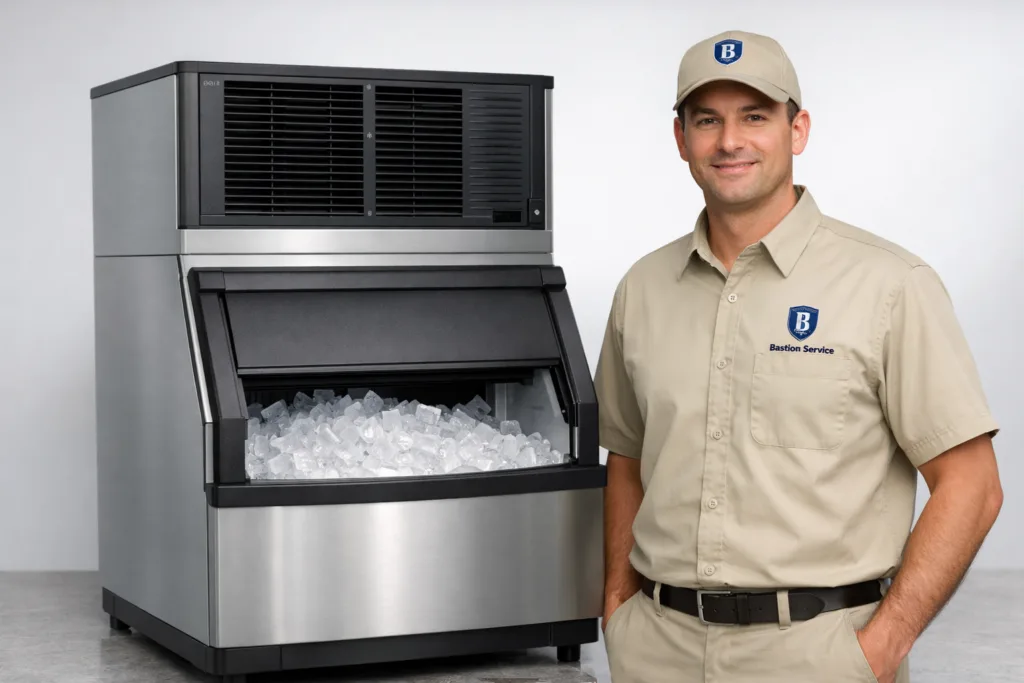




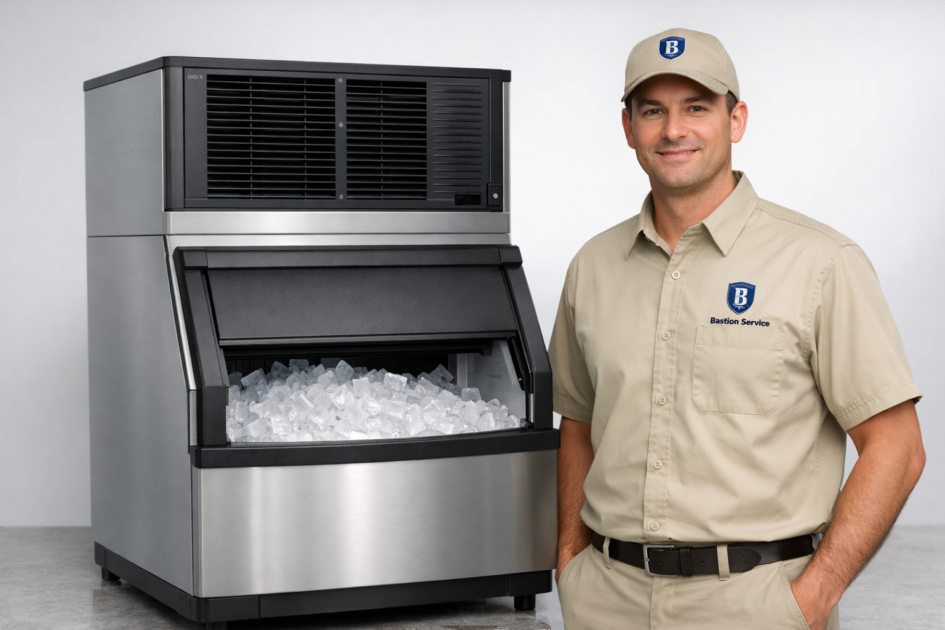
When a Hoshizaki ice machine starts underproducing, leaking, or stopping mid-cycle, the priority is to identify the actual failure before the problem affects service any further. For businesses in Torrance, that usually means scheduling a repair visit that can separate water supply issues from scale buildup, drainage faults, control problems, or refrigeration-related performance loss. Bastion Service helps operators understand what the machine is doing, what risk comes with continued use, and what repair path makes the most sense for the equipment on site.
For specific equipment paths in Torrance, review Hoshizaki Refrigerator Repair in Torrance, Hoshizaki Freezer Repair in Torrance, and Hoshizaki Ice Machine Repair in Torrance.
Common Hoshizaki ice machine symptoms that need repair attention
Ice machines rarely fail in only one way. A unit that seems to have a production problem may also have water flow restrictions, weak harvest performance, or ice quality changes that point to a larger issue. Looking at the full symptom pattern helps determine whether the machine needs cleaning and targeted repair, component replacement, or a broader reliability discussion.
Low ice production or no ice at all
If the machine is making less ice than normal, taking too long to complete a cycle, or not producing at all, several systems may be involved. Common causes include restricted incoming water, a sticking inlet valve, mineral scale inside the water circuit, sensor problems, circulation issues, or cooling performance that is no longer strong enough to complete a normal freeze cycle.
For a business, low production is more than an inconvenience. It changes prep routines, creates pressure during peak demand, and often leads staff to keep the machine running longer than they should. If output has dropped noticeably, service is usually worth scheduling before the unit progresses to full shutdown.
Leaks, overflow, and water around the machine
Water on the floor or inside the machine cabinet can come from drain restrictions, fill problems, cracked lines, pump issues, float-related faults, or internal scale that interferes with normal movement. Some leaks are steady and obvious, while others only appear during certain parts of the cycle.
These symptoms should not be ignored. Continued operation can lead to slip hazards, surrounding water damage, sanitation concerns, and additional failures if water reaches electrical parts or keeps the machine from cycling correctly.
Harvest problems and ice not releasing properly
When cubes do not release cleanly, batches hang up during harvest, or the machine repeatedly struggles to drop ice into the bin, the cause may involve scale buildup, temperature sensing issues, circulation weakness, or control timing faults. Harvest issues often show up before a complete shutdown, especially on units that are still freezing but no longer finishing the cycle normally.
A service inspection helps determine whether the problem is mainly scale-related or whether a component in the control or water system is no longer responding the way it should.
Shutdowns, error conditions, or repeated resets
If a Hoshizaki unit stops unexpectedly, restarts after being reset, or runs for a short time and then shuts down again, the machine is usually protecting itself from an operating condition it cannot complete safely. That may include water level problems, temperature irregularities, sensor faults, drain issues, or board-related control failures.
Repeated resets are rarely a long-term solution. If the machine is tripping out more than once, the safer choice is usually to have it diagnosed rather than forcing it through more cycles.
Cloudy, thin, misshapen, or poor-quality ice
Ice appearance can reveal a lot about machine condition. Thin cubes, hollow centers, cloudy ice, inconsistent batch size, or changes in taste and clarity may point to water quality problems, scaling, filtration issues, or incomplete freeze performance. In some cases, poor ice quality is an early warning that the machine is still running but no longer operating within normal conditions.
For customer-facing businesses, ice quality affects presentation and can also signal developing production trouble. Addressing it early may help prevent larger repair needs later.
What these symptoms often mean in day-to-day operation
Different problems create different operational risks. A machine that is simply slow may still support limited use for a short period, while a unit that is leaking, overflowing, or repeatedly shutting down may need to be taken offline immediately. The right decision depends on what the machine is doing right now, not just on whether it produced some ice earlier in the day.
- Reduced output: often points to water flow restrictions, scale, or weakening system performance.
- Standing water or overflow: suggests drain, fill, or pump trouble that can worsen quickly.
- Long cycles: may indicate scale, sensor errors, or cooling performance loss.
- Incomplete harvest: commonly ties back to scale, control timing, or temperature-related issues.
- Frequent shutdowns: usually mean the unit is detecting a fault condition that should be repaired rather than bypassed.
When continued use can make the repair more expensive
Some operators try to stretch a machine through one more shift when output is low or ice quality starts slipping. That can be understandable, but certain symptoms tend to worsen with continued use. Running a unit with poor drainage, unreliable fill, or heavy internal scale can place extra stress on pumps, valves, sensors, and other key parts.
If the machine is making unusual noise, leaving water behind, short cycling, or failing harvest repeatedly, using it without inspection can turn a manageable repair into a more disruptive one. In a busy kitchen or beverage setup, a short delay in scheduling service often costs more than the initial symptom suggested.
How repair decisions are usually made
A productive service call should clarify more than whether the machine turns on. It should identify what failed, whether there are secondary issues developing, and whether the unit can reasonably stay in operation while parts or follow-up work are arranged. That matters for businesses in Torrance that need to manage service windows, staffing, and inventory without guessing at equipment condition.
Depending on the symptom pattern, repair planning may involve confirming:
- water supply and fill performance
- drain function and overflow causes
- scale buildup affecting normal cycling
- sensor or control response
- harvest timing and release problems
- cooling performance affecting freeze consistency
Once those checks are made, the next step is usually clearer: proceed with repair, schedule additional work, keep the machine offline, or weigh repair cost against age and recurring reliability issues.
Related Hoshizaki cold-side equipment considerations
Some businesses using Hoshizaki ice machines also rely on the brand’s refrigerators or freezers in the same work area. When multiple cold-side units are showing performance issues at once, it helps to prioritize based on immediate operational impact. Ice shortages, temperature holding concerns, and repeated equipment interruptions can all affect service flow differently, so diagnosis should focus on which problem creates the greatest risk first.
Scheduling service in Torrance
If your machine is producing too little ice, showing water flow problems, leaking, failing to harvest, building up scale quickly, or shutting down without warning, the next practical step is to schedule repair service in Torrance. An on-site diagnosis can show whether the unit should remain in limited use, whether it needs to be taken offline, and what repair work is most likely to restore reliable ice production with the least added downtime.


