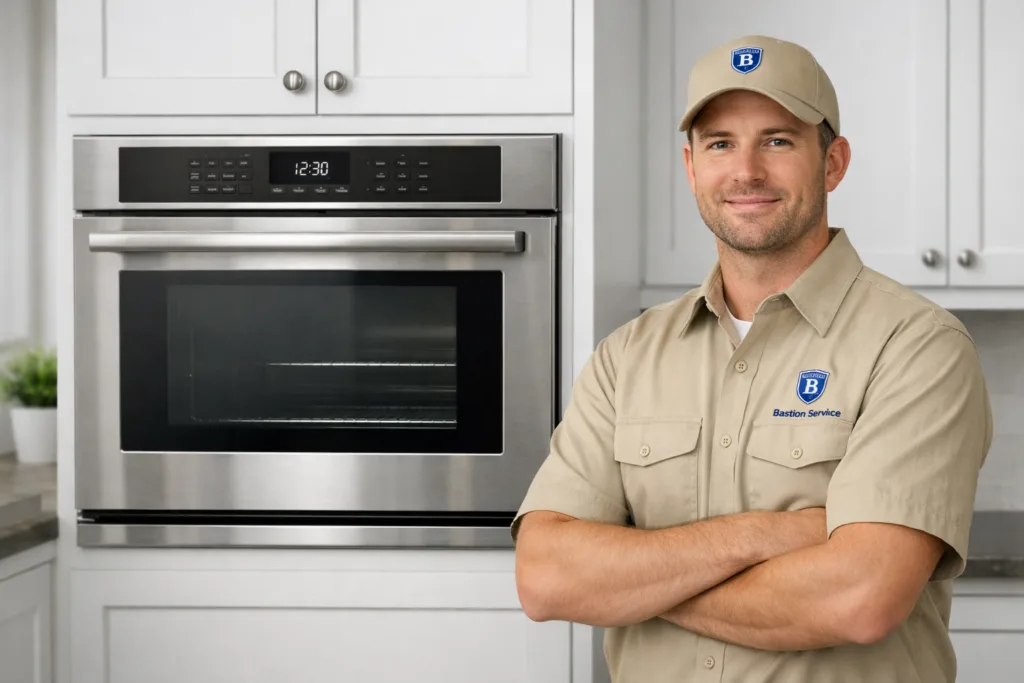
Common GE Wall Oven Symptoms and What They Often Mean

GE wall ovens can fail in ways that look similar at first, but the repair path depends on what the oven is actually doing. A unit that will not heat at all is different from one that heats slowly, runs hotter than the display setting, or shuts off once the cavity gets hot. Paying attention to the exact pattern helps narrow the problem faster.
Not heating or barely heating
If the oven stays cold, only warms slightly, or takes an unusually long time to preheat, likely causes include a failed bake element, a weak broil element, a faulty temperature sensor, wiring damage, or a control problem that is not sending power correctly. On some GE models, the display and lights may appear normal even while the heating circuit is not operating properly.
Uneven baking and roasting
When one side of a dish browns faster, the top burns before the center cooks, or results change from rack to rack, the issue may involve partial element failure, convection fan problems, sensor drift, or calibration errors. These symptoms are often frustrating because the oven still seems usable, but cooking results become inconsistent enough to waste time and food.
Slow preheat
Slow preheat is one of the most common complaints with built-in ovens. It can point to a weakened heating element, a sensor that is reading inaccurately, or a control board that is not cycling heat as it should. If preheat times keep getting longer in a West Hollywood home, that usually means the problem is progressing rather than correcting itself.
Temperature swings or overheating
An oven that overshoots the set temperature or swings widely during baking may have a sensor issue, relay failure, or electronic control fault. Overheating should be taken seriously. Beyond poor cooking results, repeated high heat can stress internal parts and create additional failures that were not present at the start.
Error codes, beeping, or random shutdowns
Fault codes and repeated beeping usually mean the control has detected a temperature, latch, keypad, or communication issue. If the oven shuts off mid-cycle and then works again later, that can indicate an intermittent control failure, overheating protection event, loose wiring connection, or a power supply problem.
Problems That Often Show Up After Self-Clean
Many GE wall oven issues become noticeable right after a self-clean cycle. The extreme heat can expose a weak sensor, stress a door lock assembly, or push an aging control board past its limit. Homeowners often report that the oven was working before self-clean and then started showing an error, would not unlock, or would no longer heat normally afterward.
That does not always mean self-clean directly caused the failure, but it often reveals a component that was already close to failing. If the timing lines up closely with the cleaning cycle, the latch system, thermal fuse, sensor circuit, and control area are all worth checking.
Door and Seal Issues That Affect Performance
A wall oven door that will not close tightly can create more than a comfort issue in the kitchen. Lost heat affects cooking consistency and can cause the oven to run longer as it tries to maintain the selected temperature. Common causes include worn hinges, a damaged gasket, misalignment, or a latch problem.
Signs to watch for include:
- Heat escaping from the door edge
- Longer-than-normal cook times
- Visible gaps when the door is closed
- A door that drops, sticks, or will not stay aligned
- Repeated trouble after using self-clean
When to Stop Using the Oven
Some symptoms are more urgent than others. Continued use is not a good idea if the oven is tripping the breaker, producing a burning electrical smell, sparking, overheating badly, or shutting down during use while hot. These conditions can lead to more expensive damage and may create a safety concern.
If the oven is simply cooking unevenly, service can often be planned without immediate disruption. If it is showing electrical instability or obvious overheating, stopping use until the cause is identified is the safer choice.
For gas-equipped wall oven models, a persistent gas smell should be treated differently from a standard repair issue. Stop using the appliance and follow gas safety steps before arranging appliance service.
What Makes Built-In Wall Oven Repair Different
Built-in appliances are harder to ignore because they are part of the kitchen itself. In many West Hollywood households, a wall oven is used regularly for daily meals, baking, and hosting at home. When it fails, there is usually no easy substitute sitting next to it.
Wall ovens also combine heating components, electronics, insulation, cooling systems, door hardware, and installation factors in a tighter space than many freestanding units. That is one reason symptom-based troubleshooting matters so much. The same complaint can come from a failed part, a heat-management problem, or a control issue that only appears once the oven reaches operating temperature.
Repair or Replace: How to Think Through the Decision
Many GE wall oven problems are worth repairing, especially when the failure is limited to a heating element, sensor, fan motor, latch assembly, or a single identified electronic component. Repair often makes sense when the oven fits the kitchen well, the cavity and door are in good condition, and the issue is isolated.
Replacement may become the better option when multiple major systems are failing, the unit has recurring electronic problems, or the expected repair cost is too close to the value of keeping the appliance. With a built-in wall oven, replacement can also involve cabinet fit, trim compatibility, and installation details, so the decision is rarely based on one part alone.
A useful service visit should answer a few practical questions clearly:
- What specific component or condition is causing the symptom?
- Is the oven safe to use right now?
- Is the problem likely isolated or part of a larger failure pattern?
- Does the repair make sense for the oven’s condition and age?
What West Hollywood Homeowners Can Do Before Scheduling Service
Without taking the appliance apart, a few observations can make diagnosis easier. Note whether the problem affects bake, broil, or both. Check if preheat is slow every time or only sometimes. Watch for fault codes, unusual fan behavior, door lock issues, or signs that the breaker has tripped. If food is repeatedly overcooking or undercooking, compare results across different racks and settings.
It also helps to notice when the problem started. A failure that began after self-clean, after a power interruption, or after months of slow performance can point in different directions. Those details make the service call more productive and help identify whether the issue is a simple part failure or a broader control problem.
Service That Starts With the Actual Symptom
Most homeowners want a straightforward answer: why the oven is failing, whether it is worth fixing, and what the next step should be. For GE wall oven repair in West Hollywood, the best approach is to work from the exact symptom pattern rather than guessing based on one visible sign. That keeps the process focused, reduces unnecessary part replacement, and helps restore normal kitchen use with a practical repair plan.