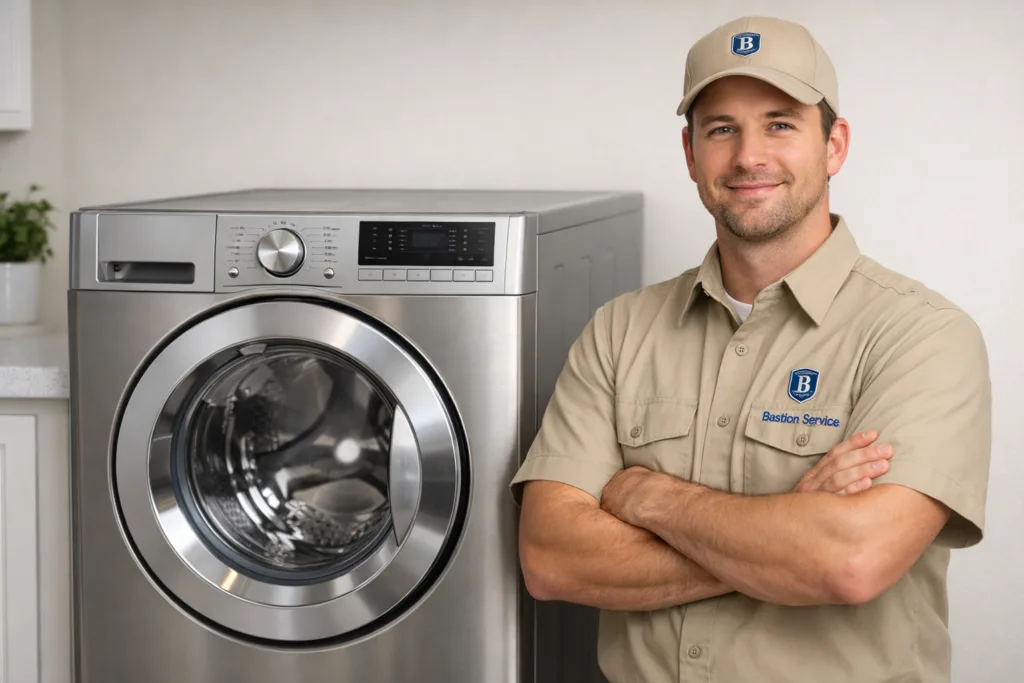
An Electrolux washer that will not drain, stops mid-cycle, leaks onto the floor, or leaves clothes overly wet can throw off the entire laundry routine. The most useful next step is identifying which system is actually failing, since similar symptoms can come from very different causes such as a blocked drain path, a door-lock problem, suspension wear, a water inlet issue, or an electronic fault.
How Electrolux washer problems are usually diagnosed
Modern Electrolux washers rely on sensors, lock assemblies, control logic, and timed responses between filling, tumbling, draining, and spinning. When one part of that sequence fails, the machine may pause, flash lights, cancel the cycle, or appear to have a completely different problem. For example, a washer that will not advance to spin may actually be struggling to drain, and a unit that will not start may be reacting to a latch or control issue rather than a motor failure.
That is why symptom timing matters. Whether the problem happens at the beginning of the cycle, during agitation, at drain, or only at high spin often helps narrow the repair path much faster.
Common Electrolux washer symptoms and what they can mean
Washer will not start
If the machine powers on but does not begin washing, likely causes include a faulty door lock, interface problem, control issue, or interruption in the normal startup checks. In some cases, the washer may be detecting a condition that prevents safe operation, even though the appliance still has power.
If nothing happens at all, it can also be worth ruling out a tripped breaker, outlet problem, or damaged power connection before assuming the washer itself has failed.
Stops mid-cycle or will not finish
A washer that begins normally and then shuts down partway through may be dealing with a drain restriction, an unbalanced load condition, a latch problem, or a fault in the control system. Some units stop because water is not leaving the tub fast enough, while others pause because the machine cannot safely continue into spin.
When this happens repeatedly across multiple loads, it usually points to a true repair issue rather than a one-time cycle interruption.
Not draining or not spinning properly
If water remains in the tub or clothes come out too wet, common causes include a clogged pump filter, restricted drain hose, failing drain pump, or a lock issue that prevents high-speed spin. A washer can also refuse to spin properly if it senses that the load is off balance.
Occasional imbalance can happen with bulky items, but recurring wet clothes after normal loads usually mean the washer is not completing the drain and spin sequence correctly.
Leaking during fill, wash, or drain
Leaks do not all come from the same place. Water around the front of the machine may point to a worn door boot, oversudsing, or a problem with how the load is tumbling. Leaks from the rear can involve inlet hoses, drain hoses, or internal connections. Water that appears only during draining may be tied to the pump or drain path rather than the tub itself.
Noting when the leak appears is often one of the fastest ways to narrow down the likely source.
Loud noise, banging, or shaking
Thumping and strong movement during spin can be caused by uneven loading, but repeated banging, grinding, or walking across the floor may indicate worn suspension components, bearing problems, pulley issues, or support wear. If the washer has become noticeably rougher over time, that change often suggests progressive mechanical wear rather than a simple loading mistake.
Continuing to run a washer that is shaking violently can put extra stress on the cabinet, tub supports, and surrounding connections.
Poor wash results, residue, or odor
If clothes are not coming out clean, detergent remains in the dispenser, or the washer has a stale smell, the issue may involve poor water flow, drainage problems, buildup inside the machine, or incomplete rinsing. These problems often develop gradually, so households may first notice longer drying times, dingy fabrics, or lingering odor before realizing the washer is no longer performing as it should.
Signs the issue is getting worse
Some washer problems start small and then become more obvious over several weeks. A drain pump may begin by leaving clothes a little wetter than usual before the washer eventually stops draining altogether. Suspension wear may begin as occasional vibration before turning into severe movement during every spin cycle. Small leaks can become flooring damage if they continue unnoticed behind or under the appliance.
If the machine is showing increasing noise, repeated shutdowns, slower draining, or visible water around the base, waiting usually does not improve the outcome.
When to stop using the washer
It is best to stop running the unit if you notice burning smells, electrical irregularity, grinding noises, repeated breaker trips, or active leaking. Those symptoms can lead to additional part damage or create avoidable safety concerns in the laundry area.
- Stop use if water is pooling on the floor.
- Stop use if the drum is making scraping or grinding sounds.
- Stop use if the washer will not unlock or repeatedly fails to drain.
- Stop use if the appliance is shaking hard enough to move.
Repair or replacement for an Electrolux washer
For many households in Mid-Wilshire, repair makes sense when the washer is otherwise in solid condition and the failure is limited to a specific part such as a pump, latch, valve, hose, dispenser component, or suspension element. Replacement becomes more likely when the machine has multiple major faults, severe tub or bearing damage, persistent control failures, or repair costs that no longer make sense for the condition of the appliance.
The most reliable way to make that decision is to compare the exact failed component, the overall condition of the washer, and how the machine has been performing before the current problem appeared.
What to note before scheduling service
A few observations can make troubleshooting much easier. Try to note whether the washer fills but does not tumble, tumbles but does not drain, drains but does not spin, or leaks only during a certain part of the cycle. It also helps to pay attention to any flashing lights, unusual sounds, or changes in cycle length.
Useful details include:
- Whether the problem happens on every load or only sometimes
- Whether the issue began suddenly or worsened gradually
- Whether heavy items trigger stronger vibration than normal
- Whether water remains in the tub after the cycle ends
- Whether detergent, softener, or residue is left behind
Residential washer service focused on the actual symptom
In Mid-Wilshire homes, washer trouble is rarely just an inconvenience for long. Laundry piles up quickly when the machine will not complete a cycle or starts leaking. A symptom-based evaluation helps determine whether the issue is isolated and repairable or whether the appliance is showing signs of broader wear.
For Electrolux washer repair in Mid-Wilshire, the goal is to match the repair plan to what the machine is actually doing, avoid unnecessary part replacement, and help homeowners make a sound decision about the next step.