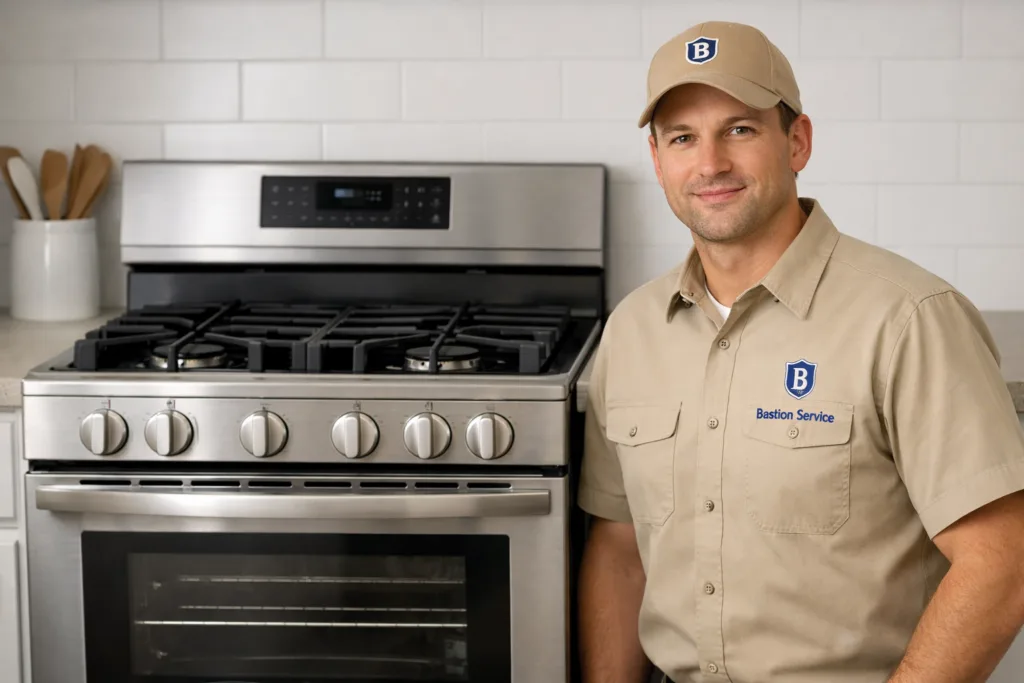
Range problems are rarely just an inconvenience. A burner that will not ignite, an oven that drifts off temperature, or controls that stop responding can disrupt everyday cooking and make the appliance harder to trust. With Electrolux ranges, the exact symptom matters, because similar performance issues can come from different parts of the ignition system, heating system, or control assembly.
What common Electrolux range symptoms usually mean
Burner clicks but does not light
On gas models, repeated clicking without ignition often points to a burner head blockage, moisture around the igniter, a worn ignition switch, or a spark module problem. Sometimes the burner will light eventually, but delayed ignition is still a sign that something is not working as it should. If the clicking continues after the flame appears, the range may need cleaning, drying, adjustment, or replacement of ignition-related components.
Oven is not heating or heats too slowly
An oven that stays cold or takes much longer than normal to preheat may have a weak igniter, failed bake element, broil element issue, temperature sensor problem, or an electronic control fault. In some cases, the oven partially heats, which can make the problem seem minor even though cooking results are already being affected.
Uneven baking, roasting, or browning
If food comes out overcooked on one rack and undercooked on another, the cause may be inaccurate temperature sensing, a heating component that is no longer performing fully, poor heat circulation, or a door seal that is not holding heat properly. This kind of problem often develops gradually, so homeowners may notice recipes taking longer before they realize the range itself is the issue.
Surface burners heat inconsistently
On electric Electrolux ranges, inconsistent burner performance can come from a failing surface element or a bad infinite switch. On gas units, weak flame, uneven flame pattern, or slow ignition can indicate clogged ports, ignition wear, or other burner assembly issues. If one burner behaves differently from the others, that difference can help narrow down the fault.
Display, keypad, or control panel problems
When the display flickers, shows error codes, resets, or stops accepting commands, the problem may involve the user interface, main control board, wiring, or power supply to the range. Intermittent control issues are worth addressing early, because they often become more frequent before turning into a complete no-start or no-heat condition.
Signs the range should not be ignored
Some symptoms are more than just annoying. They can point to a fault that may worsen with continued use. It is a good idea to stop and reassess when you notice any of the following:
- Burners that repeatedly fail to light
- Constant clicking during or after ignition
- Oven temperatures that are clearly too high or too low
- Preheat times that are suddenly much longer
- Controls that do not respond consistently
- Error codes that keep returning
- A door that will not close or seal properly
- Intermittent power loss, shutoff, or breaker trips
If the range appears to overheat, will not shut off correctly, or shows electrical irregularities, it is usually safer to stop using it until the problem is diagnosed.
Why accurate symptom matching matters
One of the most common mistakes with range problems is assuming the failed part based on one visible symptom. For example, an oven that is not reaching temperature may look like a simple heating element issue, but the actual cause could be the sensor, igniter, relay, or control board. A burner that clicks constantly may need more than basic cleaning if the switch harness or spark system has started to fail.
That is why the best repair path starts with the actual behavior of the appliance: what happens during preheat, whether the problem affects one burner or several, whether the issue is constant or intermittent, and whether the control panel is also acting strangely. Those details help separate a targeted repair from a larger component failure.
Repair or replace: how homeowners usually decide
Many Electrolux range issues are worth repairing, especially when the fault is limited to a burner ignition part, oven sensor, heating element, switch, igniter, or door-related component. A repair decision becomes more difficult when the range has several unrelated issues at once or when an older unit is showing broader electronic failure.
Most Mid-City homeowners make the decision by looking at a few practical factors:
- The age of the range
- How well it has performed aside from the current problem
- Whether the repair is focused or involves multiple major parts
- The overall condition of the appliance, including door, controls, and cooktop
If the appliance has otherwise been reliable and the diagnosis points to one primary failure, repair is often the sensible option. If the range has ongoing control issues, repeated breakdowns, and visible wear in several systems, replacement may be the better long-term choice.
Issues that can affect everyday cooking quality
Not every range problem causes a full shutdown. Some faults simply make cooking inconsistent, which can be just as frustrating. If roasts take much longer than expected, cookies brown unevenly, water boils too slowly on one burner, or settings no longer match actual heat output, the range may still be working but not working correctly.
These partial-performance issues matter because they often point to components that are weakening rather than fully failed. Catching those problems earlier can help avoid extra stress on related parts and reduce the chance of a more expensive breakdown later.
What Mid-City homeowners usually want from service
Most people do not need a long technical explanation. They want to know what is causing the problem, whether the range is safe to use, and whether the fix makes sense for the appliance they already have. For households in Mid-City, that usually means identifying the failed system, understanding whether the issue is isolated or broader, and choosing the next step based on the condition of the range rather than guesswork.
Whether the problem is a burner that will not light, an oven that cannot hold temperature, or a control panel that has become unreliable, the most helpful outcome is a repair plan based on the real symptom pattern and the actual condition of the appliance.