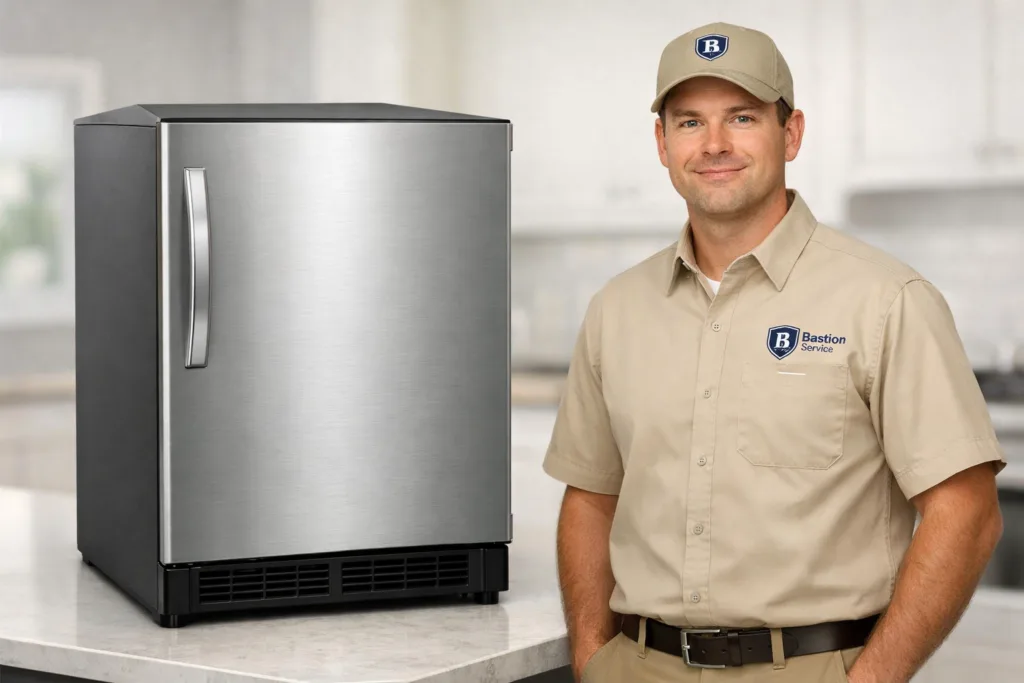
Ice maker problems are easiest to solve when the symptom is matched to the stage of the cycle that is failing. An EdgeStar unit has to bring in water, freeze it at the right temperature, release the cubes properly, and manage drainage without overflow. When one part of that sequence breaks down, the symptoms usually become fairly specific, and that helps narrow the repair path.
Common EdgeStar ice maker symptoms and what they usually mean
Many household calls involve one of a few recurring patterns. The machine may turn on but produce no ice, make ice very slowly, create small or misshapen cubes, leak onto the floor, or run with unusual sounds. While those symptoms can look similar from the outside, they often point to different failures inside the appliance.
For example, no ice production may be tied to water supply problems, a faulty inlet valve, a control issue, or a freeze cycle that never completes. Slow production may suggest scale buildup, reduced cooling performance, or restricted airflow around the unit. Clumped or cloudy ice can indicate inconsistent water flow, temperature fluctuation, or maintenance issues that interfere with clean ice formation.
When the unit is running but not making ice
If your EdgeStar ice maker powers up, lights up, or sounds active but never drops a batch, the problem is often somewhere between water entry and harvest. A blocked supply line, poor fill, or an inlet valve problem can prevent the machine from getting enough water to begin a proper cycle. In other cases, water enters but the unit does not get cold enough to form ice correctly.
There are also situations where the ice maker starts a cycle but fails to finish it. That can happen when a sensor, control component, or internal mechanism is no longer responding as it should. From the outside, it may look like the appliance is simply “on but doing nothing,” when the real issue is a cycle interruption inside the machine.
Signs this symptom needs prompt attention
- The machine has been on for hours with no fresh ice
- You hear humming or cycling without normal output
- The bin stays empty even after resetting the unit
- The appliance seems active but never completes a batch
Slow ice production and weak batches
When output drops gradually instead of stopping all at once, the cause is often more subtle. Mineral deposits can build up in the water path and interfere with fill consistency. Restricted airflow or poor ventilation can also make it harder for the unit to maintain the temperature needed for normal production. If the machine is underperforming, the result may be fewer cubes, longer wait times, or ice that melts faster than expected.
Weak batches can also point to refrigeration-related trouble. If the cooling side of the appliance is struggling, the cubes may come out thin, soft, hollow, or partially formed. In a home setting, this often becomes noticeable first during heavier everyday use, when the machine cannot keep up the way it used to.
Ice quality clues worth noticing
- Small cubes or incomplete batches
- Cloudy or brittle ice
- Cubes stuck together in wet clumps
- Ice that melts unusually fast in a drink
Leaks, puddles, and standing water around the appliance
Water outside an EdgeStar ice maker should never be treated as a minor nuisance. Some leaks come from a loose fitting or supply connection, while others happen because water is not draining correctly or because the machine is overfilling. If cooling performance drops, formed ice may also melt inside the unit and create water where it should not be.
A recurring leak can damage nearby flooring and cabinetry, especially if the unit is tucked into a finished kitchen or bar area. Shutting the machine down until the source is identified is often the safest move when water is repeatedly collecting around the appliance.
Possible causes of leaking
- Water line or connection problems
- Internal overflow during the fill cycle
- Drain restrictions or routing issues
- Ice melt caused by poor cooling
Clumped ice, jammed ice, or trouble releasing cubes
Not every ice maker problem is about total failure. Sometimes the machine still produces ice, but the cubes clump together, stick in place, or fail to release cleanly. That can happen when the timing of the harvest cycle is off, when water fill is inconsistent, or when internal surfaces are affected by buildup.
Clumping can also happen after a period of unstable temperature. If the machine partially melts stored ice and then refreezes it, the result is a stuck mass rather than separate cubes. In a household appliance, this often leads owners to think the problem is only cosmetic, but it can be an early warning that cooling or cycle control is no longer stable.
Unusual noises and repeated cycling
Some sound is normal in an ice maker, but a change in sound usually matters. Buzzing, clicking, rattling, or repeated on-and-off cycling can each point to a different mechanical or electrical problem. A rattling noise may be as simple as vibration or leveling, while a persistent hum with no ice production may suggest the machine is trying to pull water or start a cycle without success.
Grinding or repeated restart behavior can mean internal components are under strain. If noise is paired with leaking, slow output, or warm conditions inside the unit, the appliance should be checked before continued use causes a larger failure.
Why symptom-based diagnosis matters
Replacing parts based only on guesswork can turn a manageable repair into a longer and more expensive process. The same symptom can have several different causes, and the fix depends on which part of the operating sequence is actually failing. A proper evaluation helps determine whether the issue is related to water supply, temperature, controls, drainage, or wear inside the machine.
That also helps with the repair-versus-replacement decision. Some problems are isolated and sensible to fix. Others involve multiple failures, severe corrosion, repeated leak history, or major cooling trouble that makes replacement the better long-term choice for the home.
When it makes sense to stop using the ice maker
It is usually best to pause normal use if the machine is leaking, cycling constantly, making unusually loud noises, or failing to hold temperature. Continued operation can worsen water damage, increase internal strain, and make buildup or component wear more severe. A unit that still “sort of works” can sometimes do more damage than one that stops completely.
You should also avoid forcing extra cycles or repeated resets if the appliance is not responding normally. That can mask the pattern of failure and make diagnosis less straightforward during service.
What West Hollywood homeowners should expect from a repair visit
For homes in West Hollywood, the most useful service call is one that follows the actual symptom chain instead of jumping straight to part replacement. That means checking whether the unit is filling properly, whether it is reaching the correct freezing conditions, whether the harvest cycle is completing, and whether drainage and controls are working as they should.
From there, the repair path becomes much clearer. Some EdgeStar ice maker issues are resolved with cleaning, correction of water flow problems, or a targeted component replacement. Others reveal a broader condition problem that makes repair less practical. Either way, a structured inspection gives you a solid basis for the next decision and helps protect the appliance area from avoidable water or performance problems.