
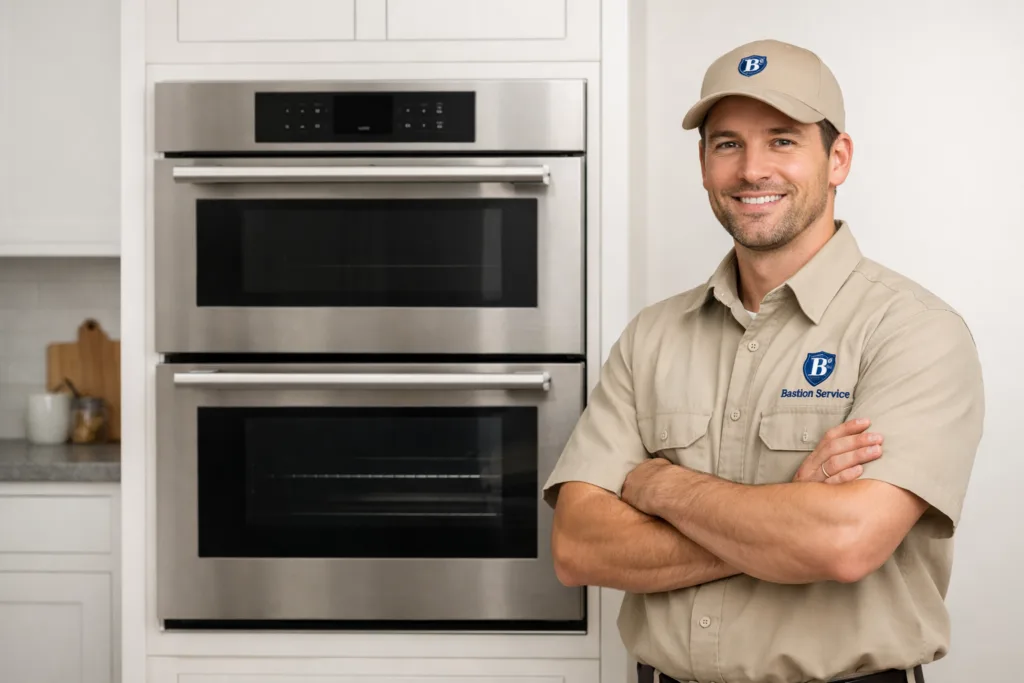




A built-in wall oven can seem to fail in one obvious way while the actual problem sits elsewhere in the heating or control system. That is why symptoms like poor baking results, a stalled preheat, or a flashing error should be tested carefully before any part is replaced.
Related Dacor and wall oven service paths in Cheviot Hills include Dacor Appliance Repair in Cheviot Hills, Wall Oven Repair in Cheviot Hills, and Dacor Refrigerator Repair in Cheviot Hills.
What tends to go wrong with a Dacor wall oven
Dacor wall ovens often depend on several systems working together at the same time: bake and broil heat, temperature sensing, airflow, door status, and electronic controls. When one part falls out of range, the oven may still turn on and appear normal, but cooking performance becomes unreliable.
In Cheviot Hills homes, the most common complaints usually involve one of these patterns:
- The oven powers on but does not heat
- Preheat takes much longer than it used to
- Food bakes unevenly from rack to rack or side to side
- The displayed temperature does not match actual oven temperature
- The control panel beeps, freezes, or shows fault codes
- The door lock or self-clean function stops working properly
Symptom-based troubleshooting that saves time
The same complaint can come from very different failures. An oven that will not reach temperature may have a weak element, a sensor reading problem, a relay issue, or a power supply fault. An oven with uneven baking may actually have a convection fan issue rather than a heating issue. A proper diagnosis helps separate the cause from the symptom.
This matters because built-in appliances are not ideal for trial-and-error repairs. Access can be more involved, and replacing the wrong electronic part can add cost without solving the original problem.
Common symptoms and what they may mean
Oven will not heat at all
If the display works but the cavity stays cold, the issue may involve the bake element, broil circuit, thermal protection components, sensor, control board, or incoming power. Some ovens can appear fully powered while still lacking the voltage needed for normal heating.
When this happens, it is important not to assume the visible element is the only possible cause. A hidden bake element, relay failure, or control-side issue may be responsible.
Slow preheating
Long preheat times often point to partial heat loss rather than total failure. One heating circuit may be weak or inactive, causing the oven to eventually warm up but far more slowly than normal. That usually leads to longer cook times and inconsistent results.
If preheat has gradually become slower, it is worth addressing before the oven stops heating properly altogether.
Uneven baking or roasting
Cookies that brown too much on one side, casseroles that stay cool in the center, or dishes that need repeated time adjustments usually suggest a temperature distribution problem. Possible causes include:
- A drifting temperature sensor
- Intermittent element operation
- Convection fan failure or reduced airflow
- Calibration issues in the control system
- Door seal wear allowing heat to escape
Because several of these can produce nearly identical cooking results, testing matters more than guesswork.
Temperature swings during cooking
All ovens cycle heat on and off, but large swings can make baking frustrating. If the oven overshoots, drops too low, or seems unable to hold a stable temperature, the sensor or electronic control may not be reading and regulating correctly. In some cases, relay contacts or element performance can also create unstable heat.
Error codes, beeping, or control panel problems
A Dacor wall oven that beeps unexpectedly, resets itself, or stops responding at the keypad may have a user interface issue, moisture-related control interference, wiring connection trouble, or a failing board. Repeated fault codes should not be ignored, especially if the oven also stops mid-cycle or loses heat while cooking.
Door lock and self-clean issues
If the oven door will not lock, stays locked, or the appliance acts up after self-cleaning, the problem may involve the latch motor, switch assembly, thermal cutoff, or main control. Forcing the door or repeatedly restarting the cycle can make the repair more complicated.
Signs you should stop using the oven
Some problems are inconvenient. Others are a reason to stop using the appliance until it is checked. Discontinue use if you notice:
- A burning smell that does not clear quickly
- Breaker trips during preheat or cooking
- The oven shutting off unexpectedly
- Visible sparking or signs of overheating
- The exterior cabinet area becoming unusually hot
- Repeated fault codes tied to temperature or door lock functions
Continued operation under those conditions can damage wiring, stress controls, or create a bigger repair than the original fault.
When repair usually makes sense
Many wall oven problems are still worth repairing, especially when the failure is isolated to a sensor, element, fan motor, latch component, or other defined part. A good service visit should identify whether the issue is limited and repairable or part of a broader control-system problem.
Replacement may deserve more consideration if the oven has severe interior wear, repeated electronic failures, or parts availability problems. Age alone is not the only factor. The better question is whether the repair addresses the actual failure in a lasting way.
What homeowners in Cheviot Hills should expect from service
For Dacor Wall Oven Repair in Cheviot Hills, the most useful appointment is one that connects the symptom you see with the system that actually failed. That means verifying heat output, checking sensor response, reviewing control behavior, and ruling out supply or wiring issues before recommending next steps.
For households in Cheviot Hills, that approach makes it easier to decide whether to proceed with repair now, monitor a minor issue, or plan for replacement if the oven has broader problems. It also reduces the chances of repeat visits based on an incomplete first impression.
Simple steps before scheduling service
Before assuming a major failure, there are a few basic checks that can help narrow the issue:
- Confirm the oven is not in demo, Sabbath, or delay mode
- Check whether both bake and broil functions respond
- Note any error code exactly as shown
- Pay attention to whether the problem happens every cycle or only sometimes
- Notice whether the issue started after self-clean, a power outage, or a breaker trip
Those details can be helpful when describing the problem and can shorten the path to an accurate diagnosis.
If your wall oven is no longer heating the way it should, uneven results and control issues usually point to a specific failing system rather than a general appliance decline. Getting the symptom pattern checked early can help prevent more expensive damage and restore more predictable cooking performance.


