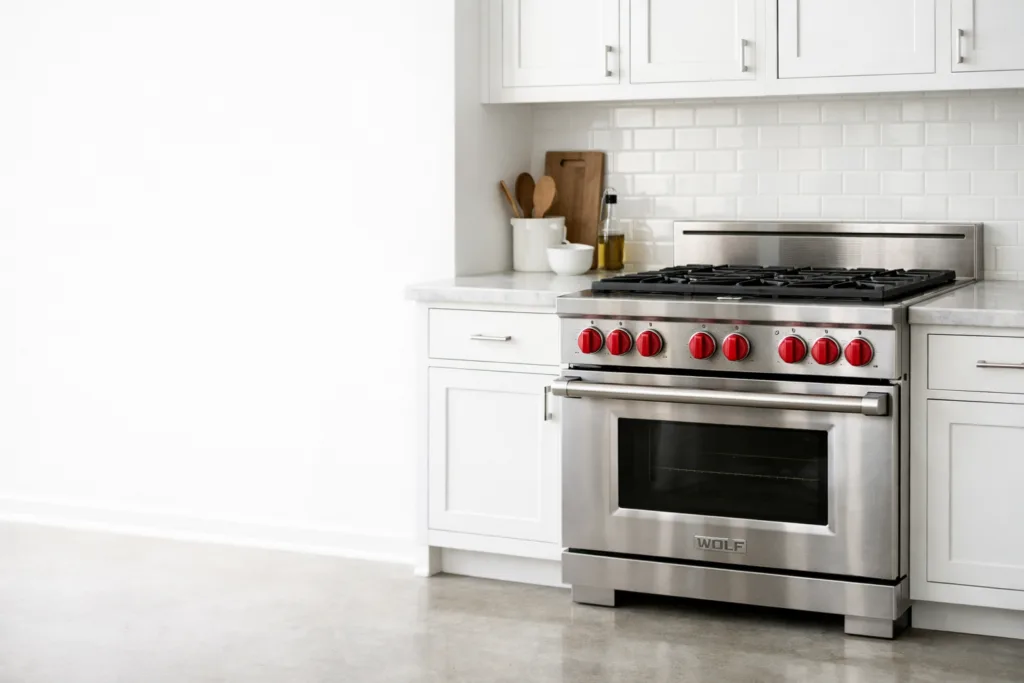
Oven problems rarely stay minor for long. What starts as a longer preheat or a tray of cookies baking unevenly can turn into a unit that will not hold temperature, shuts off mid-cycle, or becomes unreliable when you need it most. With Wolf ovens, the same surface-level symptom can come from very different causes, so the most useful next step is testing the appliance based on the exact way the problem appears.
Common Wolf oven problems in Mar Vista homes
In Mar Vista households, oven trouble usually shows up in everyday cooking first. Meals take longer than expected, roasting temperatures feel off, or baked goods no longer come out consistently. Some homeowners notice a fault code or intermittent shutdown, while others simply realize the oven no longer performs the way it used to.
Not heating or taking too long to preheat
If the oven powers on but does not reach the set temperature, several components may be involved depending on the model. Possible causes can include a failing igniter, weakened heating element, temperature sensor issue, relay problem, or electronic control fault. Slow preheat is often treated as an inconvenience, but it can be an early warning that a heating component is weakening and no longer producing full output.
This is one of the most common situations where guesswork leads to wasted time. A weak igniter, for example, can mimic other heating problems, and a sensor that reads inaccurately can make the oven seem underpowered when the real issue is temperature feedback.
Uneven baking and temperature swings
When one rack browns faster than another or food comes out overdone around the edges and undercooked in the center, the oven may not be circulating or regulating heat correctly. Causes can include sensor drift, convection fan issues, poor door sealing, or calibration problems. Inconsistent baking is especially noticeable in homes that use the oven often for weeknight meals, holiday cooking, or batch baking.
If results have changed across multiple recipes and pans, the appliance usually needs service rather than a change in cooking method.
Oven shuts off during use or shows an error code
An oven that turns off unexpectedly can point to an overheating condition, a control problem, electrical interruption, or a safety-related fault. If the display shows an error code repeatedly, the code should be treated as a symptom, not the final diagnosis. In many cases, clearing the code or resetting power only brings the same issue back later.
If the breaker trips when the oven is running, stop using it until the cause is identified. Repeated tripping can indicate a component failure or wiring issue that should not be ignored.
Door, hinge, gasket, and latch issues
A Wolf oven depends on proper door alignment and sealing to maintain stable cooking temperatures. If the door does not close tightly, heat escapes, cook times increase, and performance becomes less predictable. Worn hinges, damaged gaskets, or latch problems after self-clean cycles can all interfere with normal operation.
Door problems are easy to underestimate because the oven may still turn on and appear to work. In practice, poor sealing can affect both cooking results and the stress placed on heating components.
What different symptoms can mean
Looking closely at the symptom pattern helps narrow down the repair path. Homeowners often describe the issue in broad terms like “not working right,” but the details matter.
- Preheat starts normally but takes much longer than before: often linked to a weak heating component, igniter, or inaccurate temperature feedback.
- Display works, but the cavity stays cool: may suggest a heating failure, relay issue, or control problem.
- Oven gets hot but food still comes out wrong: frequently tied to calibration, sensor, convection, or sealing issues.
- Problem only happens sometimes: intermittent electrical or control faults are common in this pattern.
- Issue began after self-clean: latch, thermal, fuse, or control-related failures can appear after high-heat cleaning cycles.
These distinctions help determine whether the repair is likely to involve one failed part, related component testing, or a broader condition issue within the oven.
Why diagnosis matters before replacing parts
Wolf ovens are built with integrated controls and tightly related components, which means one failure can resemble another. Replacing parts based only on the most obvious symptom can miss the underlying cause. An oven that seems to have a bad sensor may actually have a control issue. A unit that appears to need a new board may be reacting to a separate heating or door-related fault.
Good diagnosis also helps with repair-versus-replacement decisions. If the problem is isolated and the rest of the oven is in sound condition, repair is often a sensible option. If testing reveals multiple worn components, repeated history, or a major control failure in an aging unit, it may be time to consider whether further repair is worthwhile.
When to stop using the oven and schedule service
Some problems allow limited use for a short time, but others call for stopping right away. If the appliance is showing signs of electrical stress, overheating, or unsafe ignition behavior, continued use can make the repair more expensive or create avoidable risk.
Arrange service if you notice any of the following:
- The oven will not maintain the selected temperature
- Preheat times are steadily getting longer
- The oven shuts off during baking or roasting
- Error codes return after being cleared
- The door will not close or seal properly
- There is sparking, a burning smell, or visible signs of overheating
- The breaker trips during operation
For gas models, delayed ignition or an unusual gas odor should never be brushed off. If there is a strong or persistent gas smell, stop using the appliance and address the gas safety concern before pursuing appliance repair.
What homeowners in Mar Vista can expect from a repair evaluation
A useful oven service visit should do more than confirm that the appliance is malfunctioning. It should identify which component has failed, whether adjacent parts have been affected, and whether the symptom points to isolated wear or a larger reliability issue. That is especially important when the oven has been showing smaller warning signs for weeks, such as uneven browning, erratic temperatures, or occasional startup trouble.
In many Mar Vista homes, the priority is getting the oven back to reliable daily use without unnecessary parts replacement. That means matching the repair path to the specific complaint, model behavior, and overall condition of the appliance.
Signs the issue may have been developing for a while
Oven failures are not always sudden. Many start with subtle performance changes that are easy to explain away until the appliance becomes truly disruptive.
- Recipes that used to be dependable now need extra time
- The oven seems hotter or cooler than the setting suggests
- Broiling performance has dropped off
- The convection feature no longer cooks as evenly as before
- The door feels loose, misaligned, or harder to close
- The control panel behaves inconsistently or responds slowly
When these signs show up together, the oven may need more than a single quick fix. Identifying that early can help avoid repeat service calls and interrupted use.
Choosing the right next step
The best repair decisions come from the symptom pattern, not from assumptions. A Wolf oven that is still in good overall condition may only need a targeted repair to restore normal cooking. In other cases, diagnosis may show that the problem is broader and that continued use should be paused until the underlying fault is resolved.
For homeowners in Mar Vista, the goal is straightforward: make the oven predictable again for everyday meals, baking, and family routines. The fastest way to get there is to identify the actual cause of the heating, temperature, control, or door issue before deciding on the repair path.