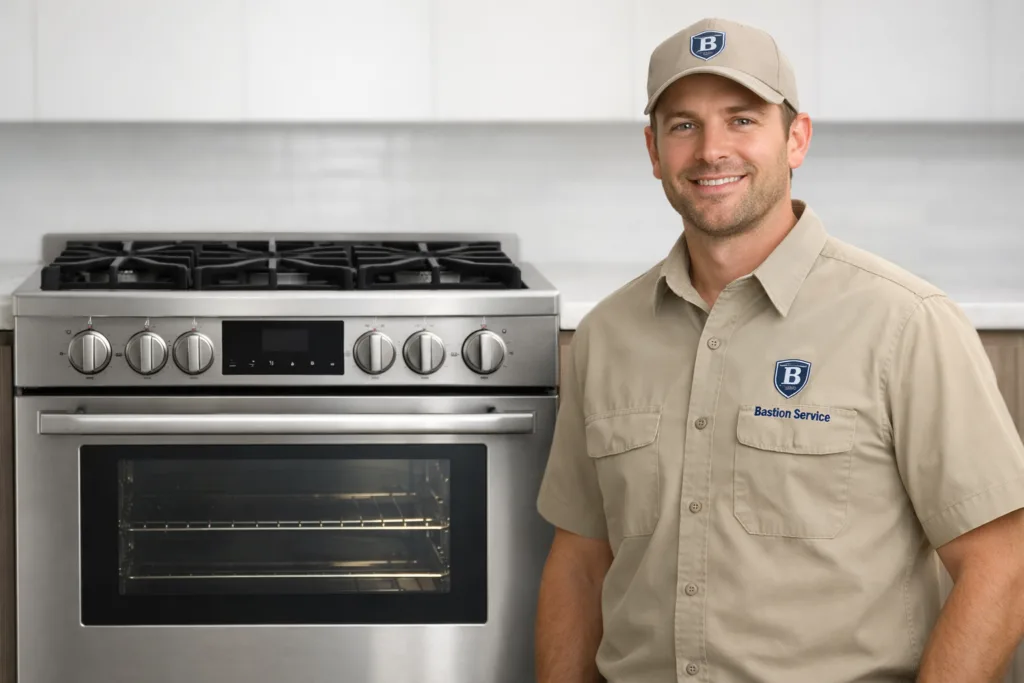
Cooking problems usually show up before a complete failure. A batch that browns unevenly, a preheat cycle that drags on, or a control panel that acts strangely can all point to a specific issue inside the oven. For homeowners in Mar Vista, the most useful approach is to match the symptom to the likely failed part or system instead of treating every oven problem the same way.
What different LG oven symptoms often mean
LG ovens can fail in ways that look similar at first, but the repair path changes depending on how the appliance behaves in bake, broil, and preheat modes. Noticing the exact pattern helps narrow down whether the problem is related to heat production, temperature sensing, power supply, airflow, or the electronic controls.
Oven not heating at all
If the oven stays cold in bake or broil, the fault may involve the igniter on a gas model, a failed bake or broil element on an electric model, a sensor problem, damaged wiring, or a control issue. Sometimes the display and lights still work, which makes the oven appear functional even though the heating circuit is not operating correctly.
A total no-heat condition is usually more than a calibration issue. If the unit starts a cycle but never warms up, the problem often needs part-level diagnosis rather than settings changes.
Uneven baking or hot and cold spots
When food cooks faster on one side, burns on the bottom, or comes out inconsistent from rack to rack, the oven may be heating but not distributing or regulating heat properly. Possible causes include a weak element, a drifting temperature sensor, a convection fan issue, poor door sealing, or a control that is cycling heat incorrectly.
This kind of problem matters because the oven can still seem usable while producing unreliable results. Households often notice it first with baking, roasting, or anything that depends on stable temperature over time.
Slow preheat
A long preheat cycle is one of the most common warning signs before a larger heating failure. On some LG ovens, slow preheating can point to an igniter that has weakened, an element that is no longer reaching full output, or a sensor and control combination that is reading temperature inaccurately.
If preheat has become gradually slower, it is worth addressing early. Waiting can lead to incomplete heating, poor cooking performance, and more strain on related components.
Temperature swings during cooking
An oven that overshoots the set temperature, drops too low, or cycles erratically may have trouble with sensing or control response. In practical terms, that can look like cookies that burn before the centers set, casseroles that take much longer than expected, or recipes that never turn out the same way twice.
Temperature instability does not always mean the entire control board has failed. In many cases, the issue is isolated to a sensor, element performance problem, or another part affecting how the oven reads and maintains heat.
Error codes, resets, and control problems
If the display flashes, the touch controls stop responding, or the oven shuts down mid-cycle, the fault may involve the user interface, temperature sensing circuit, door lock system, or main control. Error codes can be helpful, but they do not always identify the failed part by themselves. A code may point to the affected system while the true cause is a wiring issue, a shorted component, or an intermittent board fault.
Common issues by oven function
Breaking the problem down by function can make the next step easier.
- Bake not working but broil works: often points to a bake element, igniter, relay, or related wiring problem.
- Broil not working but bake works: may involve the broil element, control output, or connection failure.
- Convection not performing normally: fan motor, fan blade, sensor, or control-related issues may be affecting airflow and heat balance.
- Self-clean problems: door latch, lock motor, thermal stress, or control faults can keep the cycle from starting or finishing correctly.
- Door not closing or sealing well: worn hinges, gasket problems, or alignment issues can affect both temperature stability and cooking times.
Signs the oven should not keep being used
Some performance issues are frustrating but not immediately dangerous. Others should be taken seriously before the appliance is used again. It is best to stop using the oven if you notice repeated breaker trips, visible sparking, a strong burning smell, failure to shut off properly, or persistent fault codes that return after resetting the unit.
For gas models, delayed ignition, clicking without lighting, or unusual ignition behavior should be checked promptly. If there is a strong gas odor, stop using the appliance and address the gas concern first.
Why symptom-based diagnosis matters
Replacing parts based on guesswork can get expensive quickly, especially with modern LG ovens that rely on multiple sensors, electronic controls, and safety systems working together. A no-heat complaint could come from an igniter, element, sensor, relay, harness issue, or board failure. Uneven cooking could come from regulation problems rather than a complete heating failure.
That is why homeowners usually benefit from practical repair guidance tied to the actual symptom pattern. The goal is to identify what has failed, what is still working, and whether the repair is likely to restore normal cooking performance without repeat problems.
When repair usually makes sense
Many LG oven problems are worth repairing when the issue is limited to one system and the rest of the appliance is in solid condition. Isolated failures such as igniters, heating elements, temperature sensors, fan motors, door hardware, and some control-related parts are often repairable without turning the job into a full appliance replacement decision.
Repair is usually the better path when the oven has been cooking well otherwise, the cabinet and cavity are in good shape, and the problem can be traced to a specific failed component.
When replacement may be the better choice
Replacement becomes more reasonable when the oven has multiple active issues, recurring electronic faults, heavy wear, or signs that several major components are nearing the end of service life. If a unit has ongoing control trouble plus poor heating plus door or interior deterioration, putting money into one repair may not solve the broader reliability problem.
In those cases, the key question is not just whether the oven can be repaired, but whether the result will be cost-effective and dependable for everyday household use.
What Mar Vista homeowners can do before scheduling service
A few quick observations can make diagnosis easier. Note whether the problem happens in bake, broil, or both. Pay attention to how long preheat takes, whether the display shows a code, and whether the oven reaches temperature at all or simply falls short. If food is cooking unevenly, think about whether the issue happens on every rack and with multiple recipes.
You can also check for obvious signs such as a damaged door seal, a visibly broken element on electric models, or a control panel that resets unexpectedly. These details help separate a heating issue from a sensor, airflow, or control fault.
Focused help for household cooking problems
Most people do not need a deep technical explanation. They want to know why dinner is taking longer, why baking results changed, or whether the oven is safe to keep using. For LG ovens in Mar Vista, the best next step is to evaluate the exact symptom, confirm the failed component or system, and choose the repair path that fits the condition of the appliance.