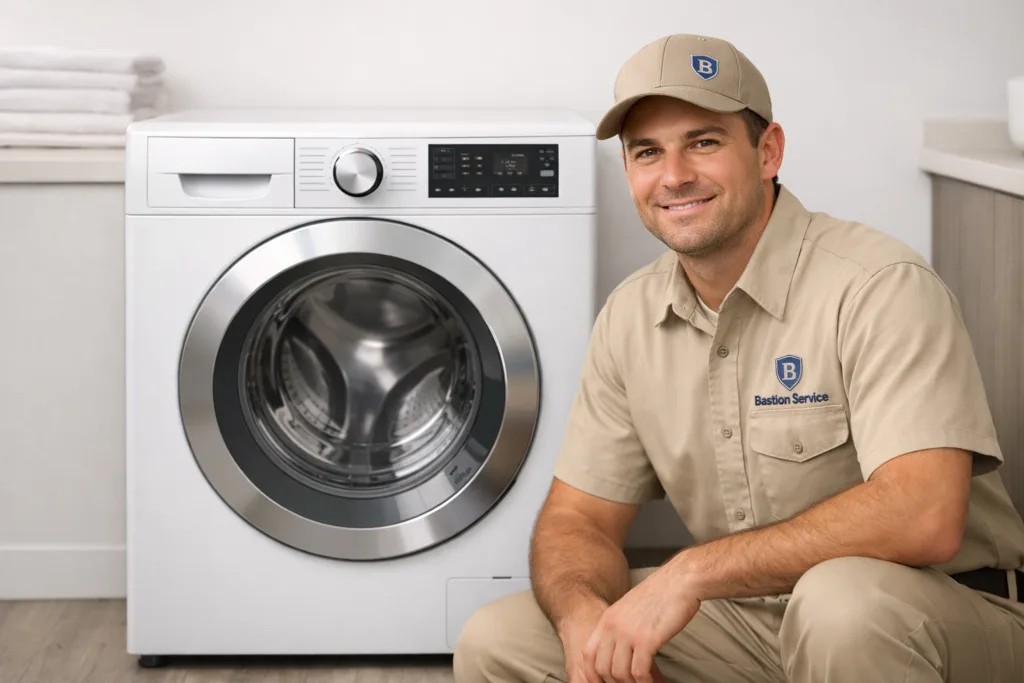
Small changes in washer performance often show up before a complete failure. Clothes may come out wetter than usual, cycle times may stretch longer, the drum may pause unexpectedly, or a faint leak may appear near the front of the machine. On Bosch washers, those symptoms can point to very different causes, which is why the next step should be based on what the machine is actually doing rather than on the most obvious guess.
Common Bosch washer problems seen in El Segundo homes
Household laundry routines are usually disrupted by a few repeat symptom patterns. Bosch washer service is often needed when the unit will not start, will not drain, leaves soap residue, shakes hard during spin, leaks water, or stops with an error before the cycle is complete. Looking at when the problem happens is often the fastest way to narrow down the repair path.
Washer will not start
If the display lights up but the cycle will not begin, the issue may involve the door lock, control response, start sequence, or a condition the washer sees as unsafe. A Bosch washer may appear to have power but still refuse to run if the door is not locking correctly or if another fault is preventing the cycle from engaging.
Homeowners sometimes notice that the controls respond normally until the moment the cycle should begin. That can suggest a latch or communication issue rather than a total power failure.
Not draining and leaving clothes wet
When water remains in the drum at the end of the cycle, the washer often cannot move into a full spin. This may be caused by a clogged drain path, a weak or failing pump, a sensing problem, or a condition that keeps the unit from advancing properly. Clothes may come out heavy, damp, and poorly rinsed even though the machine appears to have completed the cycle.
If the washer hums, pauses, or repeatedly adds time without clearing the water, it is best not to keep restarting it. Repeated attempts can add strain to the drain system and make cleanup harder if the machine eventually overflows or leaks.
Leaking during operation
The timing of a leak is one of the most useful clues. Water that appears during fill may point to inlet-related parts, oversudsing, or a door seal issue. Water that shows up during drain or spin may be tied to hoses, pump connections, or internal wear that only becomes noticeable once the washer is moving water quickly.
Because water can travel before it becomes visible on the floor, the spot where you see it is not always the spot where it started. That is especially true when a front-load washer leaks from underneath or near one front corner.
Shaking, banging, or unusual noise
Some vibration is normal, but strong movement across the floor, repeated banging in spin, scraping sounds, or a rough mechanical noise should be checked. A single unbalanced load can cause temporary shaking, but repeated vibration usually suggests that something else is affecting stability or drum movement.
Common possibilities include suspension wear, objects caught where they should not be, drum support problems, or a washer that is no longer handling spin the way it should. If the machine has become noticeably louder over time, that trend matters.
Poor wash results or detergent residue
If clothes are not coming clean, detergent is left behind, or rinse performance has dropped, the issue may not be the detergent itself. Water fill problems, drainage trouble, cycle interruptions, or heating-related faults can all affect how well the washer cleans and rinses.
This is a symptom many households tolerate for a while because the washer still runs. But poor wash quality often means the machine is no longer completing part of the process correctly.
Error codes and cycles that stop midstream
A Bosch washer that stops at the same point every time is giving useful information even if the exact code is unclear. Repeated interruptions can be linked to water intake, draining, temperature, door lock, or control communication issues. The code helps narrow the possibilities, but the code alone is not the full answer.
How symptom timing helps identify the problem
One of the simplest ways to understand a washer problem is to note when it occurs:
- At the beginning of the cycle: often linked to filling, door lock, or startup control issues
- During wash or tumble: may involve sensing, motor response, unusual noise, or leaks from the door area
- During drain: commonly points to pump, hose, or blockage-related trouble
- During spin: may reveal imbalance, suspension wear, drum problems, or drainage faults that prevented a proper spin
- At the very end: can suggest incomplete draining, unlocking problems, or a cycle that never fully finished
Even a short description of the sequence can make repair decisions more accurate. For example, a washer that “won’t spin” may actually be failing earlier because it cannot drain.
Signs the washer should not keep running
Some issues are more than an inconvenience and are worth addressing before the next load. It is smart to stop using the washer if you notice:
- Water leaking onto flooring
- A burning smell
- Grinding, scraping, or metal-on-metal noise
- The drum repeatedly stopping with water inside
- The machine moving excessively during spin
- The door not locking or not unlocking normally
Continuing to run the unit with those symptoms can increase wear, lead to a larger repair, or create avoidable water damage inside the home.
Why accurate diagnosis matters on Bosch washers
Many washer problems overlap from the homeowner’s point of view. A load that ends soaking wet could be caused by a pump issue, a restriction in the drain path, an imbalance condition, or a control-related interruption. A washer that will not start may have a failed latch, not a failed motor. A leak that seems to come from the door may actually be caused elsewhere.
That is why the most useful repair plan starts with confirming the failed part or system instead of replacing parts based on a symptom alone. This is the step that helps determine whether the issue is isolated, whether the machine has broader wear, and whether repair is likely to restore normal household use.
Repair or replace: what usually makes sense
Many Bosch washer problems are repairable when the failure is limited to a pump, valve, latch, hose connection, suspension component, or a specific electrical fault that has been properly identified. In those cases, repair is often the practical move.
Replacement becomes more likely when the washer has multiple major issues at once, clear signs of internal wear beyond a single repair, or recurring problems that continue after prior work. Age matters, but condition matters more. A well-kept washer with one confirmed failure is very different from a washer with repeated leaks, heavy noise, control trouble, and poor spin performance all at the same time.
What El Segundo homeowners can check before service
Without taking the washer apart, a few observations can help clarify the problem:
- Whether the washer fills with water normally
- Whether the drum turns during wash
- Whether the problem happens on every cycle or only certain loads
- Whether water remains inside after the cycle stops
- Whether the leak appears early, late, or only during spin
- Whether the unit shows a repeat error pattern
These details do not replace service, but they do make the symptom pattern easier to understand and help separate a one-time loading issue from a mechanical or electrical problem.
When service is worth scheduling
Washer service makes sense when the machine is no longer completing normal cycles, when draining is unreliable, when wash results have dropped off, or when the unit is leaking or producing unusual noise. It is also worth scheduling when the washer still runs but clearly is not behaving the way it used to.
For households in El Segundo, the goal is usually straightforward: restore reliable laundry use without guessing, repeated failed cycles, or waiting until a minor symptom becomes a full breakdown. When the pattern is identified early, the repair decision is usually easier and the path forward is clearer.