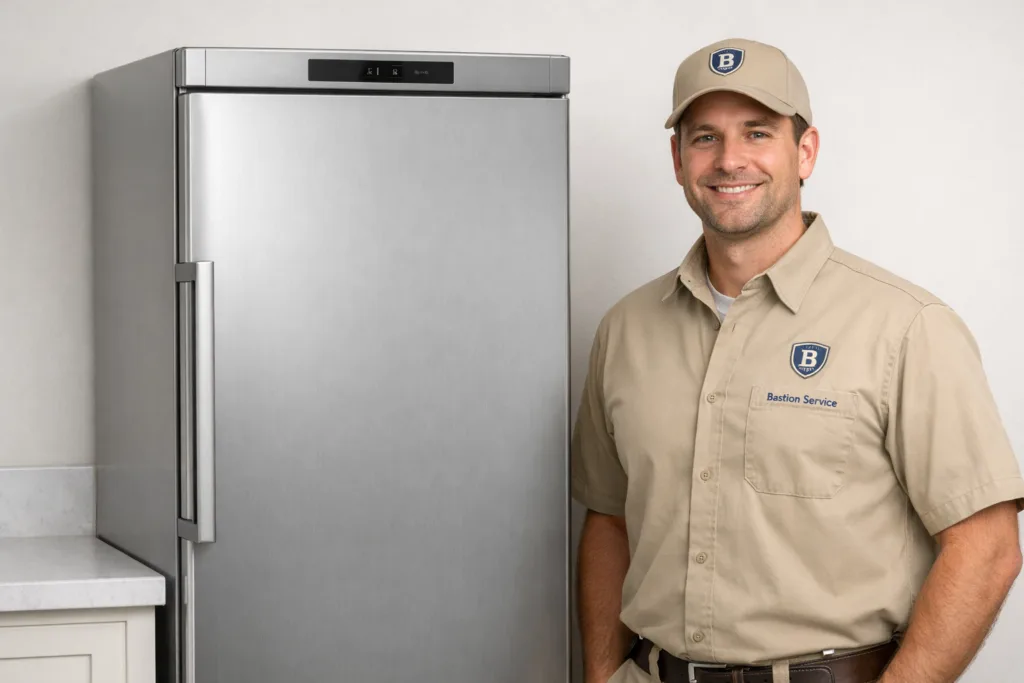
Food loss can happen fast when a freezer stops holding steady temperature. What helps most is matching the repair path to the way the problem is showing up. On a Blomberg freezer, symptoms such as soft food, repeated frost, puddling water, or a fan that suddenly gets loud often point to different systems inside the unit, so the details matter.
Start with what the freezer is doing now
Freezer problems rarely appear as one isolated failure. A temperature complaint may come with frost on the back panel, a door that no longer seals tightly, or a fan sound that changes during the day. Looking at the full symptom pattern usually makes it easier to tell whether the issue is related to airflow, defrost operation, controls, door sealing, or the cooling system itself.
Not freezing hard enough
If ice cream is soft, frozen meals are partly thawing, or food quality seems different from shelf to shelf, the freezer may not be moving cold air properly. Common causes include frost blocking the evaporator area, a weak evaporator fan, a sensor or thermostat issue, or a cooling problem that prevents the cabinet from reaching and maintaining the right temperature.
Homeowners sometimes notice that the back of the freezer feels colder than the front, or that items near vents stay harder than food in drawers. That uneven pattern often points to airflow restrictions rather than a simple “not cold” condition.
Frost buildup that keeps coming back
A light trace of frost after the door has been open is one thing. Thick frost on walls, drawers, rails, or around the back interior panel is different. Repeated ice buildup can mean the freezer is not defrosting correctly, the door gasket is leaking warm air, or the door is slightly misaligned and not closing as tightly as it should.
As frost thickens, airflow drops. Once that happens, the freezer may still run but cool less effectively, leading to soft food, longer run times, and more strain on key components.
Running all the time or getting unusually loud
A Blomberg freezer that rarely cycles off is usually trying to recover from something. Warm air entering through a poor seal, dirty heat-dissipating surfaces, sensor errors, ice around the fan, or reduced cooling efficiency can all push the unit into longer run times. That nonstop operation is not just annoying; it often signals falling performance.
Noises can also help narrow things down. A clicking sound may suggest a start or relay issue. Buzzing can point to a motor or compressor-related problem. Rattling may be as simple as a loose panel, while scraping or humming from inside the cabinet can happen when ice starts interfering with the fan.
Water, moisture, or sheets of ice inside
Water under drawers, dampness around the opening, or thin ice layers on interior surfaces often trace back to drainage issues, door seal leaks, or inconsistent defrost behavior. Moisture should not be ignored. Once water starts collecting and refreezing, the freezer can develop both cooling and airflow problems that are harder to correct later.
Why the same symptom can lead to very different repairs
Two freezers can both seem “warm” and still need completely different solutions. One may have a door gasket letting in humid air. Another may have a failed defrost part that has buried the evaporator in ice. A third may have a sealed-system problem that changes the repair decision entirely.
That is why diagnosis matters before parts are replaced. Guessing based on one visible symptom can waste time and money, especially when a freezer is still partly working and the real fault is hidden behind interior panels or tied to how the unit cycles.
Signs the issue should be addressed sooner rather than later
Some freezer problems build slowly, but they still affect food safety and appliance wear. It is smart to stop waiting if you notice:
- Food softening or thawing and refreezing
- Heavy frost that returns after manual clearing
- The freezer running almost nonstop
- A door that pops open, sags, or does not seal evenly
- Water pooling inside or under the unit
- New fan noise, clicking, buzzing, or scraping sounds
- Burning smells or repeated electrical tripping
In Pico-Robertson homes, these are usually the warning signs that a smaller issue is starting to spread into a larger one.
Problems that homeowners sometimes mistake for major failure
Not every poor-cooling complaint means the freezer is beyond repair. Several conditions can look severe at first but may still be limited to a specific component or airflow issue.
Door gasket wear
If the gasket is torn, loose, hardened, or dirty enough to prevent a full seal, warm air can enter little by little. The result may look like a cooling-system problem because the freezer runs longer, frosts up faster, and struggles in certain sections. But the root cause may be at the door edge.
Defrost-related faults
A freezer with a defrost heater, sensor, or control issue can eventually become packed with hidden frost behind the panel. From the outside, it may simply seem warm and noisy. Inside, airflow may be blocked by ice. This is a common example of why symptom-based guessing leads people in the wrong direction.
Fan and airflow issues
When fans slow down, stop intermittently, or get obstructed by ice, cold air may not circulate where it needs to go. That can create uneven temperatures, noise complaints, and frost in unusual places. The freezer may still cool somewhat, which makes the issue easy to postpone even though performance is already compromised.
When repair is often worth considering
Repair usually makes sense when the problem is isolated and the overall freezer condition is solid. That often includes faults involving gaskets, fans, defrost components, sensors, switches, or certain control-related parts. In these cases, a targeted repair may restore normal operation without the cost of replacing the appliance.
Replacement becomes a more serious consideration when there is a major cooling-system failure, multiple worn components, extensive age-related wear, or a repair total that no longer fits the freezer’s remaining service life. The useful decision point is not the symptom alone but the confirmed cause and the condition of the unit as a whole.
How to describe the problem before service
If you are scheduling Blomberg freezer repair in Pico-Robertson, a few observations can make troubleshooting faster and more accurate. Try to note:
- Whether food is fully thawing or just softening
- Where frost appears and how quickly it returns
- If the noise is constant, intermittent, or tied to door opening
- Whether water is inside the cabinet or under the unit
- If the freezer runs all day or cycles normally at times
- Any recent changes in how the door closes or seals
These details often help separate a simple access or airflow problem from a deeper cooling issue.
What a useful service visit should answer
Most homeowners are not looking for theory. They want to know why the freezer is failing, whether it is safe to keep using, and what repair path actually makes sense. A helpful service visit should identify the likely source of the temperature or frost problem, explain whether continued operation could worsen the condition, and outline the next step in plain language.
For households in Pico-Robertson, the goal is usually straightforward: protect food, restore stable freezing, and avoid paying for the wrong repair first. When the symptom pattern is evaluated carefully, it becomes much easier to decide whether the problem is manageable, urgent, or a sign that replacement should be considered.