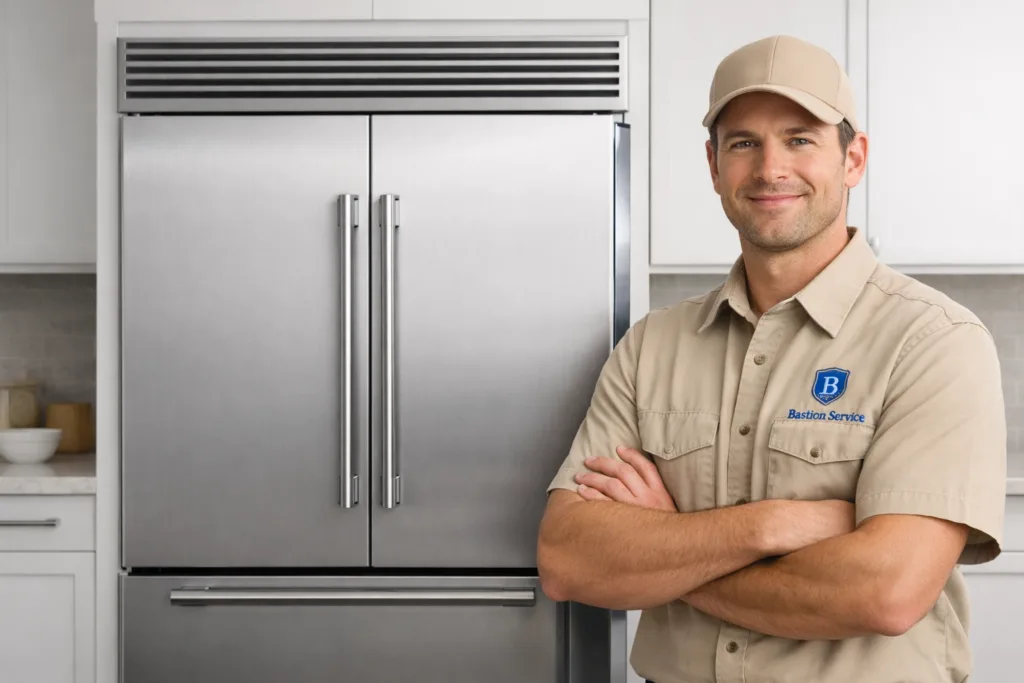
Premium freezers rarely fail in just one obvious way. A Sub-Zero unit may start with a little frost on the back wall, drawers that feel harder to open, or a fan sound that comes and goes before food temperature changes become noticeable. Reading those early signs correctly can help prevent spoiled food, excess ice buildup, and unnecessary part replacement.
What common freezer symptoms usually mean
Food is softening or freezing unevenly
If frozen items near one section stay solid while food in another area starts to soften, the problem is often related to air movement rather than a complete loss of cooling. Restricted airflow, an evaporator fan issue, frost around the evaporator cover, or a sensor problem can all create uneven temperatures inside the cabinet. In a built-in Sub-Zero freezer, this kind of pattern usually needs more than a quick thermostat adjustment.
Watch for clues such as ice cream turning soft, frozen vegetables clumping together, or items near the door thawing first. Those details help narrow down whether the issue is circulation, temperature sensing, or a deeper cooling problem.
Frost keeps coming back
Recurring frost is one of the most useful symptoms because it often points to a short list of causes. Warm air entering through a worn gasket, a door that does not close fully, or a defrost problem can all lead to visible ice on shelves, drawers, or interior panels. Even when the freezer still seems cold, repeated frost buildup can interfere with normal airflow and force fans and other components to work harder.
If frost forms around packages or along drawer rails, the unit may be pulling in moisture each time the door relaxes open or fails to seal evenly. If frost appears behind interior panels, the issue may be more closely tied to defrost operation or blocked airflow.
The freezer runs too long or never seems to catch up
A freezer that runs almost nonstop is telling you it is struggling to maintain its target temperature. That can happen because of dirty heat-transfer surfaces, fan trouble, control faults, sensor errors, a sealing issue, or a sealed-system problem. The important point is that long run times do not always mean the compressor itself has failed.
In many homes in Pico-Robertson, this symptom first shows up as a freezer that sounds busy all day but still does not feel as cold as usual. That combination is a strong reason to stop guessing and have the unit evaluated before performance drops further.
Leaks, drips, or ice under drawers
Water around the freezer or ice collecting where it should not can be related to a blocked defrost drain, condensation from warm air intrusion, or melting frost that is no longer draining properly. This often starts as a small sheet of ice at the bottom of the compartment and later turns into sticking drawers, pooling water, or extra strain on moving parts.
Because moisture problems can look minor at first, they are easy to ignore. In reality, they often point to a condition that keeps worsening with normal use.
Buzzing, clicking, or fan noise
Not every sound means a major failure, but a new sound that repeats in the same pattern should be taken seriously. Buzzing can come from vibration or struggling components. Clicking may point to controls or start-related issues. Scraping or rumbling often suggests ice interfering with a fan blade or wear in a fan motor assembly.
When noise changes happen alongside frost, warming, or leaking, the sound is usually part of the same repair story rather than a separate issue.
Why accurate diagnosis matters on a Sub-Zero freezer
Sub-Zero freezers are designed for stable storage and integrated performance, which makes symptom overlap common. A complaint like “not freezing” can trace back to several different systems, including door sealing, evaporator airflow, temperature sensing, defrost function, controls, or the sealed system. Replacing parts based on assumptions can waste money while the original problem continues.
A proper diagnosis should sort out what failed first, what secondary symptoms developed after that, and whether the current condition has started affecting food preservation. That is especially important when the freezer still cools somewhat, because partial operation can make the source of the issue less obvious.
Signs the problem is getting worse
- Frozen food softens, then refreezes with ice crystals.
- Frost returns soon after being cleared away.
- Door gaskets look compressed, torn, or no longer sit flush.
- The freezer runs constantly and the kitchen side panels feel unusually warm.
- Drawers become difficult to slide because ice keeps forming underneath or around them.
- New noise appears at the same time as temperature swings or leaks.
Once these signs start stacking up, continued use can create more ice obstruction, more fan strain, and a higher chance of food loss.
When to schedule service
Service is usually worth scheduling as soon as you notice a pattern, not only when the freezer stops cooling completely. Early-stage symptoms are often easier to trace while the unit is still operating and before heavy ice buildup hides the original cause.
If your Sub-Zero freezer in Pico-Robertson is warming, frosting over, leaking, or making a repeatable new sound, prompt attention can help preserve both the appliance and the food inside. Waiting for a total breakdown often turns a manageable repair into a more disruptive one.
Repair versus replacement: what homeowners should weigh
With a built-in premium freezer, the decision is usually not as simple as comparing one repair bill to the price of a new appliance. The better question is whether the current problem is isolated and repairable or part of a larger pattern involving age, repeat failures, and declining cooling performance.
Many issues are still reasonable to repair, including fan motors, sensors, some defrost components, drainage problems, and sealing faults. The conversation changes when there are major cooling-system concerns combined with significant age or repeated service history. A useful assessment should explain not just what part failed, but how that failure fits into the overall condition of the freezer.
What helps before a technician arrives
You do not need to disassemble anything, but a few observations can make the visit more productive:
- Note whether the problem is constant or intermittent.
- Check if frost is forming on food, walls, or behind drawers.
- Listen for fan noise, buzzing, or clicking and note when it happens.
- See whether the door closes firmly on its own or seems slightly loose.
- Pay attention to which foods softened first and where they were stored.
Those details often reveal whether the issue centers on airflow, moisture intrusion, defrost operation, or cooling performance.
What Pico-Robertson homeowners can expect from a focused service approach
In Pico-Robertson homes, built-in freezer repair often requires attention to cabinet fit, ventilation conditions, door alignment, and the exact sequence of symptoms. A freezer that started with light frost and later developed fan noise tells a different story than one that suddenly warmed with no warning. Looking at that sequence is what helps shape the right repair path.
For homeowners deciding what to do next, the most helpful service visit is one that identifies the likely cause, explains the repair scope in plain terms, and makes it easier to judge whether the unit remains a solid repair candidate.