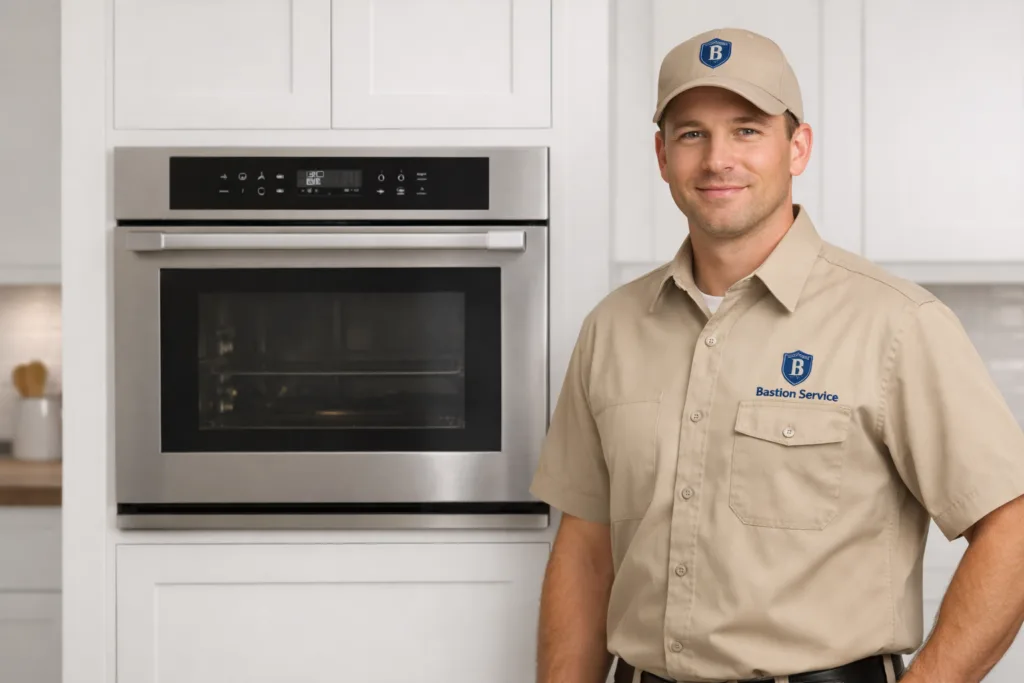
Built-in wall ovens can fail in ways that look similar on the surface but lead to very different repairs. An oven that runs cool, overheats, or bakes unevenly may involve the temperature sensor, a heating element, a relay on the control board, a cooling fan problem, or a door seal issue. Starting with the symptom pattern helps narrow the problem before any parts are considered.
What different wall oven symptoms usually point to
Dacor wall ovens are designed for consistent cooking, so repeat performance issues usually mean something in the heating or control system is no longer operating as intended. The most useful details are whether the problem happens on every cycle, only during preheat, only in bake mode, or only after the oven has been running for a while.
Oven will not heat at all
If the cavity stays cold, the issue may be tied to incoming power, a failed bake or broil element, a thermal protection problem, wiring damage, or an electronic control failure. On some units, the display may still appear normal even though the heating circuit is not completing properly.
Slow preheat
A long preheat often means one part of the heating system is not contributing fully. The oven may eventually reach temperature, but only after extended time. This can happen when an element is weak, a sensor is reading inaccurately, or the control is not cycling heat correctly.
Uneven baking or roasting
If one side browns faster than the other or food comes out with overdone edges and undercooked centers, the cause may involve poor heat distribution, a door that is not sealing well, sensor drift, or a convection-related issue on models equipped with a fan system.
Temperature swings
Some cycling is normal, but large swings can create inconsistent cooking results. Homeowners may notice recipes that used to work now need extra time, or that dishes brown too quickly on top while staying pale underneath. This can point to a sensor problem, relay issue, or calibration error.
Display or control problems
An error code, frozen display, random beeping, or buttons that respond intermittently can indicate a control interface problem or a fault being reported elsewhere in the oven. In many cases, the display is signaling a deeper issue rather than being the only failed part.
Common signs homeowners notice in West Hollywood kitchens
- Preheat taking much longer than it used to
- Food finishing unevenly from rack to rack
- Broil working better than bake, or the reverse
- The oven shutting off before cooking is done
- Error messages during normal use
- A door that will not close firmly or seal heat properly
- Controls that stop responding in the middle of a cycle
These signs matter because they help separate a straightforward component failure from a broader electrical or control issue.
Heating issues are not always caused by the part you expect
It is easy to assume that a heating complaint means a bad element, but built-in ovens are more interconnected than that. A temperature sensor that is out of range can make the oven heat too little or too much. A failing relay can interrupt normal cycling. A damaged door gasket can let heat escape and make preheat seem weak. In some cases, the oven cavity is getting hot, but the control is reading conditions incorrectly and ending the cycle too early.
That is why symptom-based testing matters. Replacing parts by guesswork can add cost without fixing the real cause.
Door, latch, and self-clean problems
Door-related issues can affect both safety and cooking performance. If the door is misaligned, the hinges are worn, or the gasket no longer seals tightly, heat may escape during baking. That can lead to poor browning, longer cook times, and extra strain on heating components.
Self-clean cycles can also trigger repair needs. Some ovens develop latch problems afterward, leaving the door locked or preventing a new cycle from starting. In other cases, the heat of the self-clean cycle exposes a weak control, failing lock motor, or sensor issue that had not been obvious before.
When to stop using the oven
Some oven problems are mostly performance issues, but others should be addressed before the appliance is used again. It is smart to stop operation and schedule service if you notice:
- A burning electrical smell
- Breaker trips during preheat or cooking
- The oven overheating surrounding cabinetry
- The unit shutting off repeatedly on its own
- The door remaining locked unexpectedly
- Controls behaving erratically while heat is active
Continued use under those conditions can increase damage and may create a larger repair path than the original failure.
Repair or replacement for a built-in Dacor wall oven
Built-in appliances are different from freestanding units because replacement is not always simple. Cabinet fit, trim alignment, electrical requirements, and model dimensions all affect the decision. For many homeowners in West Hollywood, repair makes sense when the oven is otherwise in good condition and the problem is limited to a confirmed component such as a sensor, element, fan, latch assembly, or control-related part.
Replacement becomes more worth considering when the oven has multiple major faults, repeated history of similar breakdowns, or a repair cost that no longer matches the appliance’s overall condition. The most useful comparison comes after the exact failure has been identified, not before.
What a service visit should clarify
A worthwhile diagnostic visit should answer a few practical questions: what failed, whether the symptom is isolated or part of a larger electrical issue, whether continued use could cause more damage, and whether the repair is sensible for the age and condition of the oven. That kind of evaluation is especially important with a built-in Dacor unit, where access and installation details can affect both labor and repair planning.
For households in West Hollywood, the goal is not just getting the oven to turn on again. It is restoring stable, predictable cooking performance so baking, roasting, and everyday meal prep feel normal again.