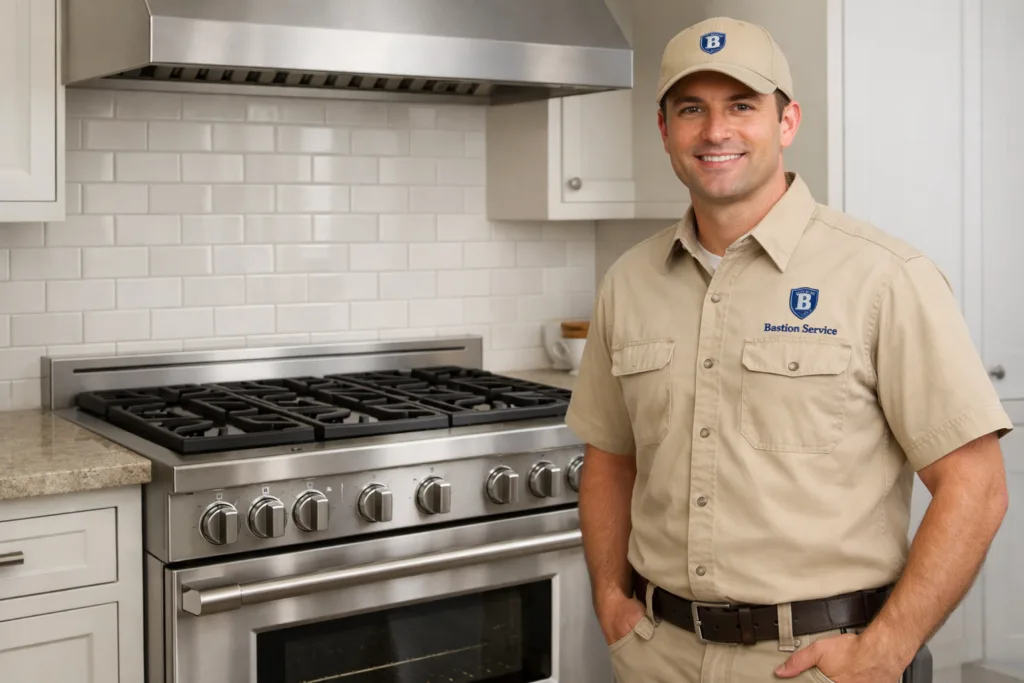
Range problems are easiest to solve when the symptom is described clearly. A Wolf unit may show the same outward behavior for several different reasons, so it helps to pay attention to what happens first, what happens next, and whether the issue is constant or intermittent. That pattern often reveals whether the problem is tied to ignition, heat regulation, controls, airflow, or wear in a specific component.
Start with the exact behavior you are seeing
Small details matter with a residential cooking appliance. If a burner clicks for a few seconds and then lights, that points in a different direction than a burner that clicks continuously and never lights at all. An oven that eventually reaches temperature is also different from one that preheats slowly and then struggles to maintain heat. In Palos Verdes Estates homes, these distinctions help narrow the repair path before parts are changed unnecessarily.
It is also useful to notice whether the problem began after cleaning, after a power interruption, or after a period of heavy holiday cooking. Moisture, residue, power-related control glitches, and normal component fatigue can all create similar complaints at first.
Common Wolf range symptoms and what they may mean
Burner clicks but will not ignite
This is one of the most common range complaints. In many cases, the cause is related to the ignition system, burner cap alignment, debris in the burner ports, or moisture near the igniter. If one burner is affected while the others work normally, the issue may be isolated to that burner assembly. If multiple burners show the same symptom, the diagnosis may move toward switches, power supply, or a broader ignition problem.
Homeowners sometimes notice that the clicking continues even after the flame appears. That can happen when moisture or residue is interfering with normal ignition sensing behavior, but it can also indicate a component that needs attention rather than more cleaning.
Burner lights, but the flame is weak or uneven
An uneven flame can lead to slow boiling, hot spots, and frustrating cooking results. On a Wolf range, this may come from blocked burner ports, burner parts that are not seated correctly, or issues affecting gas flow. If cookware suddenly seems to take much longer to heat, the problem may not be the pan at all.
- Flame looks lower than usual on one side
- Burner takes longer to bring water to a boil
- Flame color or shape appears inconsistent
- Heat output changes from one use to the next
Oven takes too long to preheat
When preheat becomes noticeably slower, the problem may involve the igniter, sensor, control system, or another heating-related component. Some ovens still appear to reach the selected temperature even when a part is weakening, but cooking results start to reveal the issue. You may notice longer bake times, roasted foods that never brown correctly, or a need to compensate by raising the temperature.
Oven temperature seems off
If food is repeatedly overcooked on the outside and underdone in the center, or if familiar recipes suddenly stop working, the oven may not be holding temperature the way it should. A sensor problem, calibration issue, control fault, or uneven heat distribution can all produce this type of complaint. Because temperature drift is often gradual, many homeowners in Palos Verdes Estates do not realize how much performance has changed until several meals come out wrong in a row.
Oven heats, then stops maintaining heat
This symptom often shows up during longer baking or roasting cycles. The range may seem normal at first, then lose consistency partway through cooking. That can point to a heating component weakening under load, a sensor reading issue, or a control problem that becomes more obvious as the oven stays on longer.
Display or control panel is unresponsive
If settings do not respond correctly, the display flickers, or oven functions start and stop unpredictably, the control system should be checked. Electronic issues can affect more than convenience. They may interfere with ignition timing, temperature regulation, or normal cooking cycles.
What changes after cleaning or a spill
Not every service call begins with part failure. After deep cleaning, boil-overs, or liquid spills, burners may click abnormally, ignition may hesitate, or controls may behave oddly until affected areas are fully dry and free of residue. The key is whether the issue clears quickly or continues. If a problem remains after normal drying time and careful reassembly of burner parts, further diagnosis is usually the next step.
For gas burners, even slight misalignment of burner caps or buildup around the ports can change how reliably the burner lights. For ovens, spills that harden inside the cavity can sometimes affect airflow and cooking performance more than homeowners expect.
Signs the problem is getting worse
Ranges often give warning signs before a complete failure. Catching those signs early can help prevent a more disruptive breakdown.
- Burners that need multiple tries to ignite
- Clicking that happens more often than before
- Preheat times that keep getting longer
- Cooking results that vary from one day to the next
- Controls that only respond intermittently
- Oven heat that seems stronger or weaker than the setting
When symptoms are trending in the wrong direction, continued use can place extra strain on igniters, valves, sensors, and control components.
When to stop using the range
Some issues should not be monitored casually. If the oven overheats, a burner will not light correctly, the appliance trips power during use, or the controls act unpredictably, it is wise to stop using the range until it has been evaluated. That is especially true if the appliance begins shutting off unexpectedly or behaves differently from one use to the next.
If there is a strong or persistent gas smell, do not continue troubleshooting the appliance yourself. Stop using the range, leave the area if needed, and contact the gas utility or emergency service first. Gas-related safety concerns should always be handled before arranging repair.
Repair or replacement depends on the overall condition
With a premium range, repair is often the sensible choice when the problem is limited to a specific system and the appliance is otherwise in good shape. Ignition faults, sensor issues, selected control failures, and many oven heating problems are commonly evaluated as repair situations. Replacement becomes more likely when several major systems are failing together, the unit has a long pattern of recurring breakdowns, or the cost of restoring reliable performance no longer makes sense for the household.
The decision is usually easiest when it is based on condition rather than frustration. A single bad week in the kitchen can make any appliance feel beyond saving, but the actual fault may still be isolated and manageable.
How homeowners can prepare for a service visit
A few notes about the symptom can make diagnosis faster and more accurate. Before service, it helps to write down what the range is doing and when it happens.
- Which burner or oven function is affected
- Whether the problem is constant or intermittent
- Any error display or unusual control behavior
- Whether the issue started after cleaning, a spill, or a power event
- If the oven is underheating, overheating, or cooking unevenly
Even simple observations such as “front right burner clicks but does not light unless retried” or “oven preheats slowly, then bakes unevenly after 20 minutes” can be more useful than general descriptions like “not working right.”
Focused Wolf range repair for homes in Palos Verdes Estates
Residential range service should match how the appliance is actually used day to day. For households in Palos Verdes Estates, that means identifying whether the problem affects quick weekday cooking, longer oven cycles, or overall confidence in using the appliance safely. The most useful service approach is one that explains the likely cause, confirms it with testing, and lays out whether the repair is straightforward or whether broader wear is starting to affect performance.
When a Wolf range begins showing burner, oven, or control problems, addressing the symptom early usually gives homeowners the best chance of restoring reliable cooking without letting a smaller issue turn into a bigger one.