
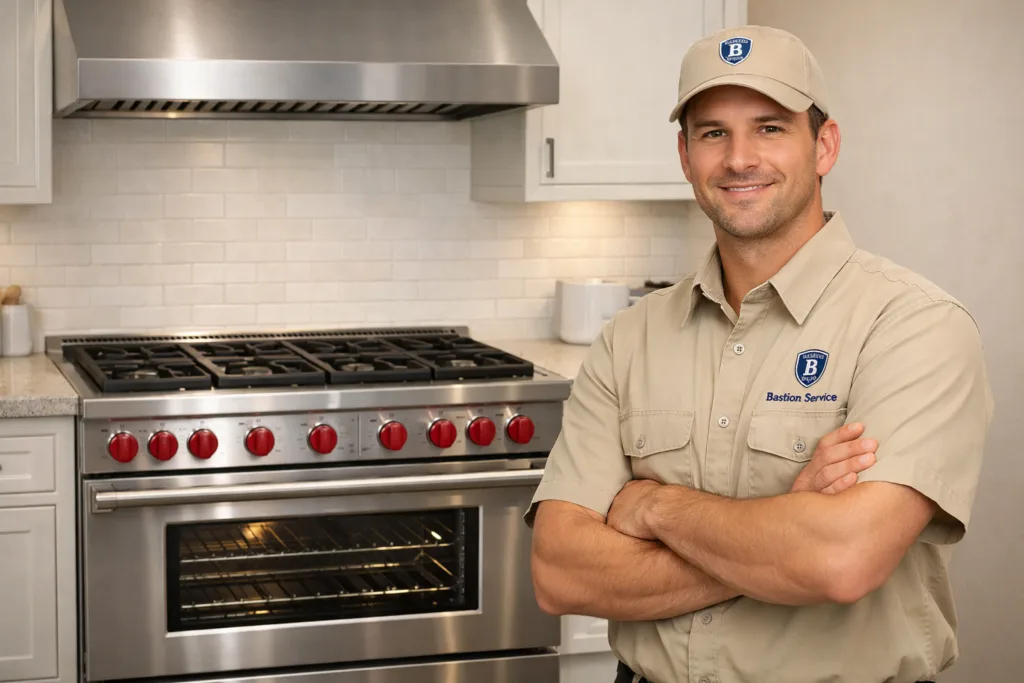




Performance problems in a Wolf appliance usually show up as a pattern before they become a full shutdown. A burner may click more often than usual, an oven may take longer to preheat, or a range may seem to work on some settings but not others. Paying attention to those early changes helps narrow down whether the issue is related to ignition, temperature sensing, controls, power, or a mechanical part that is starting to fail.
For specific Wolf appliance paths in Palos Verdes Estates, review Wolf Oven Repair in Palos Verdes Estates, Wolf Wall Oven Repair in Palos Verdes Estates, and Wolf Range Repair in Palos Verdes Estates.
For homeowners in Palos Verdes Estates, the key is not to treat every symptom as the same problem. Uneven baking can come from an igniter, sensor, relay, or airflow issue. A clicking cooktop may be dealing with moisture, burner misalignment, or a worn ignition component. The right next step depends on how the symptom appears, whether it is intermittent, and whether it is getting worse.
How Wolf appliance problems usually present
Most household calls for Wolf appliance repair begin with one of a few symptom groups:
- Ignition problems, such as repeated clicking or delayed burner lighting
- Heating problems, including low heat, no heat, slow preheat, or overheating
- Temperature inconsistency, where cooking results change even with familiar settings
- Control issues, including unresponsive knobs, buttons, displays, or erratic behavior
- Intermittent operation, where the appliance works normally one day and not the next
These categories matter because they help distinguish a simple single-part failure from a more involved control or wiring issue. When symptoms overlap, especially on a range, diagnosis becomes more important than replacing parts based on guesswork.
Cooktop symptoms that should not be ignored
Clicking that continues after ignition
A Wolf cooktop that keeps clicking after the burner lights often points to a problem in the ignition path. In some cases, the cause is relatively simple, such as moisture, residue, or a burner cap that is not seated correctly. In others, the spark system or switch assembly may be wearing out. If the clicking is constant or returns often, it is worth having it checked before the problem spreads to other burners or becomes more disruptive during everyday cooking.
Burners that do not light reliably
If a burner takes several tries to ignite or only lights on certain settings, the issue may involve ignition components, burner alignment, or gas-flow-related faults within the appliance. A burner that lights inconsistently should not be treated as normal wear. Delayed ignition and repeated failed starts are signs that the cooktop is no longer operating the way it should.
Weak flame or uneven heating
Changes in flame size or burner performance often show up first in cooking results. Water takes longer to boil, pans heat unevenly, or settings no longer behave the way they used to. That can indicate burner assembly wear, restricted flow within the appliance, or control issues affecting output. Because Wolf cooktops are designed for precise cooking response, even modest changes in flame behavior can be worth evaluating early.
When to stop using the cooktop
If there is a strong or persistent gas smell, do not continue testing the appliance. Safety comes first. Less urgent but still important warning signs include repeated failed ignition, abnormal flame behavior, and controls that no longer match actual burner performance.
Oven and wall oven issues homeowners notice first
Slow preheat
One of the most common early complaints is an oven that still works, but takes noticeably longer to reach temperature. That often suggests partial component failure rather than total failure. An igniter may be weak, a sensor may be reading inaccurately, or the appliance may be struggling to cycle heat correctly. This is the kind of symptom that can linger for weeks while cooking results slowly become less predictable.
Uneven baking or roasting
If familiar recipes suddenly need extra time, brown unevenly, or cook differently from front to back or rack to rack, the problem may not be the recipe at all. Wolf ovens and wall ovens can show this pattern when heat distribution is off, temperature sensing is inaccurate, or a heating component is no longer performing consistently. These complaints are especially important when the display appears normal but the food results do not match the selected setting.
Underheating or overheating
An oven that runs cool can leave food undercooked and frustrate meal timing. An oven that overheats can be just as disruptive and may point to a sensor, control, or relay problem. Because both underheating and overheating can come from several different faults, tested diagnosis is usually the fastest path to a reliable repair decision.
Door and control problems
Not every wall oven issue is strictly about heat. A door that does not close tightly, a display that cuts in and out, or controls that stop responding normally can all affect daily use. In some cases, the oven may still heat, but not safely or predictably enough for regular cooking. Those symptoms are often a sign that the appliance should be evaluated before continued use.
Range repairs are often more complex
A Wolf range combines multiple cooking systems in one appliance, so complaints can overlap. A homeowner may notice top burners clicking while the oven also preheats slowly, or one part of the range may seem unaffected while another becomes unreliable. What looks like two separate problems can sometimes share the same control, wiring, or power-related cause.
This is why range issues can be misleading at first. If the oven still heats, it is easy to assume the range is mostly fine. If one burner still lights, the ignition problem may seem minor. But mixed symptoms often point to a broader fault pattern, and that can change the repair approach significantly.
Signs the problem is getting worse
Some symptoms remain stable for a while. Others tend to spread or intensify. It is smart to schedule evaluation when you notice any of the following:
- The same failure happens repeatedly instead of occasionally
- Preheat times continue to increase
- Burners take longer to light than they did a week ago
- Temperature results become harder to predict
- The appliance shuts off unexpectedly or behaves intermittently
- Error behavior or display irregularities begin appearing during normal use
When an appliance still works part of the time, it is tempting to work around the issue. That can be reasonable for a very minor symptom, but repeated use during active ignition, heating, or control failure can turn an isolated repair into a more involved one.
Repair or replacement depends on the actual condition
With a premium brand, the better question is usually not “Is this appliance old?” but “What specifically failed, and how isolated is the problem?” Many Wolf cooktops, ovens, ranges, and wall ovens are well worth repairing when the fault is limited and the rest of the appliance remains in solid condition.
Replacement becomes more relevant when multiple major systems are failing at once, when control problems are extensive, or when repeated repairs have already been stacking up without restoring dependable use. The decision should be based on the condition of the specific appliance, not just frustration with the latest symptom.
What a helpful service visit should answer
Most homeowners do not need a long technical breakdown. They want to know what is causing the symptom, whether the appliance should be used in the meantime, and whether the repair path makes sense. For Wolf appliance repair in Palos Verdes Estates, the most useful outcome is a diagnosis that explains the failure clearly and sets realistic expectations for the next step.
Whether the issue involves a cooktop, oven, range, or wall oven, symptom-based evaluation is what helps separate a fixable component problem from a broader performance decline. That gives households a better basis for deciding how to restore reliable everyday cooking without wasting time on trial-and-error repairs.


