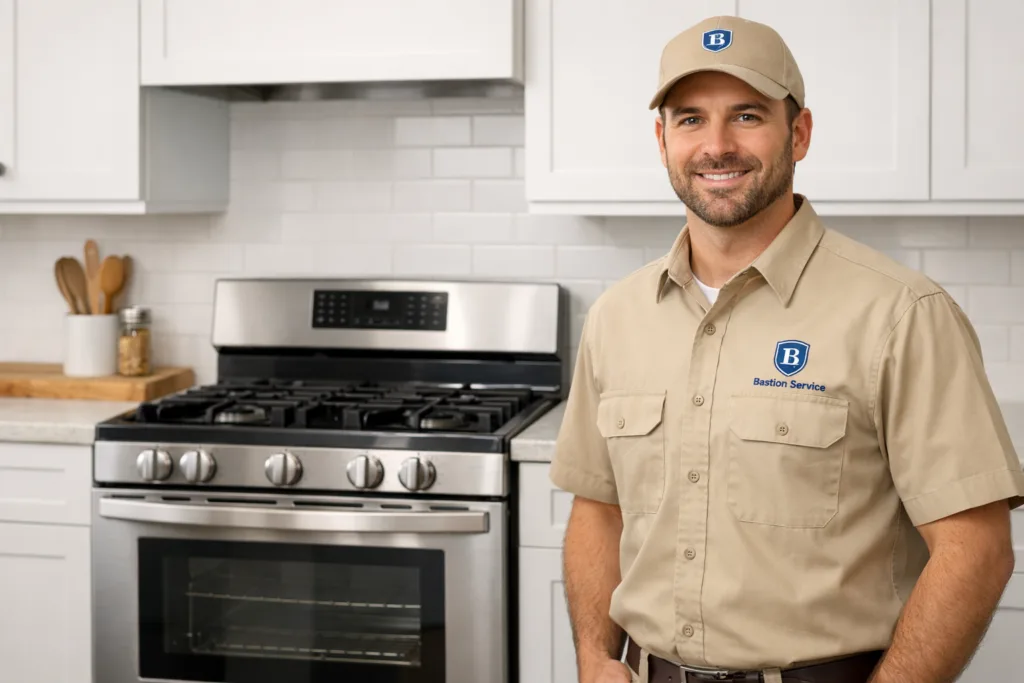
Cooking problems with an LG range often start small: one burner takes longer to light, the oven seems a little off, or the control panel responds inconsistently. Those details matter. A symptom that looks simple on the surface can point to different underlying failures, and the best repair path depends on how the range behaves during actual use.
Common LG range problems seen in homes
Ranges combine heat, ignition, controls, and safety systems in one appliance, so performance issues do not always trace back to a single obvious part. In many cases, the most useful clue is the pattern: whether the problem affects one burner or all of them, whether the oven eventually heats or never gets hot enough, and whether the issue is constant or intermittent.
Oven not heating, overheating, or cooking unevenly
If the oven is taking too long to preheat, struggling to maintain temperature, or cooking one side of a dish faster than the other, possible causes can include a sensor problem, a bake or broil heating issue, a relay fault, or an electronic control failure. Sometimes the oven still gets warm, which makes the problem easy to ignore for a while, but unstable heating usually gets worse rather than better.
Signs that the issue is more than normal temperature fluctuation include:
- Food repeatedly coming out undercooked at the center
- Noticeably longer bake times than before
- Broiling that seems weak or inconsistent
- Temperature swings large enough to affect roasting or baking results
- An oven that shuts off unexpectedly during use
Burners clicking but not lighting
On gas LG ranges, repeated clicking with no flame often points to an ignition-side problem. That can involve moisture, burner cap alignment, debris in the burner area, or a failing igniter-related component. If the clicking continues after the burner should already be lit, that also deserves attention because the range is not operating the way it should.
If one burner lights normally while another does not, that difference can help narrow down whether the issue is isolated to a specific burner assembly or tied to a broader control problem.
Electric burners not heating correctly
On electric models, a burner may heat too low, stay too hot, cycle oddly, or stop heating altogether. The cause may be the surface element, the connection point, the switch, or the control system. A burner that works only part of the time is especially important to address early, since intermittent heating can eventually turn into a complete failure.
Display and control problems
When the display flashes, buttons stop responding, settings reset, or error codes appear, the issue may be in the control system rather than in a heating component. That distinction matters because replacing a sensor or burner part will not fix a board-related fault. If the oven functions start and stop unpredictably, or the panel no longer responds consistently, service is usually the next sensible step.
Symptoms that should not be ignored
Some range problems mainly affect convenience. Others can affect safe operation or place extra strain on the appliance. Continued use is not a good idea if the range is showing signs of overheating, electrical trouble, or unreliable ignition.
Stop and reassess use if you notice:
- A strong or persistent gas smell
- Burning odors from the control area or cooktop
- Breaker trips during operation
- Ignition that fails repeatedly
- An oven that runs much hotter than the set temperature
- Sparking, unusual popping sounds, or visible heat damage
For any gas odor that seems unusual or strong, safety comes first. Stop using the range and follow proper emergency guidance before pursuing appliance service.
What different symptom patterns can mean
How the problem appears during cooking often says more than the symptom alone. For example, an oven that never heats may point in a different direction than one that heats slowly and drifts off target later. A burner that clicks only after cleaning suggests a different issue than a burner that has gradually become unreliable over several months.
Problem started after self-clean
If the range began acting up after a self-clean cycle, the heat exposure may have affected sensors, controls, or nearby components already under strain. This does not automatically mean a major failure, but it is a useful detail to mention when scheduling service.
Problem happens only sometimes
Intermittent symptoms can be harder to catch, but they are often just as real as full failures. A burner that lights every third attempt, or an oven that occasionally overshoots temperature, can indicate a part beginning to fail rather than one that has already stopped completely.
Cooktop works but oven does not
When surface burners operate normally but the oven does not, that often helps narrow the fault away from the appliance as a whole and toward the oven heating, sensing, or control side. The reverse is also true: if the oven works but one burner does not, the issue may be more localized.
When repair usually makes sense
Repair is often worthwhile when the problem is limited to a specific burner, igniter, sensor, heating component, or control-related part and the rest of the range is in good condition. Many cooking problems feel severe in the moment because they interrupt meals, but the actual fix may still be relatively contained once the failure is identified.
In Palos Verdes Estates homes, that decision usually comes down to a few practical questions:
- Is the issue isolated or are multiple systems failing?
- Has the range been reliable up to this point?
- Is the oven cavity, cooktop, and overall condition still solid?
- Did the problem begin suddenly or after a long pattern of decline?
When replacement becomes a more realistic option
Replacement may be more sensible if the range has several unrelated failures, recurring control issues, visible deterioration, or repair costs that no longer fit the condition of the appliance. The goal is not to replace a repairable range too early, but also not to keep investing in an appliance that is becoming increasingly unreliable.
A single heating or ignition issue does not usually mean replacement is necessary. Broader decline across the oven, burners, and controls is a different situation.
How to prepare for a service appointment
A few notes before scheduling can make diagnosis more efficient. Try to write down what part of the range is affected, how often the problem happens, and what you were doing when it appeared. That information is often more helpful than a general description like “it is not working right.”
Useful details include:
- Whether the issue affects the oven, cooktop, or both
- Any error code shown on the display
- Whether the problem began after cleaning, a spill, or a power interruption
- If the oven is too cold, too hot, or slow to preheat
- If a burner clicks continuously, clicks without lighting, or does not heat evenly
- Whether the problem is constant or intermittent
Why symptom details matter for LG range repair in Palos Verdes Estates
Two ranges can appear to have the same problem while needing very different repairs. That is why the best next step is based on the exact symptom pattern, not on guessing which part to replace first. If your LG range in Palos Verdes Estates is no longer heating, igniting, or responding as expected, the most useful approach is to match the repair plan to the actual failure and the overall condition of the appliance.