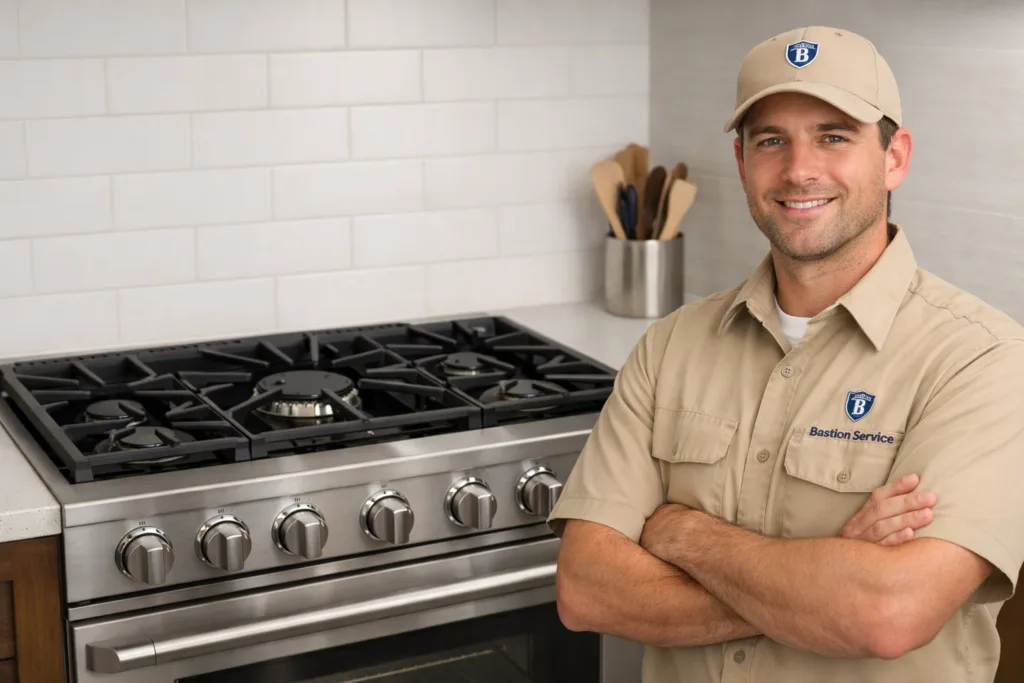
Symptom patterns that matter on a Wolf cooktop

Cooktop problems are easier to solve when the behavior is specific. A burner that sparks but never lights points in a different direction than a burner with no spark at all. A unit that works fine for a week and then starts clicking again after a spill suggests something different from a cooktop that has become steadily less reliable over time. On a Wolf cooktop, those differences matter because the repair path depends on what the appliance does before, during, and after ignition.
In Los Angeles homes, the most common complaints tend to fall into a few recognizable groups: ignition failure, persistent clicking, unstable flame, control issues, and surface damage. Looking at the exact symptom rather than the general complaint helps narrow down whether the issue is isolated to one burner or tied to a broader electrical or control-related fault.
Common Wolf cooktop problems in Los Angeles homes
Burners that will not ignite
If one burner will not light while the others work normally, the issue may be limited to that burner’s igniter, cap position, ignition pathway, or a related component under the surface. If several burners fail at once, the problem may involve power, switches, wiring, or the ignition system itself. The distinction is important because a single-burner issue is usually approached differently from a cooktop-wide failure.
It also helps to notice whether the burner clicks during the start attempt. A burner that clicks but does not light can indicate one type of fault, while a silent burner often suggests another. Even small details like delayed ignition or a burner that lights only after several tries can make diagnosis more accurate.
Repeated or nonstop clicking
Clicking that continues after the burner is lit, or clicking that starts on its own, is one of the most common reasons homeowners seek service. Moisture after cleaning, residue around the burner, or a switch that is not resetting properly can all cause this symptom. In some cases, the clicking stops after the area fully dries. In others, it returns repeatedly and becomes a sign that a component is failing.
If the cooktop keeps clicking even when it is not being used normally, it is best not to ignore it. Ongoing ignition activity can wear down related parts and make the appliance less predictable during everyday cooking.
Weak, uneven, or unstable flame
A healthy burner flame should appear steady and consistent. If the flame looks patchy, too low, unusually high, or easy to blow out, the burner may not be operating correctly. Obstructions, burner cap alignment problems, or regulation-related issues can all affect flame quality. Uneven heat on the pan often shows up before homeowners notice the flame itself is off.
This symptom is more than a cooking inconvenience. An unstable flame can make boiling, simmering, and searing inconsistent, and it may indicate the cooktop is not operating the way it was designed to.
Controls that do not respond normally
When the cooktop becomes intermittent, the problem is not always obvious from the outside. You may turn a knob and get no response, or the burner may work one day and fail the next. Some units show inconsistent ignition timing, while others seem to recover briefly and then act up again.
These patterns can point to switches, ignition modules, wiring, or model-specific control components. Intermittent problems are worth addressing early because they tend to become more frequent, not less.
Cracked glass or visible surface damage
If your Wolf cooktop has a cracked glass surface, chipped area, or visible heat damage, stop using it until the condition is evaluated. Surface damage can affect safe operation and may allow other problems to develop beneath the top. Even if the burners still seem functional, structural damage changes the repair decision and should not be treated like a minor cosmetic issue.
Why accurate diagnosis matters before parts are replaced
Premium cooking appliances often show the same outward symptom for different underlying reasons. Slow ignition, for example, may be caused by burner alignment, residue, a weak ignition component, or a broader system fault. Replacing the first suspected part without confirming the cause can lead to repeat visits and unnecessary expense.
That is why a useful service evaluation focuses on the full operating pattern: which burners are affected, whether the issue is constant or intermittent, what happens during ignition, and whether the problem started after cleaning, a spill, or a power interruption. One practical repair guidance point is simple: the more specific the symptom history, the easier it is to choose the right repair path.
When service is a smart next step
It is usually time to schedule Wolf cooktop repair when the appliance is no longer reliable for normal household use or when the same symptom keeps returning. Some problems start small but become more disruptive as ignition parts, switches, or related components continue to struggle through repeated use.
- A burner regularly fails to light
- The igniter clicks constantly or at random
- The flame is uneven, weak, or goes out easily
- More than one burner begins showing the same problem
- The cooktop works inconsistently from day to day
- Control response changes after spills, cleaning, or power issues
- The glass surface is cracked or visibly damaged
Early attention can keep a localized issue from affecting nearby components and can help preserve the overall condition of the cooktop.
When continued use can make the problem worse
Some symptoms should not be treated as routine inconvenience. Repeated ignition attempts on a burner that will not light can add wear to the ignition system. A burner with poor flame stability may affect cooking safety and performance. A control problem that comes and goes can leave you unsure whether the cooktop will behave normally the next time you use it.
If there is a strong or persistent gas smell, stop using the appliance immediately. Leave the area if necessary and contact the gas utility or emergency service before arranging repair. A gas odor is not a wait-and-see issue.
Repair versus replacement considerations
For many homeowners in Los Angeles, repair makes sense when the cooktop is otherwise in good condition and the issue is limited to ignition, burner performance, controls, or a specific damaged component. Wolf units are often worth evaluating carefully because the right repair can restore normal daily use without the disruption of replacing the appliance.
Replacement becomes a more serious consideration when there are multiple major problems at once, significant age-related wear, severe surface damage, or repair needs that no longer make sense for the condition of the unit. The best decision usually depends on the scope of failure, parts involved, and the likelihood of returning the cooktop to consistent operation.
What homeowners can note before a service visit
A few observations can make a service appointment more productive. If possible, note which burner is affected, whether the problem happens every time or only occasionally, and whether the symptom appeared after a spill, deep cleaning, or an electrical interruption. It also helps to note whether the burner sparks, whether it lights after delay, and whether the flame looks normal once lit.
Those details can help separate a one-burner issue from a larger system problem and can make Wolf Cooktop Repair in Los Angeles more efficient from the start. The goal is straightforward: dependable ignition, stable heat, and a cooktop that performs the way your household expects it to every day.