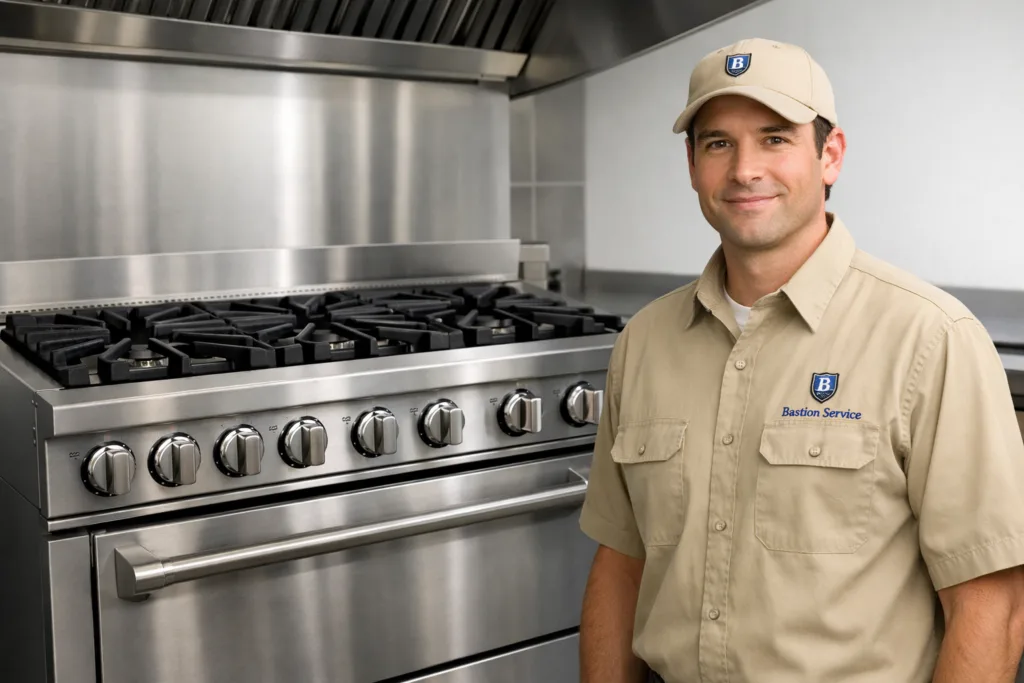




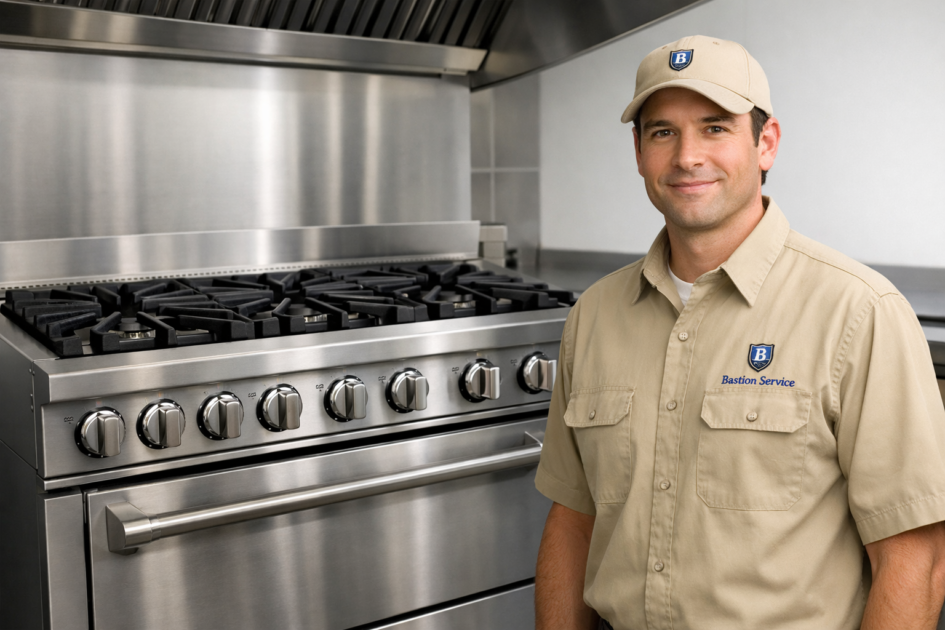
Range problems can slow production long before the unit stops working completely. When a Vulcan range begins missing ignition, losing heat, running unevenly, or failing to recover during service, the right response is to schedule diagnosis around the symptom pattern and the impact on daily kitchen output. Bastion Service works with businesses in Venice to inspect Vulcan range issues, identify the failed or worn components involved, and help plan repair around downtime, staffing, and service demands.
Related commercial service paths in Venice include Vulcan Commercial Repair in Venice, Vulcan Oven Repair in Venice, and Vulcan Fryer Repair in Venice.
Why Vulcan range problems need symptom-based diagnosis
Two ranges can show the same surface symptom and need very different repairs. A burner that will not light may involve an ignition part, blocked burner ports, a switch problem, contamination, or a gas-flow issue inside the appliance. An oven that seems too cool may actually be cycling poorly, drifting out of calibration, or struggling with a burner or sensor fault. Starting with the exact complaint helps narrow the cause faster and reduces the chance of replacing parts that are not actually failing.
That matters in busy kitchens where even one weak section can change prep timing, station setup, and food consistency. If staff are rotating pans to avoid hot spots, relighting burners during service, or adjusting temperatures constantly to compensate, the unit is already affecting workflow and should be evaluated before the problem spreads.
Common Vulcan range symptoms and what they often point to
Burners not lighting or lighting intermittently
Intermittent ignition is one of the most disruptive range issues because it tends to worsen under pressure. If a top burner clicks without lighting, lights only after several tries, or ignites and then drops out, likely causes can include worn ignition components, buildup around burner assemblies, moisture or grease contamination, switch faults, or gas-delivery issues within the range. In a production kitchen, delayed lighting is not just inconvenient; it can interrupt line speed and create uneven cooking starts.
Weak flame or uneven burner output
A burner that lights with a small flame, produces uneven flame patterns, or fails to reach expected heat can affect sautéing, boiling, holding, and timing across the line. Restricted ports, regulator-related issues, contamination, and worn burner parts are all common possibilities. When one section underperforms, staff often compensate by shifting cookware or overusing other burners, which creates additional strain and slows service.
Oven not heating correctly or holding temperature
If the oven section runs too hot, too cool, or swings noticeably during cooking, diagnosis usually focuses on temperature controls, sensing components, ignition performance, burner operation, and heat regulation inside the cavity. These faults can show up as long preheat times, poor temperature recovery, inconsistent baking or roasting, or product that finishes differently from one cycle to the next. For kitchens that depend on repeatable results, this is usually a repair issue rather than something to manage around.
Clicking, delayed ignition, or rough startup
Repeated clicking or delayed burner startup should be checked promptly. These symptoms may indicate contamination, ignition wear, unstable spark performance, or related control issues. Even when the range eventually lights, the pattern often signals a component that is no longer performing reliably under normal use.
Performance drops during peak hours
Some Vulcan range faults are most obvious only when demand rises. A unit may seem acceptable during slow periods but struggle when multiple burners are in use or when the oven is opened and cycled repeatedly. That can indicate wear that only becomes visible under load, including weak burner performance, temperature recovery problems, or control issues that make the appliance less stable during active service.
Signs the problem is affecting operations more than it seems
Kitchen teams often adapt to a failing range gradually, which can hide the seriousness of the problem. Service should move up in priority when any of the following are happening:
- Staff are relighting burners during normal cooking
- Recipes require constant temperature adjustments
- One side of the range is avoided because output is unreliable
- Oven cook times are becoming harder to predict
- Burners work some days and fail on others
- Rush periods expose problems that are less obvious during prep
These are practical warning signs that the unit is no longer supporting consistent daily use. Even if the range still operates part of the time, lost speed and uneven results can cost more than addressing the failure early.
When to stop pushing the unit and schedule repair
It makes sense to schedule service when the range is no longer dependable for core cooking tasks, when the same symptom keeps returning, or when staff have started building workarounds into normal operation. Ignition failures, unstable heat, burner dropouts, and oven temperature drift usually do not correct themselves. Continued use can expand wear, increase downtime later, and make diagnosis more complicated if multiple symptoms develop at once.
If there is a persistent gas smell, stop using the appliance immediately and follow appropriate gas safety procedures before arranging equipment repair.
What technicians typically check on a Vulcan range
Inspection usually starts with the complaint the kitchen reports most clearly: no ignition, low flame, oven temperature inconsistency, clicking, or loss of performance under load. From there, service may involve checking burner condition, ignition components, control function, sensing and temperature behavior, visible wear, buildup affecting operation, and how the range performs across different sections. The goal is to determine whether the fault is isolated, whether multiple issues are contributing to the complaint, and what repair path is most likely to restore dependable use.
That process is especially useful when the range has a mix of symptoms, such as one burner failing to light while the oven also struggles to hold temperature. Those situations often require a broader assessment instead of treating each complaint as unrelated.
Repair or replacement?
Many Vulcan range problems are best handled with repair when the appliance is otherwise solid and the failure is limited to serviceable components. Burner faults, ignition issues, temperature-control problems, and performance decline tied to wear are often worth evaluating for repair first. Replacement becomes a more serious consideration when breakdowns are frequent, multiple systems are failing, or the unit no longer supports the kitchen’s production needs even after recent service.
For businesses in Venice, the most useful comparison is not just age. It is the current fault, expected reliability after repair, the role of the range in daily output, and how much disruption the kitchen can absorb.
How to prepare for a service visit
Before scheduling, it helps to note exactly what the range is doing and when the issue appears. Useful details include whether the problem affects all burners or only one, whether the oven misses temperature during preheat or during cooking, whether clicking is constant or occasional, and whether symptoms worsen during peak use. If staff have noticed unusual shutdowns, slow recovery, or repeated resets, that information can make diagnosis more efficient.
It is also helpful to identify when the equipment can be tested with the least disruption to operations. For kitchens that depend heavily on a single range, repair timing matters almost as much as the repair itself.
Service-focused next steps for Venice kitchens
When a Vulcan range starts interfering with ticket flow, heat consistency, or safe operation, the best next step is to have the unit inspected based on the exact symptoms showing up in service. A focused evaluation can determine whether the issue involves ignition, burner output, oven temperature control, switches, sensors, or wear from heavy use, and it helps businesses in Venice make a faster repair decision with fewer surprises.
If your range is no longer reliable during prep or peak hours, scheduling service now is usually the most practical way to limit downtime, protect kitchen workflow, and return the equipment to stable day-to-day performance.