
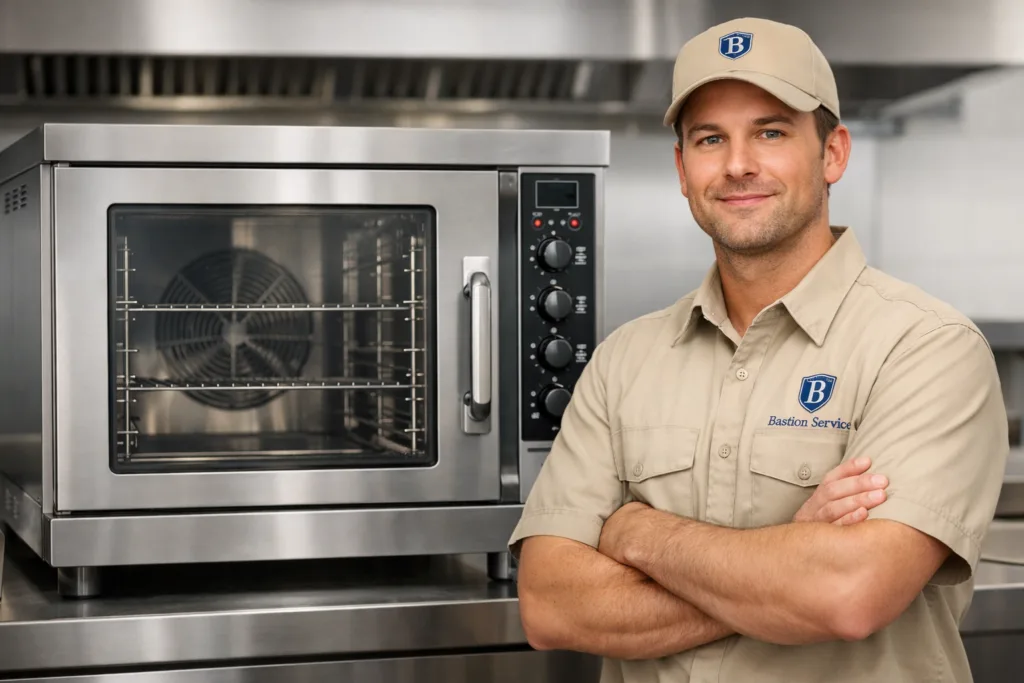





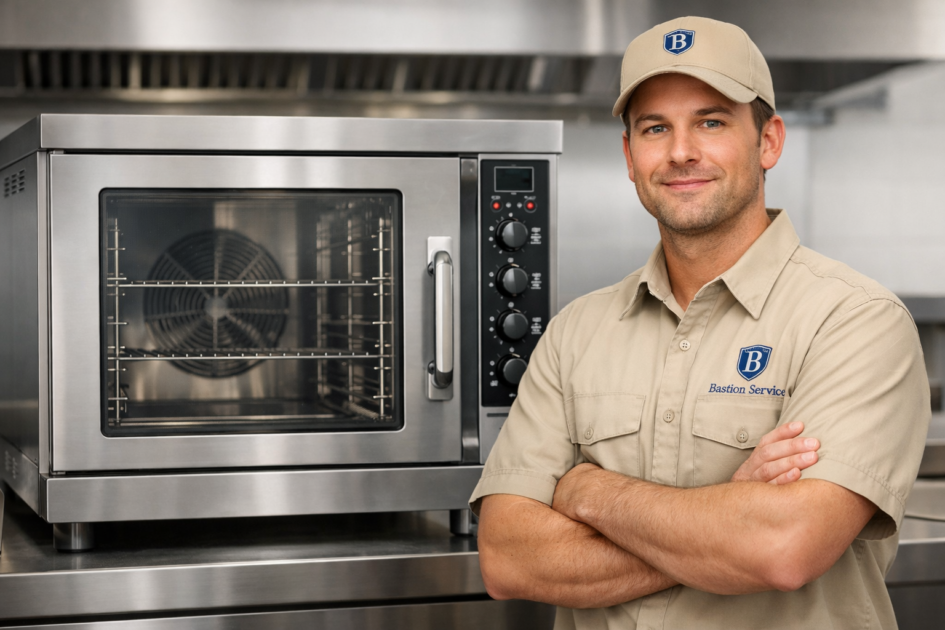
Oven problems rarely stay isolated for long in a busy kitchen. If a Vulcan unit is missing set temperature, cycling unpredictably, or dropping out during production, service should focus on the exact failure pattern, how often it occurs, and whether the oven can still be used safely until repair. For businesses in Playa Vista, that usually means scheduling diagnosis before staff start adjusting recipes, rotating pans excessively, or building prep around unreliable heat.
Related commercial service paths in Playa Vista include Vulcan Commercial Repair in Playa Vista, Commercial Oven Repair in Playa Vista, and Vulcan Range Repair in Playa Vista.
Why symptom-based testing matters
Two ovens can show the same complaint and need very different repairs. A unit that preheats slowly might have an igniter issue, weak heating output, a sensor reading problem, airflow trouble, door-seal heat loss, or a control fault. An oven that runs hot may have calibration drift, a failing probe, a relay sticking closed, or a board issue affecting temperature regulation.
That is why repair decisions should follow testing, not guesswork. Good service looks at whether the problem is constant or intermittent, whether it appears only under load, and whether related components are also being stressed. This helps avoid unnecessary part replacement and gives kitchen managers a clearer picture of downtime, urgency, and likely repair scope.
Common Vulcan oven symptoms and what they often indicate
Not heating at all
If the oven powers on but never produces heat, the cause may be tied to ignition failure, a damaged element, a safety interruption, wiring trouble, a failed control component, or a temperature regulation fault that prevents a normal heat cycle. On gas models, the ignition sequence is a common starting point. On electric configurations, element continuity and control-side switching often need to be verified.
When the oven is fully down, the key question is whether the problem is isolated to one failed part or whether a control or power issue has affected multiple functions.
Uneven baking or inconsistent results
When one rack finishes faster than another, corners bake differently, or staff have to move product around to get acceptable results, the problem may involve sensor drift, convection airflow issues, door gasket wear, control inconsistency, or heating components that are no longer performing evenly. This kind of symptom is easy to work around temporarily, but it usually leads to wasted product and inconsistent output if left unresolved.
Slow preheat and weak temperature recovery
An oven that eventually reaches temperature but takes much longer than normal can slow prep and disrupt batch timing. This may point to a weak igniter, partial heating failure, calibration error, restricted airflow, or controls that are no longer managing heat demand properly. Poor recovery between door openings is especially important in kitchens that rely on steady throughput, because the oven may appear functional while still causing production delays.
Temperature swings during operation
If the cavity runs too hot, too cool, or cycles wider than normal, the issue may come from a sensor problem, thermostat or probe inaccuracy, relays or contactors not switching correctly, or board-level control failure. Temperature instability is more than a quality issue. It can affect holding consistency, cook timing, and confidence in the equipment during peak hours.
Ignition faults and intermittent shutdowns
An oven that lights inconsistently, shuts off mid-cycle, or only fails during certain times of day often has an intermittent fault that needs to be captured through testing. Possible causes include a weak igniter, flame-sensing problems, gas valve issues, loose electrical connections, heat-related control failure, or an unstable power condition. Intermittent issues tend to worsen over time, especially when the unit is repeatedly reset and pushed back into service.
Display errors or unresponsive controls
Error codes, keypad problems, or a display that stops responding can be tied to communication faults, sensor problems, moisture exposure, failing boards, or unstable incoming power. The code itself is only part of the picture. What matters is determining whether the code identifies the real failure or just reflects a problem elsewhere in the system.
Why is my Vulcan oven not heating evenly or reaching set temperature?
This usually comes back to one of a few common issues: inaccurate sensing, weak heat production, airflow problems, worn door seals, or controls that are no longer regulating the oven correctly. In some cases, the oven is producing heat but not distributing it properly. In others, the displayed temperature does not match actual cavity temperature, which leads staff to trust settings that are no longer accurate.
When this symptom shows up consistently, repair should not be delayed. An oven that misses temperature by even a modest margin can affect batch quality all day long. Testing should confirm actual cavity performance, compare sensor response to operating behavior, and check whether the unit is failing during preheat, cycling, or recovery.
When to schedule service
Service is worth scheduling when the oven:
- does not heat or takes too long to heat
- cannot hold a stable cooking temperature
- produces uneven results from rack to rack
- shows recurring ignition or startup faults
- shuts down during normal use
- displays persistent errors or unresponsive controls
- requires staff workarounds to get through routine production
These are not minor annoyances when the oven supports daily service. They affect timing, consistency, labor flow, and the ability to rely on the same output from shift to shift.
When continued use can create bigger problems
Keep using the oven with caution if there are signs of overheating, repeated shutdowns, unstable ignition, or major temperature inaccuracy. Running the unit in that condition can stress additional parts and turn a targeted repair into a broader one. If staff are resetting the oven repeatedly, bypassing normal operating steps, or compensating constantly for bad heat performance, the equipment is already signaling that service is overdue.
If there is ever a persistent gas smell, stop using the oven immediately and follow appropriate safety procedures before arranging appliance repair.
Repair or replace?
Many Vulcan oven issues are repairable, especially when the main structure of the unit remains sound and the problem is limited to ignition parts, sensors, controls, elements, relays, contactors, wiring, door hardware, or calibration-related faults. In those cases, a targeted repair often restores stable operation without the disruption of replacement planning.
Replacement becomes a more serious consideration when failures are repeated, control issues are widespread, parts support is limited, or the total repair path no longer aligns with the value and expected reliability of the unit. The best choice depends on what failed, what else has been affected, and how critical that oven is to the operation.
What to have ready before a service visit
A few details can make diagnosis faster and more accurate:
- the model and serial information if available
- whether the problem is constant or intermittent
- any error codes shown on the display
- whether the issue appears during preheat, under load, or mid-cycle
- recent changes in performance, noises, smells, or shutdown behavior
- any previous repairs related to heat, ignition, or controls
Even simple notes from staff can help narrow the fault path. Knowing whether the oven fails first thing in the morning, only after extended use, or only when fully loaded can point service in the right direction sooner.
Service support for Playa Vista kitchens
For businesses in Playa Vista, oven repair should lead to a usable answer quickly: what failed, whether the unit should stay in service, what the repair likely involves, and how to plan around downtime. Bastion Service provides Vulcan oven support with that goal in mind, so managers can make informed decisions instead of relying on temporary workarounds. If the oven is affecting output, timing, or kitchen stability, the next practical step is to schedule diagnosis and move the repair decision forward before the problem interrupts another service window.


