
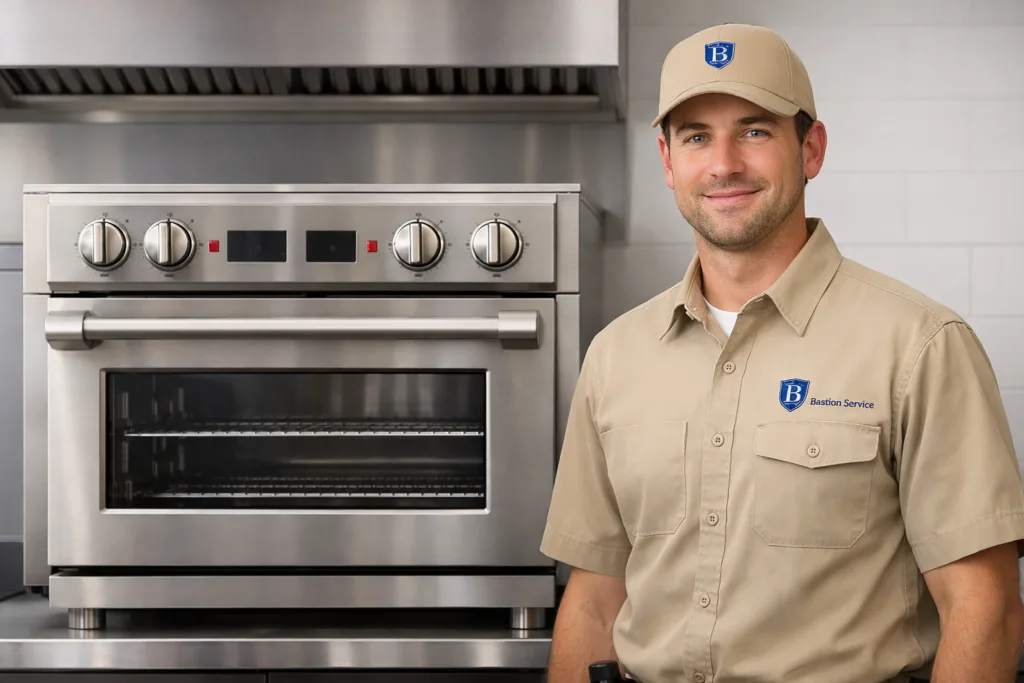




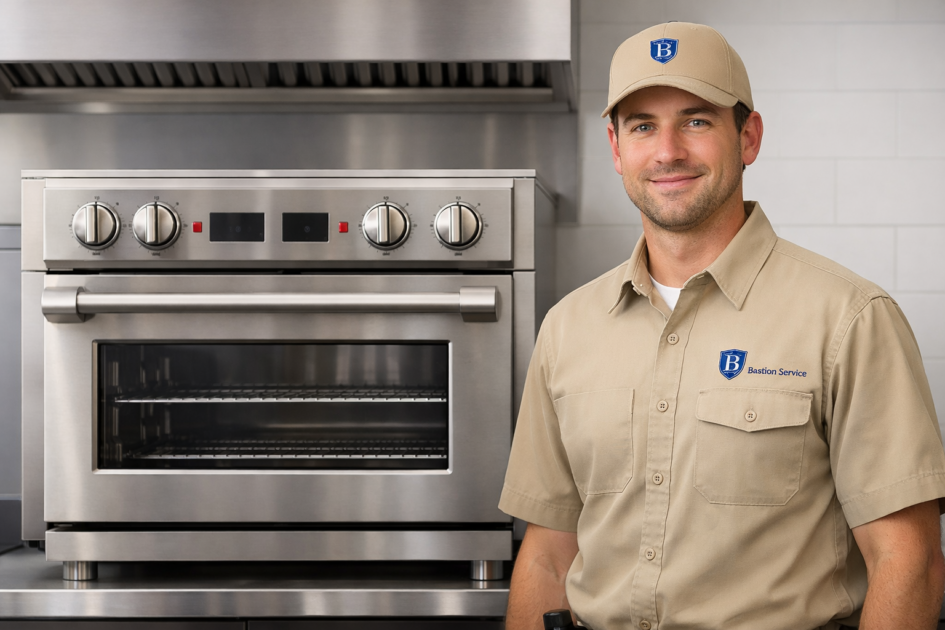
When a Wolf oven starts missing temperature, heating unevenly, or dropping out during a production shift, the issue usually reaches beyond a single bad batch. It can disrupt prep flow, slow ticket times, and force staff to work around equipment that no longer behaves predictably. For businesses in Palms, the most effective service call starts with symptom-based testing so the repair decision matches the actual failure, not just the complaint on the surface.
Related commercial service paths in Palms include Wolf Commercial Repair in Palms, Commercial Oven Repair in Palms, and Wolf Range Repair in Palms.
Bastion Service works with Palms businesses that need Wolf oven repair based on real operating conditions, including how the unit preheats, cycles, recovers heat, and performs under daily use. That matters because the same oven can appear to have a temperature problem while the root cause is actually tied to ignition, sensing, airflow, relays, controls, wiring, or door sealing.
Why is my Wolf oven not heating evenly or reaching set temperature?
This is one of the most common service patterns with Wolf ovens used in busy kitchens. If the oven takes too long to preheat, stalls below the selected temperature, or bakes differently from rack to rack, the fault may involve one or more heat-management components rather than a simple setting issue.
- Weak or failing igniters can delay burner ignition or prevent proper heat buildup.
- Temperature sensors can drift and report inaccurate cavity temperatures.
- Control boards or relays may not regulate heat consistently through the full cycle.
- Convection fan problems can create poor air circulation and uneven results.
- Door gasket wear can allow heat loss that affects recovery and stability.
In practice, staff may notice longer cook times, repeated pan rotation, unreliable browning, or product that comes out inconsistent from one load to the next. Those symptoms usually justify service before the problem expands into full downtime.
Common Wolf oven symptoms and what they often suggest
Slow preheat or no heat
If the oven powers on but does not build heat correctly, service should focus on the heating circuit, ignition components, temperature sensing, and control response. A unit that starts heating and then levels off too low can be just as disruptive as one that does not heat at all, especially when production depends on predictable start times and batch consistency.
Uneven baking or hot and cold spots
Uneven heat often points to airflow restrictions, convection motor issues, sensor inaccuracy, damaged seals, or unstable control of the heat source. In a working kitchen, this usually shows up as trays finishing differently in the same cycle or certain sections of the cavity performing better than others.
Temperature swings during operation
When the cavity overshoots, drops too far, or cycles erratically, the oven may have a sensor problem, relay failure, calibration issue, or electronic control fault. These issues can be especially costly because the oven still appears usable while quietly affecting quality, timing, and repeatability.
Ignition trouble or delayed startup
Gas Wolf ovens with ignition faults may click repeatedly, light inconsistently, or fail to start cleanly at the beginning of a cycle. Delayed ignition can interrupt workflow and should be evaluated promptly, particularly if the unit is needed for repeated daily use.
Error codes, shutdowns, or intermittent failures
Intermittent problems are often the most time-consuming for staff and the most frustrating to work around. A Wolf oven that shuts off mid-cycle, throws fault codes, or restarts unpredictably may be dealing with heat-sensitive electrical parts, loose connections, safety circuit issues, or failing control components. These symptoms rarely improve on their own.
What a service visit should accomplish
A useful oven repair visit should do more than confirm that something is wrong. It should narrow the fault to the systems that match the symptom pattern and help the operator understand the next step. That usually includes verifying how the oven behaves during preheat and cycling, checking whether the reported temperature matches actual performance, and identifying whether the issue is isolated or part of broader wear.
For a business in Palms, that information helps answer the questions that matter most:
- Is the oven safe and practical to keep using until repair?
- Is the problem likely limited to one component or several related parts?
- Will the repair restore consistent operation, or is reliability already declining overall?
- How should downtime be scheduled around kitchen workflow?
Signs the problem is affecting operations more than it seems
Some oven failures are obvious, but many become expensive before they become total breakdowns. If staff are adjusting cook times by feel, avoiding certain modes, rotating pans every cycle, or building extra buffer time around preheat, the oven is already costing the business through slower output and inconsistency.
Other warning signs include:
- products finishing differently from day to day
- longer recovery time between loads
- burning on one side and undercooking on another
- recurring reset attempts to keep the unit running
- odor, unusual noise, or repeated ignition attempts
These are not just minor annoyances. They often signal a repair need that is becoming more urgent.
When continued use can make the repair more expensive
Running an unstable oven through repeated shifts can add stress to controls, heating components, fans, and electrical connections. Overheating may damage parts beyond the original fault. Heat loss can force longer run times. Intermittent shutdowns can place extra strain on related systems each time the unit cycles unsuccessfully.
If the oven is producing repeated faults, failing to hold temperature, or behaving unpredictably during active use, it is often better to schedule service before the issue turns into a wider failure. Early intervention can help limit wasted product, avoid unnecessary parts replacement, and reduce unplanned downtime.
Repair or replacement: how businesses usually decide
Many Wolf oven problems are repairable when the failure is tied to a sensor, igniter, relay, fan component, heating circuit, wiring issue, or serviceable control part. Repair is usually the sensible route when the oven remains structurally sound and still fits the kitchen’s output requirements.
Replacement becomes a more serious consideration when the unit has a long record of repeat service issues, multiple overlapping failures, or a level of wear that makes future uptime uncertain. The decision is less about the brand name on the front and more about current condition, repair scope, and whether the oven can return to stable daily use after service.
How to prepare for Wolf oven repair in Palms
Before the appointment, it helps to note exactly what the oven is doing and when the problem appears. Useful details include whether the issue happens during preheat, under full load, after the unit has been hot for a while, or only in certain cooking modes. Error messages, delayed ignition, temperature differences, and recent changes in performance can all help narrow the diagnosis faster.
If possible, staff should also be ready to explain how the symptom affects production. For example, whether the oven now needs extra time to recover, whether only one cavity is affected, or whether certain menu items are no longer baking consistently. That operational context helps prioritize the repair around actual business impact.
Service-focused next steps for Palms businesses
When a Wolf oven begins affecting output, consistency, or safe operation, the right move is to schedule service around the specific failure pattern rather than wait for a complete shutdown. A targeted diagnosis can identify whether the problem is tied to heat generation, sensing, ignition, airflow, controls, or a combination of faults, and that makes it easier to plan repair timing, limit disruption, and get the unit back into reliable use in Palms.


