
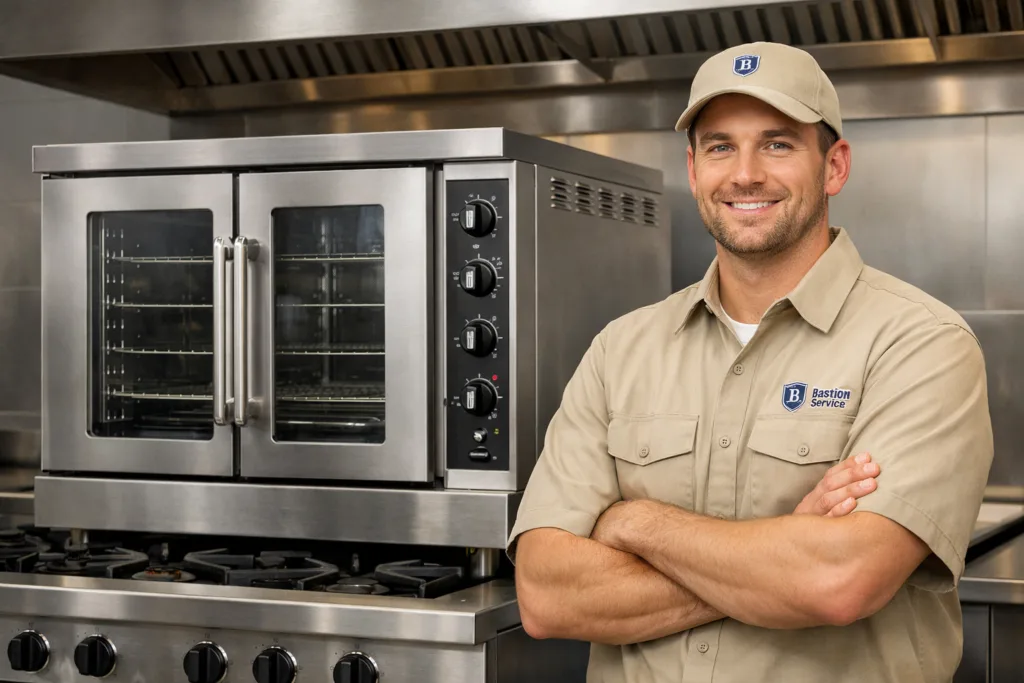




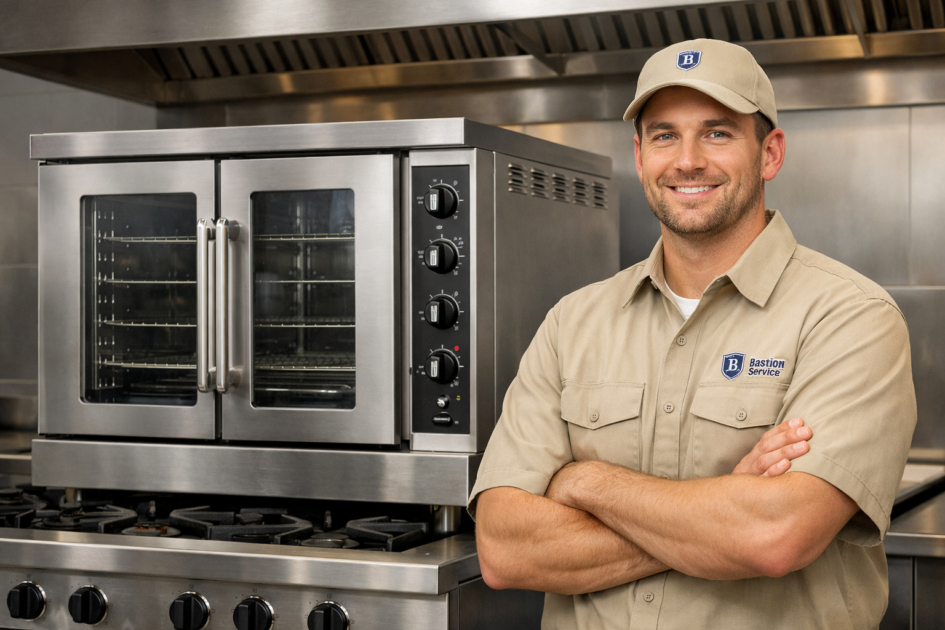
When a Vulcan oven starts missing temperature, delaying ignition, or dropping out during production, the repair decision should be based on what the unit is actually doing under load. For businesses in Palms, that means scheduling service before a minor heating problem turns into lost batches, slower ticket times, or an unexpected shutdown. A symptom-based inspection helps narrow the issue to the parts and systems affecting performance instead of guessing from one visible failure.
Related commercial service paths in Palms include Vulcan Commercial Repair in Palms, Commercial Oven Repair in Palms, and Vulcan Range Repair in Palms.
Bastion Service works with Palms businesses that rely on Vulcan ovens for steady output and repeatable results. The goal of a service visit is to identify the source of the problem, determine whether continued use is safe, and outline the next steps that best support daily operations.
Common Vulcan oven symptoms that point to repair needs
Oven problems often show up as small changes first. A unit may still run, but it no longer bakes evenly, recovers heat as quickly, or responds to controls the way operators expect. Those early signs usually mean a component is weakening or the oven is no longer regulating heat correctly.
Not heating evenly or not reaching set temperature
If the cavity stays cool, struggles to preheat, or tops out below the selected setting, several faults may be in play. Depending on the oven configuration, likely causes can include a weak igniter, failing sensor, thermostat drift, heating element issue, relay problem, gas valve fault, or control board failure. Heat loss around the door can also make the oven appear underpowered even when the heat source is operating.
In day-to-day kitchen use, this problem usually appears as underfinished product, longer cook times, or operators raising the setting to compensate. That pattern is a good reason to schedule service before the problem spreads to additional components.
Uneven baking, hot spots, or poor temperature recovery
When one rack browns faster than another or the oven struggles to recover after the door opens, the problem may involve airflow, convection components, sensor feedback, or worn sealing surfaces. In a busy operation, uneven heat quickly affects consistency because the same recipe no longer produces the same result from one cycle to the next.
This symptom is especially important when staff members are rotating pans more often, spacing loads differently, or adjusting times for each batch. Those workarounds often hide a repair issue that is already affecting throughput.
Ignition delays or failure to stay running
If the burner does not light promptly, lights and drops out, or the oven requires repeated restart attempts, the fault may involve ignition hardware, flame sensing, power supply problems, wiring, or safety-related shutdown conditions. Intermittent problems can be harder to reproduce, which is why a clear description of when the failure happens is useful before the appointment.
For example, some ovens fail only during the first startup of the day, while others cut out after reaching operating temperature. That difference can help narrow the diagnosis and speed up the repair path.
Control and display problems
When buttons stop responding, the display shows inconsistent readings, settings do not hold, or programmed cycles no longer match oven behavior, the issue may be electronic rather than purely heat-related. A faulty board, harness, switch, probe, or interface component can make the oven appear to have multiple separate problems when they are actually connected.
Why accurate testing matters before parts are replaced
The same symptom can come from very different causes. An oven that runs cold might have a sensor issue, a control issue, a gas delivery issue, or a door-seal problem. Uneven baking might be tied to airflow, temperature feedback, or chamber heat loss. Replacing one part without confirming the source of the fault can lead to repeat service calls and more downtime.
A thorough service visit should verify the complaint, check how the oven cycles, review error patterns if present, and test the components most likely tied to the symptom. That approach is usually faster and more cost-effective than changing parts one by one.
Signs your business in Palms should schedule service soon
Even if the oven is still operating, these changes usually mean it is time to have it inspected:
- Preheat takes noticeably longer than it used to.
- Set temperature and actual cooking results no longer match.
- Products bake unevenly across pans or racks.
- The oven shuts off, resets, or shows intermittent fault behavior.
- The burner cycle sounds inconsistent or delayed.
- Operators need frequent manual adjustments to get usable results.
- Heat escapes around the door or the door does not close firmly.
Waiting for a full failure can increase repair scope. A problem that begins with ignition or temperature control can put extra strain on relays, valves, boards, and other connected components if the oven keeps running in an unstable state.
Preparing for a Vulcan oven repair appointment
Before service is scheduled, it helps to note exactly what the oven is doing. Useful details include whether the problem happens during preheat or during cooking, whether it affects every cycle or only some cycles, whether fault messages appear, and whether the unit fails more often under heavy use. That information helps the technician focus on the right system faster.
If possible, businesses should also be ready to share:
- The oven model and approximate age
- Whether the issue began suddenly or gradually
- Any recent repairs or part replacements
- Whether the unit is gas or electric
- How the problem is affecting daily production
For kitchens with narrow production windows, scheduling service as soon as symptoms become repeatable is often the best way to reduce disruption.
Repair or replacement: how the decision is usually made
Many Vulcan oven issues are repairable when the main structure of the unit is still in good condition and the failure is limited to serviceable parts. In those cases, restoring the oven can be the more practical choice, especially when the unit is already fitted into an existing line and still meets output needs once repaired.
Replacement becomes more likely when the oven has multiple unrelated failures, recurring control problems, severe wear in several systems, or repair costs that no longer make sense compared with the unit’s condition and remaining value. The right decision depends less on age alone and more on reliability, downtime risk, and how important that oven is to current production in Palms.
What a useful service visit should answer
By the end of the appointment, the business should have a clear understanding of what failed, what symptoms are connected to that failure, whether the oven should remain in use, and what repair steps are recommended. That is especially important when the unit has been running inconsistently rather than failing completely, because partial operation can hide larger risks.
For businesses in Palms, the most effective next step is to schedule service when the oven first shows repeatable signs of heat, ignition, or control trouble. A focused repair process helps limit downtime, protect output quality, and keep the equipment aligned with the demands of daily kitchen operations.


