
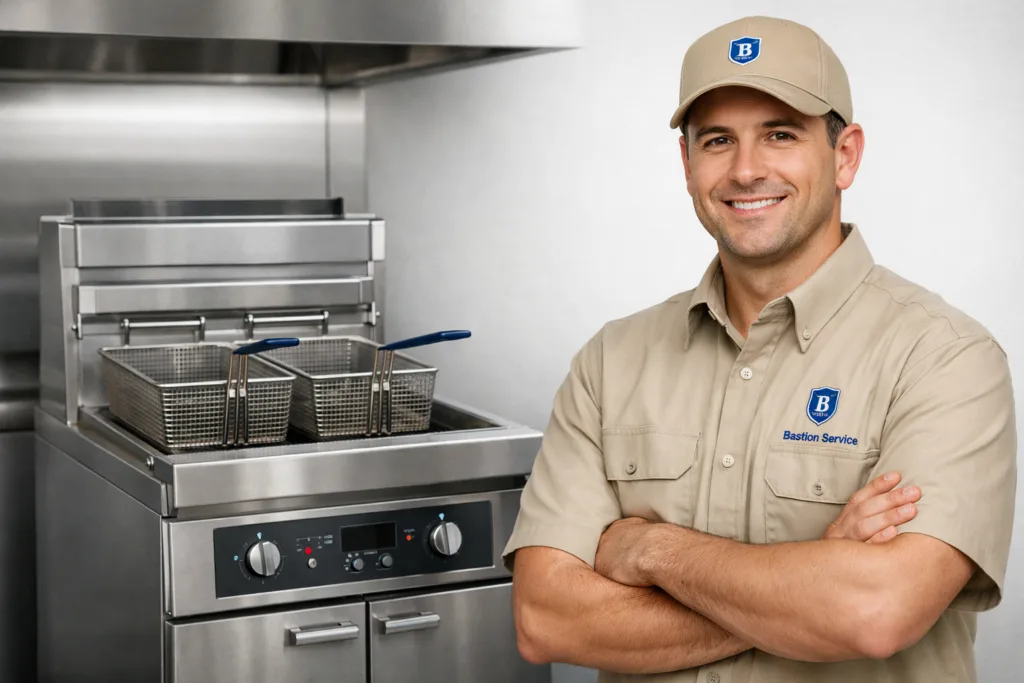




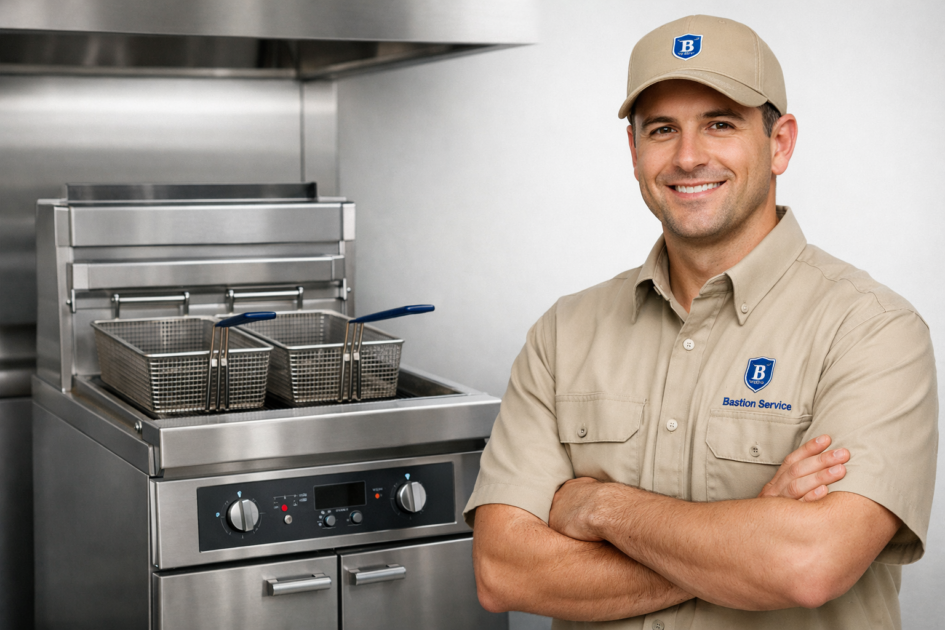
When a Wolf fryer starts missing temperature, shutting down mid-shift, or lagging during rush periods, the impact is immediate: slower output, inconsistent food quality, and added pressure on the rest of the kitchen line. For businesses in Palms, the smartest next step is to schedule service based on the exact symptom pattern rather than assume every heat issue has the same cause. Bastion Service works with kitchens that need the problem identified quickly so repair decisions, parts planning, and downtime management are based on what the fryer is actually doing in operation.
Related commercial service paths in Palms include Wolf Commercial Repair in Palms, Commercial Fryer Repair in Palms, and Wolf Oven Repair in Palms.
How Wolf fryer problems usually show up in daily kitchen use
Fryer failures are not always total failures. Many units still turn on, heat partially, or appear normal when idle, yet fall behind once production ramps up. That is why symptom-based testing matters. A recovery complaint may come from weak heating performance, an inaccurate temperature sensor, a control issue, or a safety-related interruption. A fryer that overheats may have a sensing or regulation fault rather than a simple thermostat issue.
In Palms kitchens, these problems often become obvious in a few practical ways:
- Oil takes too long to reach cooking temperature
- Temperature drops too far after loading baskets
- Recovery is slow between batches
- Food cooks unevenly or comes out darker than expected
- The unit shuts down, resets, or displays a fault
- Oil seems to overheat, smoke, or break down too quickly
Those symptoms may look similar from the line, but they point to different repair paths. Proper diagnosis helps determine whether the issue is isolated to one component or part of a broader performance problem.
Why a Wolf fryer may not heat or recover temperature properly
If a fryer does not heat at all, cannot reach the set temperature, or struggles to recover once cooking starts, the cause is usually within the heating, sensing, control, or safety system. On some units, the problem may involve ignition-related failure or burner performance. On others, it may be tied to electrical supply, limit protection, or a control response that is not matching actual oil temperature.
Slow recovery is especially important because it often shows up before a full breakdown. A fryer may seem usable during prep, then fall behind once basket loads increase. That can lead to longer cook times, inconsistent product texture, and backup at nearby stations. When a Wolf fryer in Palms keeps losing pace during active service, it is usually a sign that performance testing should happen before the problem turns into a full outage.
No heat or partial heat
A fryer that stays cold, heats only intermittently, or stalls below target temperature may be dealing with a failed heating component, ignition fault, control problem, high-limit interruption, or wiring issue. Partial heat can be harder to catch because the unit appears to run, but never performs at normal cooking pace.
Slow recovery after basket drops
If oil temperature drops too far and takes too long to rebound, the fryer may have weakened heat output, poor sensing accuracy, or a regulation issue under load. This is one of the most common complaints in busy food-service settings because it affects ticket flow long before the unit stops working completely.
Temperature swings during service
Wide cycling, overshooting, or unstable oil temperature often points to control or sensor-related faults. These issues can create inconsistent results from batch to batch and make it difficult for staff to trust cook times during peak periods.
What erratic temperature and overheating can indicate
When a fryer runs too hot, scorches product, or burns through oil faster than normal, continued operation can create bigger problems than lost consistency. Overheating can stress internal components, shorten oil life, and raise safety concerns in a fast-moving kitchen environment.
Common causes of overheating or unstable temperature behavior include:
- Sensor readings that no longer match actual oil temperature
- Control faults that cause poor cycling decisions
- Thermostat-related regulation problems
- Safety-limit issues or improper reset conditions
- Intermittent electrical faults affecting normal operation
Because these symptoms can overlap, the key is to test how the fryer behaves across a full heating cycle instead of replacing parts based on assumption.
Shutdowns, faults, and intermittent operation
A Wolf fryer that powers on and off unpredictably, locks out, or shows recurring fault conditions usually needs hands-on diagnosis. Intermittent failures are some of the most disruptive problems for kitchens in Palms because they create uncertainty: the fryer may appear fine for one shift, then fail during the next rush.
These complaints often trace back to issues such as:
- Control board faults
- Wiring or connection problems
- Ignition sequence interruptions
- Sensor communication errors
- Protective shutdowns triggered by unsafe operating conditions
In many cases, the unit must be evaluated under normal use conditions to confirm the failure pattern. A fryer that resets after cooling down or works again after a restart can still have a serious underlying fault.
Oil leaks, residue buildup, and oil-quality complaints
Not every service call starts with a no-heat issue. Some businesses first notice leaking oil, excessive residue, unusual smoke, or oil that darkens too quickly. These symptoms may point to worn seals, drain-related problems, heat imbalance, or operating conditions that are damaging oil faster than expected.
That distinction matters because some complaints are repair-related, while others involve cleaning, maintenance correction, or a combination of both. If the fryer is producing heavy buildup along with unstable temperatures, there may be an active heat-control problem contributing to the condition.
When to stop using the fryer and schedule service
It is usually time to pull the unit from regular use when the fryer repeatedly needs resets, cannot hold a stable temperature, overheats, leaks, or behaves differently from one shift to the next. Continuing to use a fryer in that condition can turn a single-component repair into a larger issue affecting controls, safety systems, or nearby parts.
For Palms businesses, early service is often the most cost-effective move when:
- The fryer no longer keeps up during busy periods
- Product quality has become inconsistent
- The unit is tripping limits or shutting down unexpectedly
- Oil temperature appears inaccurate or unstable
- Staff have to restart or monitor the fryer constantly
These are operating symptoms, not minor inconveniences. Once fryer performance starts affecting throughput, the repair decision becomes part of day-to-day kitchen management.
Repair or replace: how businesses usually evaluate the next step
Many Wolf fryer issues can be addressed with a focused repair when the cabinet, major structure, and core systems remain in solid condition. This is often true when the problem is tied to one identifiable failure in the heating, ignition, sensing, or control system.
Replacement becomes a more serious consideration when the fryer has repeated faults across multiple systems, long-term instability, significant wear, or repair costs that do not support reliable future operation. The real question for a business in Palms is not simply whether the fryer can be made to run again, but whether the repair restores the level of performance needed for normal production.
What to expect from a fryer diagnostic visit
A useful service visit should do more than confirm that the fryer is malfunctioning. It should identify the active failure, check for related wear, and clarify whether the issue appears isolated or likely to repeat. That typically includes evaluating temperature behavior, heating response, control operation, shutdown history, visible leakage, and any signs of stress tied to real kitchen use.
When the symptom pattern is documented clearly, scheduling becomes easier. Businesses can make informed decisions about targeted repair, temporary removal from service, or replacement planning without guessing at the cause.
If your Wolf fryer is no longer heating properly, recovering too slowly, or shutting down during use in Palms, service should be scheduled before the problem disrupts more of the kitchen. A repair-first evaluation based on the actual symptoms helps reduce unnecessary downtime, sets realistic next steps, and gives your team a clearer path back to steady production.


