
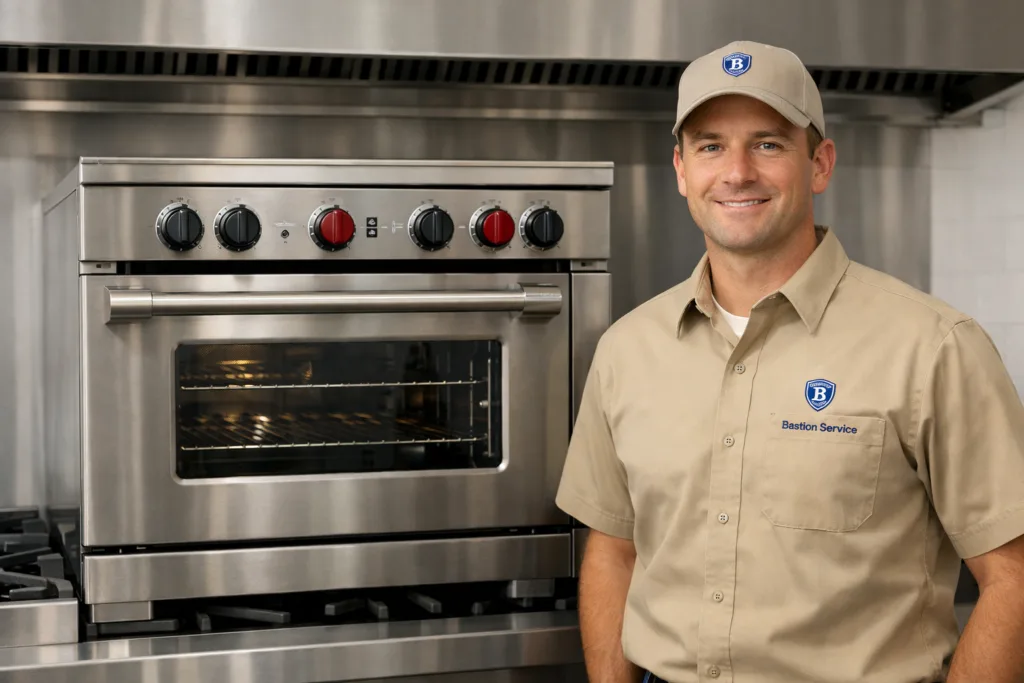




Wolf oven problems can disrupt batch timing, food quality, and staff workflow long before the unit stops working completely. For businesses in Hermosa Beach, service is most effective when the issue is evaluated by symptom pattern rather than by guesswork. Bastion Service handles Wolf oven repair with attention to fault isolation, repair scheduling, and the operational impact of downtime.
Related commercial service paths in Hermosa Beach include Wolf Commercial Repair in Hermosa Beach, Commercial Oven Repair in Hermosa Beach, and Wolf Range Repair in Hermosa Beach.
How Wolf oven issues are diagnosed
A Wolf oven may show one obvious symptom while the actual failure comes from another part of the system. Slow preheat, uneven results, overheating, ignition trouble, control errors, or random shutdowns can involve sensors, heating components, relays, wiring, door sealing, airflow, or the control interface. The goal is to identify what is causing the problem instead of replacing parts based only on the complaint.
That is why it helps to note whether the oven fails every cycle or only under heavier use, whether the display is showing a code, whether the temperature misses high or low, and whether the problem appears during preheat, recovery, or steady cooking. Those details often point the repair in the right direction faster.
Common Wolf oven symptoms and what they may mean
Not heating or taking too long to preheat
If the oven stays cold, struggles to rise in temperature, or takes much longer than normal to preheat, likely causes include a failed igniter, weak heating element, sensor issue, relay problem, or electrical supply fault. In a busy kitchen, this kind of delay can push back prep schedules and create avoidable pressure on the rest of the line.
Uneven baking or inconsistent heat
When one rack cooks faster than another, edges burn while centers lag, or results change from batch to batch, the oven may be dealing with airflow restriction, temperature sensor drift, door gasket wear, or control regulation problems. Even when the oven still runs, inconsistent heat can lead to waste, rework, and unreliable output.
Temperature will not hold at the set point
An oven that overshoots, drops below the selected temperature, or cycles too widely may have a control issue, sensor problem, sticking relay, or heat retention problem. This often shows up as unpredictable cook times and poor recovery between loads.
Ignition faults or burner-related problems
On gas-equipped Wolf ovens, failed ignition, delayed lighting, weak burner performance, or repeated attempts to ignite can point to igniter wear, gas flow problems, burner contamination, or a fault in the ignition circuit. These symptoms should be checked promptly because they affect both performance and safe operation.
Display, keypad, or control problems
If the controls do not respond properly, settings change unexpectedly, the display cuts out, or the oven resets during use, the problem may involve the control board, interface, wiring connections, or incoming power. Intermittent control faults are especially disruptive because the unit may appear usable until it fails mid-cycle.
Shutting down during operation
Unexpected shutdowns can be tied to overheating protection, unstable power, loose connections, failing controls, or internal component breakdown. For Hermosa Beach businesses, this is one of the clearest signs that service should be scheduled before the oven is trusted for full production.
Why is my Wolf oven not heating evenly or reaching set temperature?
This symptom usually comes from a problem with temperature sensing, heat generation, airflow, or heat retention. A drifting sensor may report the wrong cavity temperature. A weak igniter or failing element may produce heat, but not enough heat. A worn gasket or door alignment issue may let heat escape. In other cases, a relay or control fault causes poor cycling, so the oven never stabilizes where it should.
Because several faults can create the same cooking result, uneven heating or failure to reach set temperature is a strong reason to schedule service rather than rely on trial-and-error part replacement.
When to schedule service instead of waiting
It makes sense to book repair when performance changes become repeatable, even if the oven is still operating. Slow preheat, recurring hot spots, drifting temperatures, ignition delays, or random shutdowns usually get more disruptive over time. Waiting can turn a manageable repair into a longer outage that affects production planning and labor efficiency.
- The oven regularly misses the selected temperature
- Preheat times are noticeably longer than before
- Food quality changes from one batch to the next
- The unit overheats or trips off during use
- Error messages return after clearing
- The controls stop responding consistently
When continued use can make the problem worse
Some issues do more than reduce performance. If the oven is overheating, cycling erratically, losing power during operation, or showing ignition faults, continued use can increase wear on controls, burners, heating components, and wiring. It can also make diagnosis less straightforward later if multiple parts begin failing around the original fault.
For businesses in Hermosa Beach, addressing these symptoms early often protects both the equipment and the workflow built around it.
Repair or replacement: what businesses usually consider
Many Wolf oven problems are repairable when the fault is isolated and the unit remains in otherwise solid condition. Repair is often the better choice when the issue is limited to a serviceable component, the oven still fits the kitchen’s workflow, and restoring function quickly is the main priority.
Replacement enters the discussion when the oven has a pattern of major failures, advanced internal wear, or downtime costs that outweigh the value of another repair. The decision usually depends on symptom history, parts involved, age, overall condition, and how essential that unit is to daily output.
What to have ready before a service visit
A little preparation can make diagnosis faster and help the repair stay focused. Useful details include:
- The full model information if available
- Whether the oven is gas or electric
- Any error code shown on the display
- When the problem started and whether it is constant or intermittent
- Whether the issue happens during preheat, cooking, or recovery
- Any unusual smells, sounds, shutdowns, or ignition behavior
If the oven is overheating, failing to ignite properly, or shutting off unpredictably, limiting use until it is inspected is often the safest next step.
Service decisions should match the real operating impact
Wolf oven repair should be approached as an uptime and production issue, not just a parts issue. The most useful next step is to match the symptom pattern to the probable fault, schedule service before delays spread through the kitchen, and make a repair decision based on how the oven is actually used. When a Wolf oven begins affecting consistency, timing, or safe operation in Hermosa Beach, prompt diagnosis and repair scheduling are the practical way to reduce downtime and get the unit back into reliable service.


