





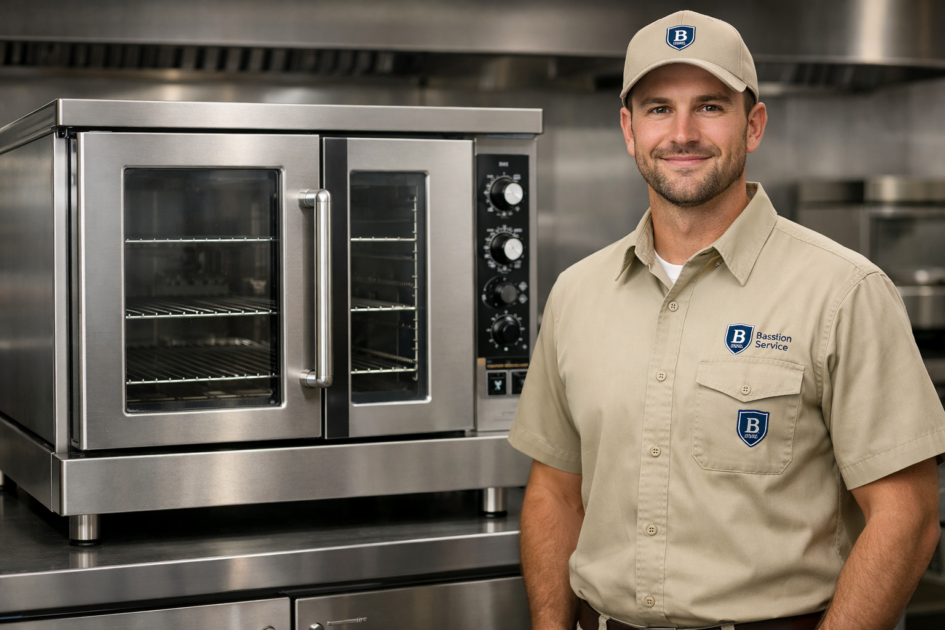
When a Blodgett oven starts heating unevenly, running too hot, failing to ignite, or dropping out during a cook cycle, the repair process should begin with symptom-based testing rather than guesswork. In Hermosa Beach, that matters because oven problems affect prep timing, batch consistency, staff workflow, and the ability to keep service moving without interruption. Bastion Service helps businesses evaluate the exact fault pattern, determine whether the unit can remain in use safely, and schedule repair based on the operational impact of the problem.
Related commercial service paths in Hermosa Beach include Blodgett Commercial Repair in Hermosa Beach, Commercial Oven Repair in Hermosa Beach, and Southbend Oven Repair in Hermosa Beach.
Common Blodgett oven problems businesses see
Oven not heating or not reaching set temperature
If the oven does not heat, heats very slowly, or stalls below the set temperature, the issue may involve an igniter, gas valve response, temperature sensor, thermostat, control board, heating element, or electrical supply problem. What looks like a simple “low heat” complaint can produce longer cook times, inconsistent results, and unnecessary strain on other kitchen equipment as staff try to compensate.
Uneven baking and temperature swings
Uneven results from top to bottom or front to back often point to airflow issues, fan motor trouble on convection units, sensor drift, door seal wear, blocked passages, or calibration problems. If one rack finishes correctly while another lags behind, the oven usually needs inspection. Repeated tray rotation and manual timing adjustments may keep production moving for a short time, but they do not correct the underlying fault.
Ignition failures and mid-cycle shutdowns
A Blodgett oven that clicks repeatedly, lights inconsistently, loses flame, or shuts down during operation may have an ignition component problem, flame-sensing issue, gas-delivery fault, or control failure. Intermittent shutdowns are especially disruptive because they create uncertainty. Staff may not know whether the next batch will cook normally, stop halfway through, or require a restart.
Doors not sealing and slow temperature recovery
Worn gaskets, loose hinges, misaligned doors, and latch wear can lead to heat loss that affects recovery time and cooking consistency. Even when the burners or elements are working, escaping heat can make the oven appear weak or unstable. Businesses often notice this problem when cook times keep stretching, the kitchen feels excess heat near the door, or the oven cycles more aggressively than usual.
Controls, displays, and operating errors
If the display is blank, settings do not respond, temperatures do not match the programmed value, or the oven resets unexpectedly, the problem may involve the control interface, wiring, relays, or related electrical components. These faults can be easy to misread at first because the oven may still power on while failing to regulate heat correctly.
Why is my Blodgett oven not heating evenly or reaching set temperature?
This symptom can come from several different causes, which is why testing matters before parts are replaced. A weak igniter may allow delayed or incomplete burner operation. A sensor that reads inaccurately can make the oven cycle off too soon or overshoot. A failing convection fan can create hot and cold zones. A damaged gasket or misaligned door can let enough heat escape that the oven struggles to recover between loads.
From an operations standpoint, the key is not only identifying the failed part but understanding how the issue shows up during real use. If the oven recovers poorly after the door opens, airflow and sealing may be part of the problem. If temperatures drift throughout the cycle, controls or sensors may be more likely. If the oven never gets fully hot, ignition, gas delivery, or heating components may be at fault.
Why diagnosis matters before approving repair
The same kitchen complaint can have very different causes. “It is not cooking right” could mean weak heat output, inaccurate sensing, airflow loss, intermittent ignition, or simple heat escape through worn door components. Proper diagnosis helps determine whether the problem is isolated to one part, whether other components have been stressed, and whether the repair is likely to restore reliable operation.
That matters for scheduling too. Businesses in Hermosa Beach often need to decide quickly whether to keep the oven in rotation, shift production elsewhere, or pull the unit from service. A symptom-based inspection helps support that decision with something more useful than trial and error.
Signs the oven should be serviced promptly
- The oven takes much longer than normal to preheat.
- Food comes out uneven from one rack position to another.
- The temperature display does not match actual cooking results.
- The burner fails to light consistently or lights with delay.
- The oven shuts off during a cook cycle.
- Staff have to reset controls to keep the unit running.
- The door does not close tightly or visible heat escapes.
- There are unusual smells, repeated clicking, or abnormal cycling behavior.
These issues often begin as quality or timing complaints before they become complete failures. Scheduling service early can help prevent wasted product, missed ticket times, and secondary damage caused by repeated failed starts or prolonged overheating.
When continued use can make the problem worse
Some ovens continue operating even while performance is deteriorating. That does not always mean they should stay in service. Running a unit with delayed ignition, unstable temperature control, poor airflow, or severe door leakage can increase wear on burners, elements, relays, and other supporting parts. What begins as one repair may become several if the oven is pushed through daily production after warning signs are already obvious.
Any strong gas odor, electrical burning smell, or repeated breaker-related issue should be treated as a stop-use condition until the oven is inspected. Safety concerns should be addressed before any attempt is made to continue normal operation.
Repair or replacement: how businesses usually decide
Repair is often the sensible option when the oven structure is in solid shape and the problem is limited to ignition parts, sensors, controls, fan components, heating elements, or door hardware. In those cases, restoring reliable temperature performance can return the unit to productive use without the disruption of replacement.
Replacement becomes a more serious consideration when the oven has frequent breakdowns, poor overall condition, multiple major failures at the same time, or ongoing temperature inconsistency that cannot be corrected economically. The decision is usually less about age alone and more about expected reliability after repair, current production demands, and how critical that oven is to daily workflow.
What to have ready before a service visit
Businesses can help speed diagnosis by noting exactly how the problem appears in use. Useful details include whether the oven fails during preheat or during a cook cycle, whether the problem is constant or intermittent, whether all racks are affected the same way, and whether the unit shows any display errors, unusual noises, or ignition delays. It also helps to know if the issue started suddenly or worsened over time.
That kind of information can help narrow the fault faster than a general report that the oven is “not working right.” For production equipment, the pattern of the failure is often just as important as the failure itself.
Service decisions should support uptime, not just a temporary restart
For businesses in Hermosa Beach, oven repair is not just about getting heat back for the moment. The real goal is to restore stable operation, reduce the chance of repeat interruptions, and make sure the next repair decision fits the actual condition of the unit. If your Blodgett oven is affecting output, consistency, or safe operation, scheduling service based on the symptom pattern is the most practical next step.


