
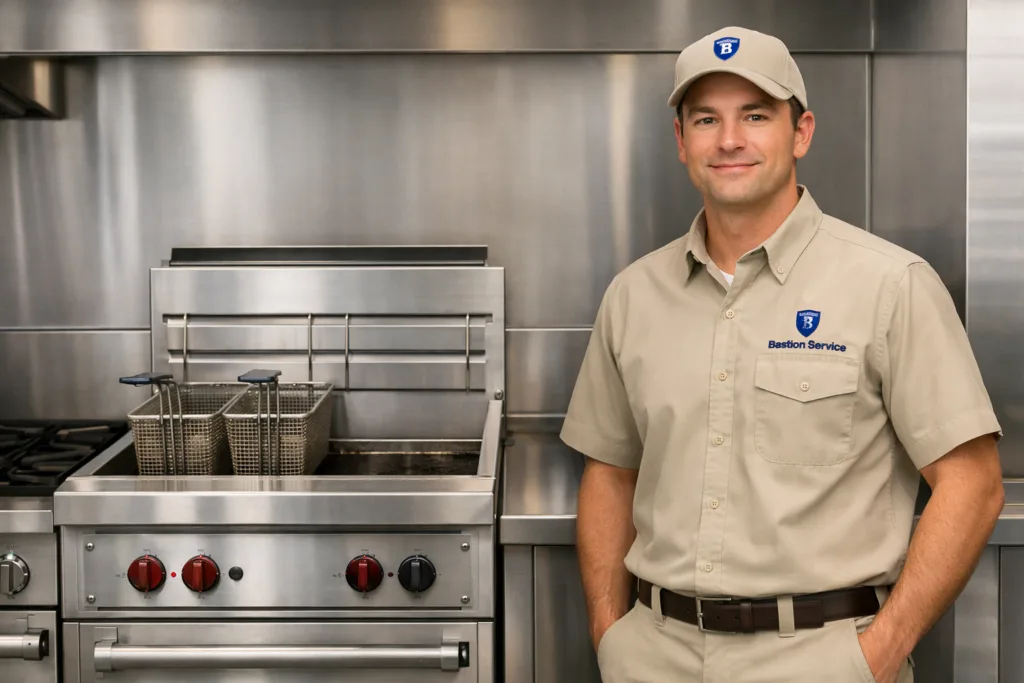




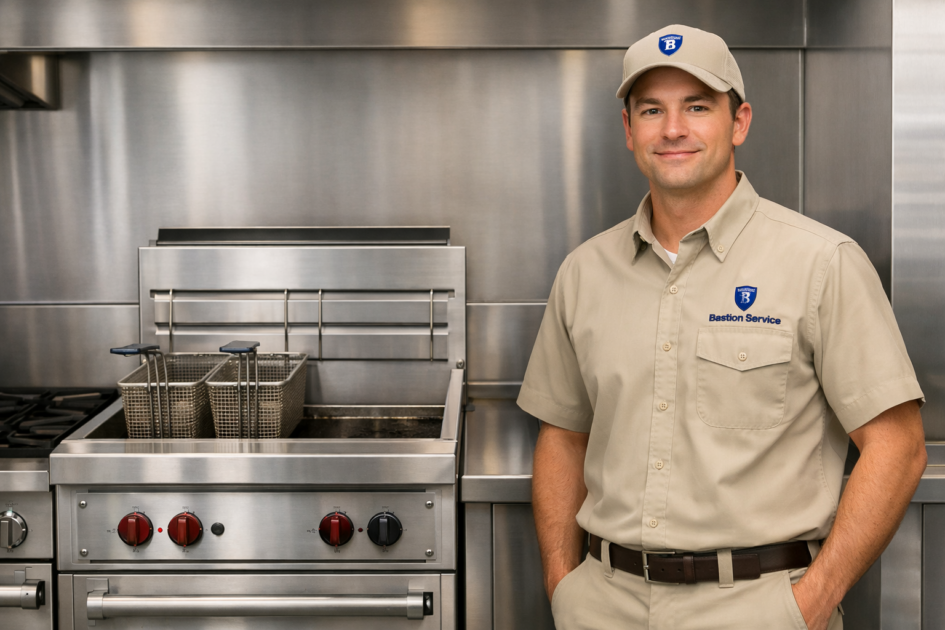
Fryer problems tend to show up at the worst time: during prep, during a rush, or right when output needs to stay consistent. When a Wolf unit starts losing heat, recovering too slowly, or stopping unexpectedly, the best next step is a service visit focused on testing the actual failure rather than guessing from one symptom. Bastion Service helps businesses in Hermosa Beach evaluate Wolf fryer issues based on heating behavior, control response, safety performance, and the overall impact on daily operations so repair decisions can be made with less delay.
Related commercial service paths in Hermosa Beach include Wolf Commercial Repair in Hermosa Beach, Commercial Fryer Repair in Hermosa Beach, and Wolf Oven Repair in Hermosa Beach.
Why a Wolf fryer stops heating or struggles to recover
A fryer that will not heat properly or cannot recover temperature between batches may have a problem with the burner system, ignition sequence, sensor feedback, high-limit protection, controls, gas flow, or power supply. These faults can produce similar results at the basket level even though the underlying cause is different. That is why symptom-based testing matters.
In day-to-day kitchen use, poor heating or slow recovery usually shows up as longer cook times, lighter or darker product than expected, inconsistent texture, and staff compensating by changing batch size or extending cycles. If the fryer is falling behind during normal use, the issue has already moved beyond a minor inconvenience.
No heat at startup
If the fryer powers on but never begins heating, the problem may involve ignition components, safety circuits, temperature sensing, control faults, or a supply issue preventing normal startup. In some cases the unit may appear ready while failing to complete the heat sequence. This type of failure should be checked promptly because repeated startup attempts can waste time without restoring production.
Slow heat-up before service begins
When the fryer eventually heats but takes much longer than usual, that can point to burner weakness, incomplete ignition, sensor inaccuracy, or control problems affecting how the unit responds to temperature demand. Slow heat-up often gets overlooked until morning prep starts slipping or opening staff notice the fryer is consistently late reaching target temperature.
Slow recovery between batches
Recovery problems are especially disruptive because the fryer may seem normal at idle but struggle as soon as demand increases. That pattern can indicate heating inefficiency, restricted performance, unstable sensing, or a control issue that is only obvious under load. If recovery is slipping, food quality and output usually follow.
Oil temperature swings and inconsistent cooking results
One of the most common complaints with a troubled fryer is inconsistent temperature. Operators may notice one batch finishing too dark, the next taking longer, and another coming out uneven even when product and procedures have not changed. Temperature instability is often tied to sensing or regulation problems, but it can also be related to heating interruptions or safety responses occurring during operation.
Overshooting the set temperature
If the oil climbs too high, the fryer may be receiving inaccurate sensor input or responding poorly through the control system. Overshooting can shorten oil life, affect product consistency, and create unnecessary stress on internal components. A unit that runs hot should not be treated as merely “off by a little” when the drift is recurring.
Dropping below target during normal cooking
When the fryer cannot maintain temperature through standard use, the issue may involve the burner assembly, control regulation, sensor feedback, or another component limiting sustained heat performance. This often leads to uneven color, soggier results, and longer ticket times that ripple into the rest of the line.
Fluctuation without a clear pattern
Irregular swings are often harder for staff to work around because the fryer may perform well for a period and then suddenly become inconsistent. Intermittent control faults, wiring issues, sensor drift, and safety interruptions can all create this kind of pattern. The more inconsistent the behavior, the more important it is to test the fryer while considering the full operating sequence rather than one isolated complaint.
Ignition and burner problems that affect reliability
Wolf fryer service calls often involve startup failures, unreliable burner operation, or a unit that lights and then drops out. These problems can be intermittent at first, which is why some kitchens keep resetting or retrying the unit until the fault becomes constant. If ignition is not dependable, the fryer is not dependable.
Ignition clicks or attempts but does not light correctly
This can point to ignition component wear, burner-related issues, fuel delivery problems, or safety conditions preventing normal operation. From the operator’s perspective, the fryer may seem close to working while still not producing usable heat. Repeated failed starts are a warning sign that the issue needs direct service attention.
Burner lights but does not stay stable
A fryer that begins heating and then drops out may have flame-sensing trouble, a safety interruption, control failure, or another fault affecting sustained operation. This kind of behavior is especially disruptive because staff may think the unit has recovered, only to lose heat again during use.
Control and safety faults should not be ignored
Digital controls, temperature controls, and built-in safety systems are essential to normal fryer operation. When any of them stop responding correctly, the fryer may still run, but not in a way that supports consistent output. A display that is active does not necessarily mean the unit is regulating correctly.
Unresponsive buttons or inconsistent settings
If controls stop accepting input, reset unexpectedly, or fail to hold the selected setting, the problem may involve the interface, internal control components, or communication within the system. In practice, this can look like random behavior to staff even though a specific electrical or control fault is behind it.
Error codes or shutdowns during operation
Protective shutdowns are meant to prevent unsafe or abnormal operation. When they start appearing repeatedly, the answer is not simply restarting the fryer and continuing as usual. Error conditions can be tied to overheating, sensor faults, ignition problems, control failures, or other issues that need to be diagnosed before the fryer is trusted again in regular production.
What to note before scheduling service
Helpful details can speed up the repair process and make diagnosis more accurate. Before scheduling service, it is useful to note:
- Whether the fryer fails at startup or only after running for a while
- If the issue is constant or intermittent
- Whether the problem is no heat, slow recovery, temperature drift, shutdown, or control failure
- Any recent changes in cook times, product color, or batch consistency
- Any visible error messages or unusual sounds during ignition or heating
Even simple observations can help separate a control issue from a heating issue, or a recovery complaint from a full startup failure.
When continued use can increase downtime
Many kitchens keep a fryer in operation as long as it still does something useful, but that approach can backfire when the unit is no longer performing predictably. Running a fryer with unstable heat, repeated lockouts, or erratic controls can make diagnosis more complicated and may contribute to secondary component failure. It also creates avoidable strain on staff who have to compensate for equipment that is not behaving normally.
If cooks are adjusting timing, reducing batch size, restarting the fryer, or avoiding one vat because it cannot be trusted, the equipment is already affecting workflow. At that point, scheduling repair is usually the more practical decision than waiting for a complete shutdown.
Repair or replacement: how businesses usually decide
Many Wolf fryer problems are repairable when the unit is otherwise in solid condition and the fault is limited to a specific burner, ignition, sensing, safety, or control issue. In those cases, repair can restore reliable operation without the disruption of replacing the entire unit.
Replacement becomes a more serious consideration when the fryer has multiple active faults, a growing repair history, or declining reliability even after prior service. For businesses in Hermosa Beach, the right call usually depends on expected uptime after repair, total correction cost, and whether the fryer can return to stable service without recurring interruption.
What a service visit should accomplish
A productive fryer repair visit should do more than identify that the unit is “not heating right.” It should determine which system is failing, confirm how that fault shows up in real operation, check for related wear, and explain the most sensible next step. That may mean moving ahead with repair, planning around parts needs, or deciding the unit no longer makes sense to keep in service.
When a Wolf fryer is affecting output in Hermosa Beach, the goal is to move quickly from symptoms to a repair plan that makes operational sense. If the unit is no longer heating consistently, recovering on time, or staying stable through service, scheduling diagnosis is the practical way to reduce further disruption and make an informed decision about repair.


