
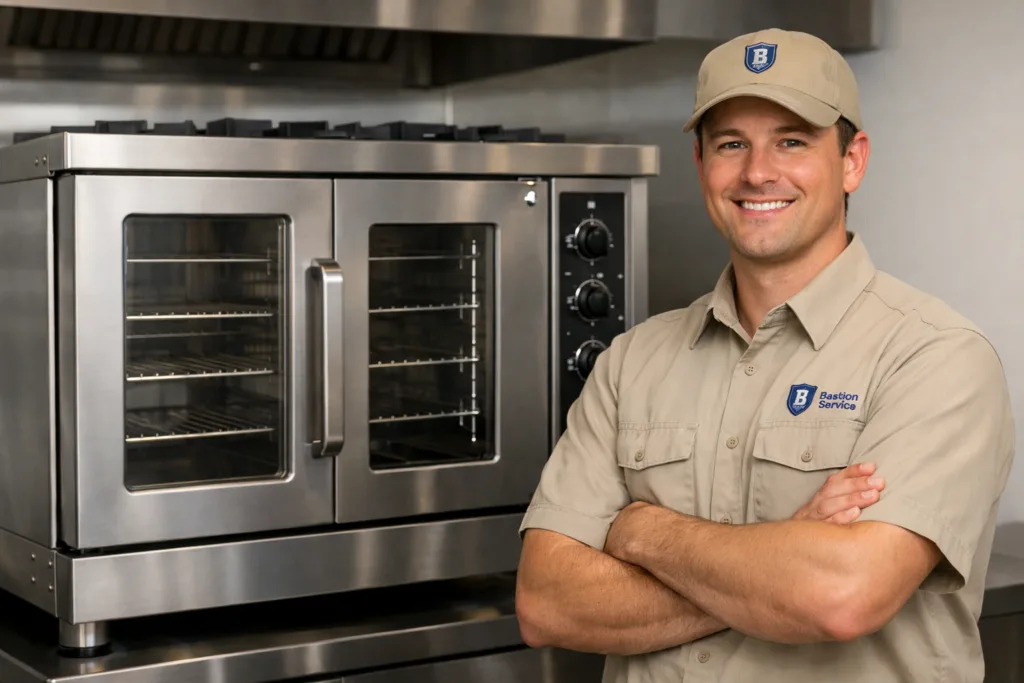




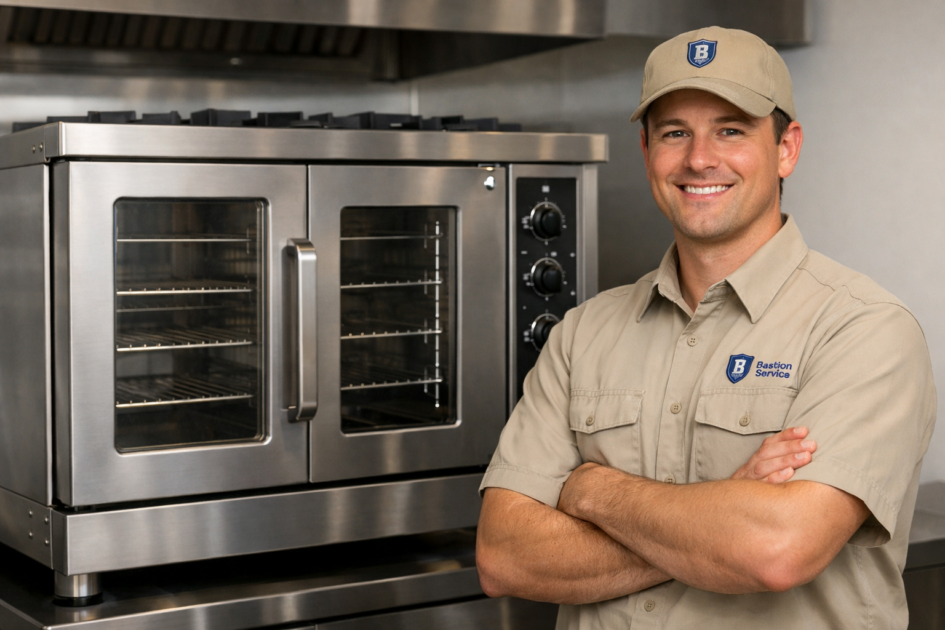
When a Vulcan oven starts missing temperature, baking unevenly, dropping ignition, or shutting down mid-cycle, the problem quickly reaches beyond the equipment itself. Production slows, ticket timing gets harder to manage, and staff may begin compensating in ways that create even more inconsistency. For businesses in Hermosa Beach, oven service should focus on identifying the exact fault, understanding how it affects daily output, and scheduling repair before a smaller issue turns into longer downtime.
Related commercial service paths in Hermosa Beach include Vulcan Commercial Repair in Hermosa Beach, Commercial Oven Repair in Hermosa Beach, and Vulcan Range Repair in Hermosa Beach.
Bastion Service handles Vulcan oven repair for Hermosa Beach businesses by starting with the symptom pattern, checking how the unit is actually operating, and narrowing the issue to the components most likely involved. That matters when an oven appears to have a heating problem but the real cause is ignition weakness, sensor error, airflow loss, door leakage, burner trouble, or control failure. A service-first approach helps operators make better repair decisions and avoid replacing parts based on guesswork.
Common Vulcan Oven Problems and What They Usually Mean
Slow preheat or failure to reach set temperature
If the oven takes too long to warm up or never gets to the selected temperature, the fault may be tied to a weak igniter, failing burner assembly, temperature sensor issue, thermostat drift, gas flow problem, or control malfunction. In a busy kitchen, this often shows up first as delayed opening prep, longer bake times, or product finishing later than expected.
When this symptom appears repeatedly, operators often try to work around it by increasing settings or adding extra cook time. That can hide the root problem for a while, but it usually leads to inconsistent results and makes the oven harder to evaluate without proper testing.
Uneven baking, hot spots, or poor recovery
A Vulcan oven that cooks one rack differently from another may have airflow issues, convection component wear, calibration error, damaged seals, or heat distribution problems inside the cavity. Poor recovery after the door opens can also point to heat retention loss or a burner system that is no longer responding the way it should.
This type of problem is especially disruptive because the oven may still appear to be running. The unit powers on, heat is present, and staff can continue using it, but the output is no longer predictable. For food-service businesses, that creates waste, slows plating, and makes quality control harder across shifts.
Ignition faults and intermittent burner operation
If the oven clicks without lighting, lights only sometimes, or starts and then drops flame, the cause may involve the igniter, flame sensing, wiring, gas valve function, burner contamination, or the control system. Intermittent ignition is worth addressing early because it tends to become more frequent, not less.
In many cases, operators notice this problem as random startup delays or unexplained shutdowns during use. Because the symptom can come and go, it is easy to postpone service, but intermittent faults are often the ones that cause the most disruption during peak production periods.
Temperature swings or overheating
When the oven runs hotter than the set point, cycles too aggressively, or burns product at settings that used to work, likely causes include sensor failure, thermostat inaccuracy, relay issues, control board problems, or calibration drift. Temperature swings can be just as damaging as no-heat complaints because they make output less consistent and increase wear on the oven over time.
For kitchens that depend on repeatable results, unstable temperature control affects more than food quality. It changes timing, forces staff adjustments, and can create uncertainty around every batch that goes through the oven.
Door, hinge, and gasket issues
Heat loss from worn door gaskets, loose hinges, or a door that no longer closes correctly can mimic a larger heating failure. The oven may seem weak, slow, or inaccurate when the real issue is that heat is escaping faster than the unit can maintain it.
Door-related problems often develop gradually. Recovery slows, the exterior feels hotter than usual, and staff may need to close the door more firmly to get consistent performance. While these issues can look minor at first, they often contribute directly to uneven baking and longer cycle times.
Why a Symptom-Based Diagnosis Matters
Many oven complaints overlap. A unit that seems to need a new igniter may actually have a control problem. What looks like a thermostat issue can be caused by airflow imbalance or sensor misreading. An oven that appears to be underheating may be losing heat through the door rather than failing at the burner.
That is why symptom-based testing is important before any repair decision is made. The goal is to confirm the complaint, observe operating behavior, compare actual temperature response to set point, and isolate the failed part or system. This helps avoid repeated service visits caused by replacing one component while the underlying fault remains unresolved.
Signs the Oven Should Be Serviced Soon
Businesses in Hermosa Beach should schedule service when a Vulcan oven shows any of the following patterns:
- Long preheat times or incomplete heating
- Uneven browning or inconsistent bake results
- Ignition delays, failed starts, or burner dropout
- Temperature overshoot or unstable cycling
- Shutdowns during operation
- Noticeable heat escaping around the door
- Recurring need to adjust cook times to compensate
These symptoms usually mean the oven is no longer operating within a predictable range. Even if the unit is still usable, continued operation can increase wear, create product inconsistency, and make the eventual repair more involved.
What to Expect From a Service Visit
A useful oven repair visit should do more than confirm that the unit is having trouble. It should identify whether the issue is isolated or part of a broader pattern involving ignition, heat generation, temperature regulation, airflow, or physical wear. For operators, that distinction matters because it affects scheduling, parts decisions, and whether the unit can be trusted after repair.
During service, the most helpful findings usually answer practical questions: Is the oven heating correctly? Is the control system reading accurately? Is the burner system responding properly? Is heat being retained the way it should? Are multiple worn components contributing to the complaint? Those answers help determine whether repair is straightforward or whether the oven needs a more careful cost-versus-downtime review.
Repair Versus Replacement Considerations
For many businesses in Hermosa Beach, repair is the right move when the fault is limited and the rest of the oven remains structurally sound. An isolated igniter issue, sensor failure, gasket problem, or control-related defect may be very repairable if the unit still supports stable day-to-day use.
Replacement becomes a more serious discussion when the oven has repeated breakdowns, multiple systems showing wear, ongoing temperature reliability issues, or a repair history that keeps interrupting operations. The decision is less about whether the oven can be made to run again and more about whether it can return to dependable production without creating another service disruption soon after.
Preparing for Vulcan Oven Repair in Hermosa Beach
Before service is scheduled, it helps to note exactly how the problem appears in real use. Is the oven slow every time it starts, or only after several cycles? Does it miss temperature by a small margin or a major one? Are the results uneven across racks, or does the whole cavity seem weak? Does ignition fail at startup, after preheat, or randomly during use? Details like these can make diagnosis faster and help match the repair plan to the actual complaint.
If possible, businesses should also be ready to describe when the issue began, whether it has become more frequent, and whether staff have already changed settings or workflow to compensate. Those details often reveal whether the problem is sudden, progressive, intermittent, or tied to a specific operating condition.
Focused Service for Businesses in Hermosa Beach
When a Vulcan oven starts affecting timing, consistency, or safe operation, the next step should be to get the unit evaluated based on what it is doing now, how severely it is affecting production, and which repair path makes the most sense for the equipment’s role in the kitchen. For businesses in Hermosa Beach, the value of service is not just getting heat back on. It is restoring stable performance, reducing avoidable downtime, and moving forward with a repair plan that fits the condition of the oven and the demands of daily operations.


