
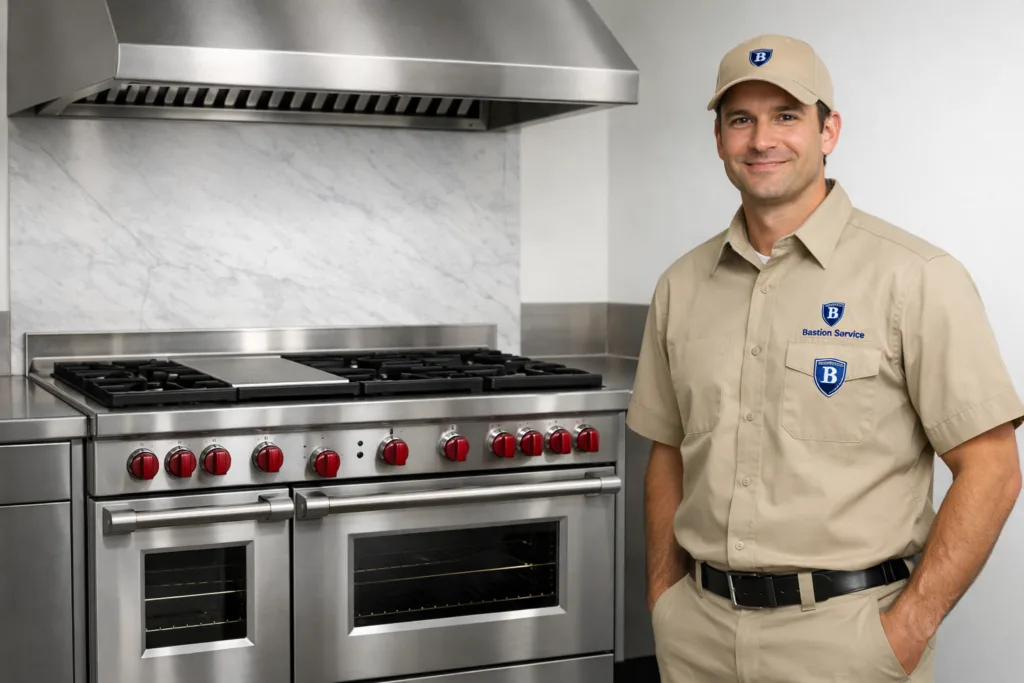




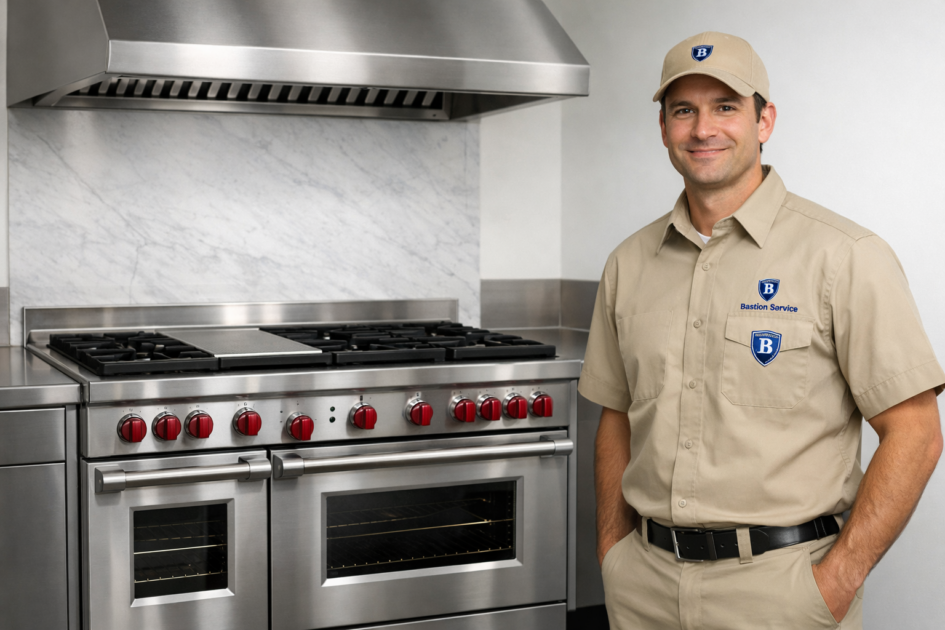
Equipment problems rarely stay isolated for long in a working kitchen. When a Wolf oven, range, or fryer starts losing heat, failing to ignite, or dropping out during use in Hermosa Beach, the priority is to identify the fault quickly, understand the operational risk, and schedule repair based on how the issue is affecting service. Bastion Service works with businesses in Hermosa Beach that need symptom-based troubleshooting, repair planning, and scheduling that supports daily production instead of adding avoidable interruption.
For specific equipment paths in Hermosa Beach, review Wolf Oven Repair in Hermosa Beach, Wolf Range Repair in Hermosa Beach, and Wolf Fryer Repair in Hermosa Beach.
What Wolf cooking equipment problems usually need service
Most service calls start with one of a few patterns: heat that does not match the setting, burners that light inconsistently, fryers that recover too slowly, controls that stop responding, or units that shut down without warning. Even when the symptom looks simple, the cause may involve ignition components, sensors, thermostatic controls, gas delivery issues, relays, switches, boards, safety cutoffs, or wiring faults.
That matters because two units can show the same complaint and need very different repairs. A burner that will not stay lit may be tied to flame sensing, gas flow, or a control issue. An oven running cold may involve a sensor problem, a heating fault, or an inaccurate control response under load. The value of service is not just replacing parts, but narrowing the failure to the actual source before the problem spreads into a longer outage.
Oven performance issues that affect output
Slow preheat or failure to reach set temperature
If a Wolf oven takes too long to preheat or stalls below the selected temperature, kitchen output slows immediately. Staff may extend cook times, rotate product unnecessarily, or shift workload to other stations. Common causes can include sensor drift, heating circuit problems, relay failure, control trouble, or faults in components responsible for regulating temperature rise.
Service should be considered early when the issue appears across multiple shifts or becomes easy for staff to predict. Once an oven regularly misses temperature, production planning becomes guesswork and food quality can become inconsistent from batch to batch.
Temperature swings during operation
An oven that overshoots, drops heat during a cycle, or holds different temperatures at different times can create uneven browning, undercooked product, and repeat cooking. In many kitchens, this shows up first as product inconsistency rather than a total failure. Operators may notice that recipes that normally run cleanly start needing adjustments that were never required before.
When temperature drift is repeatable, repair is usually more efficient than working around it. Continued use under unstable heat can increase wear on other components and make it harder to separate a single failed part from a larger control problem later.
Range problems that disrupt line flow
Burners that do not ignite reliably
On a Wolf range, ignition trouble often appears as clicking without ignition, delayed lighting, burners that light only after several tries, or flame that goes out shortly after startup. These symptoms can point to worn ignition parts, burner contamination, flame sensing problems, valve issues, or control-related faults.
From an operations standpoint, inconsistent ignition slows station setup and creates uncertainty during busy periods. If staff have to retry burners repeatedly or avoid certain positions on the range, repair should be scheduled before the condition becomes a full no-heat failure.
Weak flame, uneven flame, or unstable burner output
Burners that run low, surge, or heat unevenly can affect pan response, cook times, and consistency across the line. Sometimes the problem is obvious on one burner. Other times it shows up as a general complaint that the range no longer cooks the way it used to. Causes may include burner blockage, regulator issues, valve faults, airflow problems, or ignition-related instability.
These are not just performance annoyances. When burner output becomes unreliable, kitchens often compensate by shifting workload, extending ticket times, or overusing the remaining stations. Early repair helps prevent that type of cascading slowdown.
Fryer symptoms that lead to production delays
Slow recovery between batches
A Wolf fryer that takes too long to recover after a batch can create a bottleneck even if it appears to heat normally at startup. Recovery issues often become most visible during peak demand, when the equipment cannot return to target temperature fast enough to keep up with normal volume. Possible causes include heating component problems, thermostat issues, high-limit faults, burner trouble, or control failures.
When recovery slows, food quality can slip along with throughput. Product may come out greasy, pale, or inconsistent because the oil temperature is not where the operator expects it to be. A repair visit can determine whether the issue is limited to one part or whether broader heat-control problems are developing.
Erratic oil temperature or unexpected shutdowns
If fryer temperature swings too widely or the unit shuts down during use, staff may be forced to stop using it before service is complete. Intermittent shutdowns can involve safety cutoffs, overheating conditions, sensor faults, wiring issues, or control problems that only appear once the equipment is under sustained heat load.
Because fryers operate under demanding conditions, repeated resets should not be treated as a long-term workaround. If the unit is dropping out during production, inspection and repair planning are usually the safer next step than trying to push through another shift.
Control and electrical issues across Wolf cooking equipment
Not all cooking equipment problems begin with heat loss. Some start with displays that behave unpredictably, buttons or knobs that do not respond correctly, cycles that stop midway, or units that power on but do not operate normally. These symptoms often point toward controls, switches, sensors, boards, connections, or heat-related electrical failure.
Intermittent control issues are especially disruptive because they are hard to reproduce on demand. A unit may work at startup, then fail once it reaches operating temperature. It may reset and appear normal, then shut down again under load. That kind of symptom pattern usually requires a service visit focused on when the fault occurs, how often it appears, and what operating conditions trigger it.
How to decide whether the unit can stay in use until repair
Some equipment can remain in limited use for a short time if the symptom is mild, predictable, and not affecting safe operation. Other equipment should be taken offline quickly, especially when there is unreliable ignition, severe temperature inaccuracy, repeated shutdowns, or performance that changes from one cycle to the next without warning.
For businesses in Hermosa Beach, the practical question is not only whether the unit still runs, but whether it can support production without creating product loss, service delays, or added stress on the rest of the kitchen. If staff are compensating constantly, resetting the unit, avoiding certain burners, or changing cook times to make equipment usable, repair is usually overdue.
When repair is usually the better move than replacement
Many Wolf equipment issues are repairable when the fault is tied to a specific component or subsystem. Sensors, ignition parts, controls, switches, and heating-related components can often be diagnosed and addressed without treating the entire unit as a replacement case. That is why symptom history matters: a recent, isolated failure is different from a long pattern of recurring breakdowns.
Replacement becomes a more serious consideration when the equipment has multiple major problems at once, repeated control failures, extensive wear, or a repair history that no longer supports stable operation. A service assessment helps clarify whether the unit is a good repair candidate, whether short-term correction makes sense, and how to plan around downtime if a larger decision is needed.
Scheduling service before the problem expands
The best time to schedule repair is usually when the symptom becomes repeatable, not when the equipment has already stopped completely. A Wolf oven with drifting temperature, a range with unreliable ignition, or a fryer with poor recovery often gives warning signs before full failure. Acting during that window may help reduce lost production time and avoid secondary damage from continued operation under faulty conditions.
If your Wolf cooking equipment in Hermosa Beach is affecting throughput, consistency, or normal kitchen workflow, the next step is to arrange service based on the symptoms you are seeing, how often they occur, and whether the unit can remain in use safely until repair is completed.




