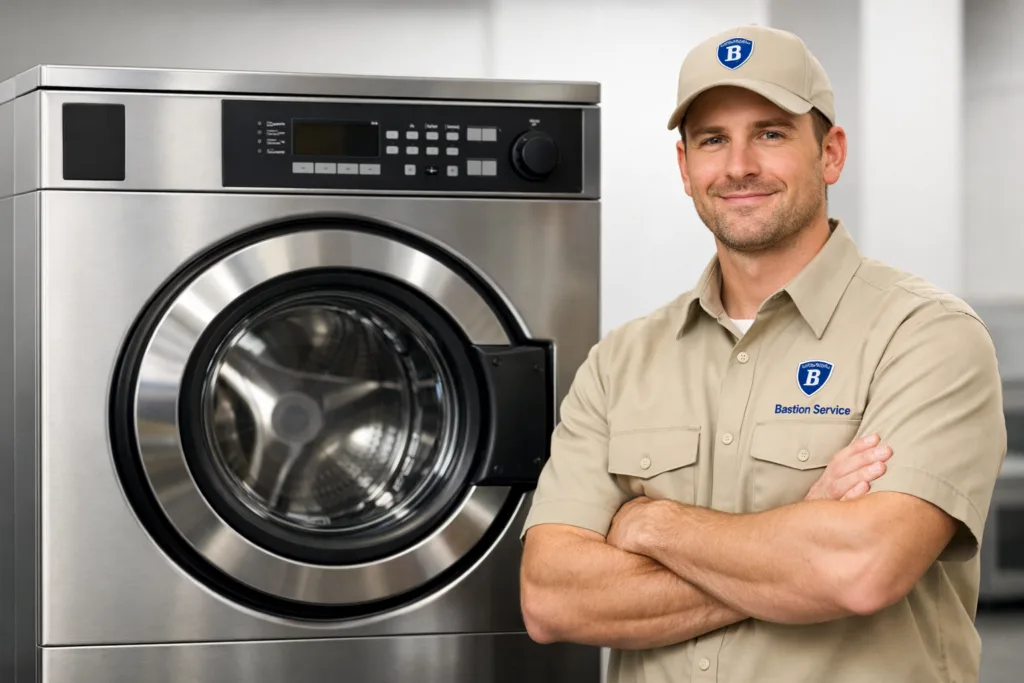




A Wascomat washer that stops working as expected can slow output, create backups, and force staff to work around unreliable equipment. Whether the problem shows up as standing water, a failed spin, a door that will not lock, or a cycle that ends early, the most useful next step is service based on the exact symptom pattern and the condition of the machine. Bastion Service helps businesses in Santa Monica evaluate washer faults, prepare for repair approval, and schedule work before downtime spreads into day-to-day operations.
Related commercial service paths in Santa Monica include Wascomat Commercial Repair in Santa Monica, Commercial Washer Repair in Santa Monica, and Wascomat Dryer Repair in Santa Monica.
How washer problems affect daily operations
Washer issues rarely stay isolated to one load. In shared laundry rooms, housing facilities, hotels, and other high-use settings, a single machine running poorly can delay turnover, reduce available capacity, and put extra strain on the rest of the equipment lineup. What starts as a slow drain or intermittent shutdown can become repeat interruptions, water on the floor, or a machine that no longer completes a full cycle.
That is why symptom-based diagnosis matters. A no-spin complaint may actually begin with a drain restriction. A fill fault may be related to a valve issue, a supply problem, or a control failure. A unit that appears dead at startup may have a door lock or safety circuit problem rather than a major board failure. Identifying the real cause first helps avoid wasted parts replacement and repeated service visits.
Common Wascomat washer symptoms and what they may mean
Washer will not start
If the machine does not begin a cycle, possible causes include door lock failure, power input problems, control board issues, interface faults, or interrupted communication between components. On a busy site, this kind of problem often looks simple at first, but startup failures can come from several different systems that all need to be checked together.
Cycle starts but does not complete
When a washer stops mid-cycle, the issue may involve drainage, heating, water level sensing, motor operation, lock faults, or control errors. Repeated resets may get a load through once or twice, but they usually do not resolve the source of the interruption.
Not draining or leaving water in the drum
Drain complaints often point to pump blockages, hose restrictions, worn pump components, sensor issues, or drain-related control faults. If water stays in the drum, extraction performance usually drops as well, and the machine may shut down before the cycle ends.
Poor spin or weak extraction
If laundry comes out wetter than expected, the cause may be an imbalance condition, incomplete draining, drive trouble, motor faults, or mechanical wear affecting the spin system. This symptom matters because it often creates a second operational problem by extending dry times and slowing overall throughput.
Leaks during operation
Leaks can come from door seals, hoses, pump connections, drain components, overfill conditions, or internal tub-related problems. The location of the water matters. Water at the front, underneath, or near the rear of the machine can point to very different repair paths, so inspection is important before deciding what the machine needs.
Excessive vibration, banging, or movement
Strong vibration can be related to leveling, loading patterns, worn suspension parts, bearing wear, or problems in the drum support system. Continued use in this condition can increase damage and turn a manageable repair into a larger mechanical issue.
Fill problems or wash performance issues
Slow filling, no fill, or inconsistent wash results may involve inlet valves, restricted screens, water supply conditions, pressure sensing, or control faults. If the machine cannot fill correctly, cycle timing and wash performance are affected even when the unit appears to keep running.
Heat-related problems
On models with wash temperature requirements, heating trouble can lead to poor cleaning results, interrupted cycles, or temperature-related fault codes. The cause may involve heating elements, sensors, relays, wiring, or control logic.
Why is my Wascomat washer not starting or not completing the cycle?
This symptom usually means the washer is failing at a specific checkpoint in the cycle sequence. Common causes include a bad door lock, control communication fault, drain problem, water fill failure, overheating issue, or a sensor reading that prevents the machine from moving to the next stage. In some cases, the washer powers on normally but stops because it cannot confirm safe operation. In others, the machine may look inactive when the actual failure is occurring in the background.
For businesses in Santa Monica, this is one of the most important symptoms to evaluate quickly because it can point to either a straightforward component failure or a broader system problem. The difference affects parts planning, approval decisions, and how much downtime to expect.
When repeated symptoms are a warning sign
Intermittent washer problems are easy to postpone because the machine may still run sometimes. But a unit that occasionally fails to lock, drains inconsistently, throws recurring error codes, or struggles to reach full spin is often moving toward a complete stoppage. Intermittent faults also make operation less predictable, which creates scheduling issues for staff and can increase wear on connected components.
- Recurring drain or spin errors
- Frequent restarts to finish loads
- Longer-than-normal cycle times
- Unusual noise during wash or extraction
- Water left behind after loads
- Occasional leaks that are becoming more frequent
These patterns usually mean service should be scheduled before the machine drops out of service completely.
What diagnosis should clarify before repair approval
On a Wascomat washer, the same visible problem can come from multiple causes. That is why repair decisions are stronger when diagnosis confirms not only the failed part, but also whether the failure has affected nearby systems. A pump issue, for example, may be simple on its own, but repeated operation with poor draining can also affect extraction performance and trigger other shutdowns.
A thorough service visit should help answer questions such as:
- What exact component or system is failing?
- Is the problem isolated or part of a larger wear pattern?
- Can the washer be used safely before repair?
- Is one repair likely to restore reliable operation?
- Are there signs that additional failures are developing?
This makes it easier to compare repair cost against expected operational value instead of reacting only to the immediate symptom.
Repair versus replacement considerations
Many washer issues are repairable, especially when the failure is limited to a valve, pump, lock assembly, sensor, belt-related component, or control-related part and the rest of the unit remains in solid condition. In those cases, restoring the machine can make sense if the expected result is stable service and normal cycle performance.
Replacement becomes a more serious consideration when the washer has repeated major breakdowns, severe bearing or structural wear, multiple system failures at the same time, or repair needs that do not align with the remaining service value of the machine. For operators in Santa Monica, the decision is often tied as much to workflow and equipment reliability as it is to the repair estimate itself.
How to prepare for a service visit
Before scheduling repair, it helps to note the exact behavior of the washer rather than only the final outcome. Good details can shorten the diagnostic process and help separate one fault from another.
- Whether the machine powers on
- Whether the door locks properly
- When the cycle stops
- Whether water fills, drains, or remains in the drum
- Any unusual sounds, vibration, or visible leaks
- Any repeat error messages or operating patterns
If the washer is leaking, failing to drain, producing strong vibration, or shutting down repeatedly, it is usually better to stop using it until the cause is checked.
Service planning for Santa Monica businesses
Washer repairs are easiest to manage when symptoms are addressed early, the cause is identified accurately, and scheduling is based on the level of operational disruption involved. For Santa Monica businesses that depend on steady laundry output, timely repair service helps reduce backup loads, avoid secondary damage, and restore more predictable workflow. If a Wascomat washer is no longer starting, draining, spinning, or completing cycles normally, the right next step is to schedule diagnosis, review the machine’s condition, and move forward with repair based on what the equipment is actually doing.