
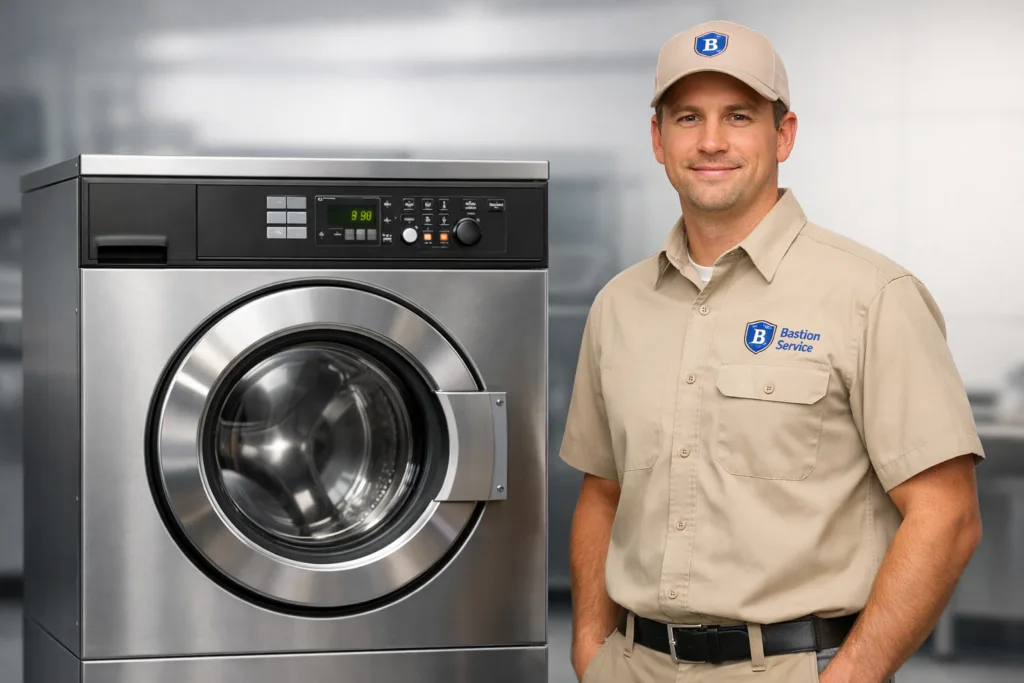




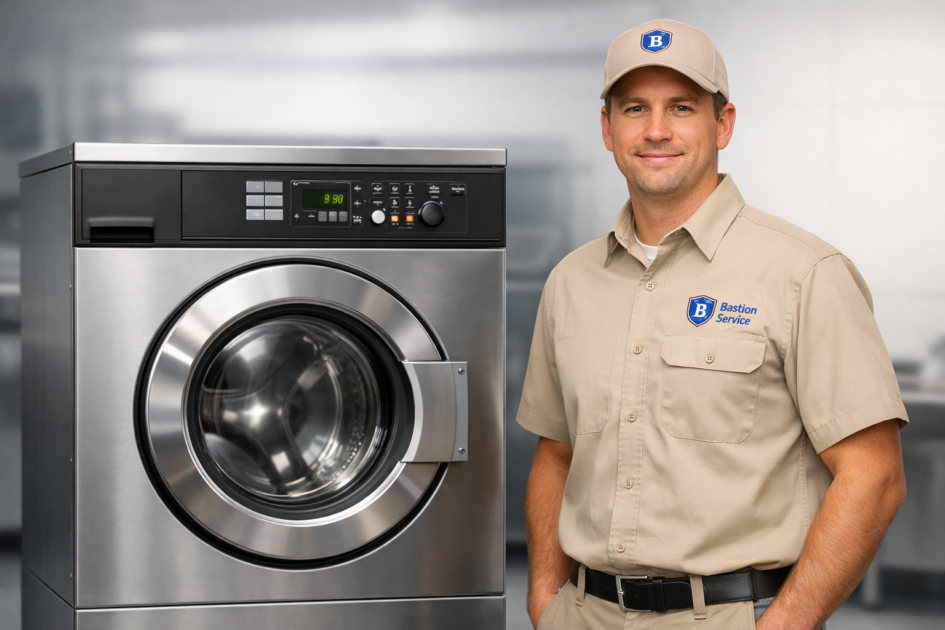
Downtime from a washer problem can quickly back up linens, uniforms, towels, and other daily loads for businesses in Santa Monica. When a Speed Queen unit starts leaving water behind, stopping mid-cycle, leaking, or struggling to reach full extraction, service should focus on the exact failure pattern so repair scheduling, parts decisions, and next steps are based on the machine’s real condition rather than guesswork.
Related commercial service paths in Santa Monica include Speed Queen Commercial Repair in Santa Monica, Commercial Washer Repair in Santa Monica, and Speed Queen Dryer Repair in Santa Monica.
Bastion Service works with businesses in Santa Monica to diagnose Speed Queen washer issues that interfere with throughput, floor safety, and normal workflow. In many cases, the most useful first step is identifying whether the symptom points to a drain system problem, a lock or control fault, a water fill issue, or wear in the drive and support components.
Common Speed Queen washer problems that disrupt operations
Washer not starting or not completing the cycle
If the washer will not start, shuts off during operation, or stalls before the cycle finishes, likely causes include a faulty lid or door lock, control failure, timer problems, wiring issues, or an unstable power supply. This symptom often appears as an intermittent problem at first, which can make it tempting to keep using the machine until it fails completely. For a business, that usually leads to more lost time and harder scheduling around an unreliable unit.
Cycle interruptions also matter because they can leave loads half washed, delay the next batch, and create confusion for staff trying to determine whether the issue is user-related or equipment-related. When the same washer repeatedly fails to finish a cycle, service is usually the better move than continued resets and restarts.
Not draining or leaving loads too wet
A Speed Queen washer that does not drain properly may have a blocked drain path, pump failure, hose restriction, sensor problem, or a spin issue that prevents proper water removal. In day-to-day operations, this often shows up as standing water in the tub, unusually long drain times, or textiles coming out heavy and wet.
Drainage problems should be addressed quickly because they can increase strain on other components and reduce total machine availability. If poor extraction is paired with unusual noise, slow cycle completion, or repeated drain-related faults, the problem may involve more than the pump alone and should be evaluated as a system issue.
Leaks during fill, wash, or drain
Leaks can come from hoses, inlet connections, pump seals, internal fittings, overfill conditions, or tub-related wear. The point in the cycle when the leak appears helps narrow the cause. A leak during fill often suggests a different source than a leak that appears during draining or high-speed spin.
For businesses in Santa Monica, even a minor washer leak can become a larger problem if it affects flooring, creates slip hazards, or spreads to nearby equipment and work areas. If the source is not obvious from outside the machine, inspection is usually needed before the washer is put back into regular use.
Excessive vibration, banging, or off-balance operation
When a washer starts shaking heavily, hitting the cabinet, or moving more than normal, the cause may involve leveling problems, worn suspension parts, basket or tub wear, or drive-related mechanical issues. Repeated off-balance operation can add stress to the machine and shorten the life of surrounding components.
Not every vibration complaint points to a major internal failure, but severe banging or new movement patterns should not be ignored. A machine that has gone from normal operation to strong vibration usually needs service before continued use turns a manageable repair into a larger mechanical issue.
Slow fill, no fill, or incorrect water temperature
Fill problems may be caused by a failing inlet valve, clogged screens, pressure issues, control faults, or temperature-mixing problems. In business settings, these issues often reduce wash quality and stretch cycle times enough to affect the entire laundry schedule.
If the washer is taking too long to fill or is using the wrong water temperature, the problem can show up as poor cleaning results, repeated cycle errors, or inconsistent performance from one load to the next. When those patterns appear together, the machine should be inspected as a performance problem rather than treated as a simple supply issue.
How symptom patterns help narrow the likely cause
One of the main reasons washer diagnosis matters is that similar complaints can come from very different failures. A washer reported as “not spinning” may actually be failing to drain first. A cycle fault that looks like a control issue may be triggered by a lock assembly that is not confirming closed status. Water remaining after the cycle may point to the pump, but it can also connect to a broader problem in the drive system.
Looking at the full symptom pattern is usually more useful than focusing on only one visible issue. Helpful details include:
- Whether the machine fails at the same point in every cycle
- Whether the problem is constant or intermittent
- Whether error codes appear before shutdown
- Whether unusual noise happens during wash, drain, or spin
- Whether leaks appear only under certain operating conditions
- Whether wash quality declined before the machine stopped working properly
These details help determine whether the repair is likely to involve one failed part or multiple developing issues.
Signs the washer should be taken out of regular use
Some washer problems can wait for scheduled service later in the day, while others should prompt immediate shutdown. It is usually best to stop normal use if the machine is leaking onto the floor, tripping electrical protection, producing a burning smell, failing to lock securely, or operating with severe vibration.
Continued operation under those conditions can increase damage, create safety concerns, and complicate the final repair. A washer that still runs is not always a washer that should remain in service, especially if each cycle increases the chance of a larger outage.
When repair is usually the better path
Repair is often a sensible option when the machine has a defined fault, the rest of the washer is in solid condition, and the issue can be corrected without uncovering widespread wear. That is often the case with many drain, fill, lock, control, hose, and pump-related failures, assuming the unit has otherwise been operating well.
A targeted repair also makes more sense when the machine still fits the workload, parts support is available, and there is no pattern of repeated breakdowns in multiple systems. For many businesses, restoring one washer quickly is more practical than working around reduced capacity while considering replacement.
When replacement may need to be discussed
Replacement becomes a more serious conversation when a washer has repeated service history, multiple worn systems, corrosion, major mechanical deterioration, or a repair scope that no longer supports reliable operation. The question is not only whether the unit can be repaired, but whether the result is likely to provide stable performance under the demands of daily use.
If inspection shows both an immediate failure and additional wear that is likely to cause another outage soon, the better decision may be to weigh current repair cost against expected remaining service life. That decision is easier when the diagnosis clearly separates the primary failure from secondary concerns.
What to have ready before service is scheduled
To speed up diagnosis and repair planning, it helps to gather a few details before the visit:
- The model information if available
- A short description of when the problem started
- Whether the issue affects every cycle or only some cycles
- Any visible leaking, noise, or vibration changes
- Any recent resets, interruptions, or power-related events
- Whether the machine should be taken out of use before inspection
This kind of preparation can make the service visit more efficient and reduce delays in deciding on the proper repair path.
Service decisions should match the real downtime risk
For a Speed Queen washer in Santa Monica, the right repair decision depends on how the machine is failing, how that failure affects daily operations, and whether continued use creates added risk. When a washer is stopping cycles, leaving loads wet, leaking, or showing unstable performance, timely diagnosis and repair scheduling help protect workflow and reduce the chance of a longer disruption.


